
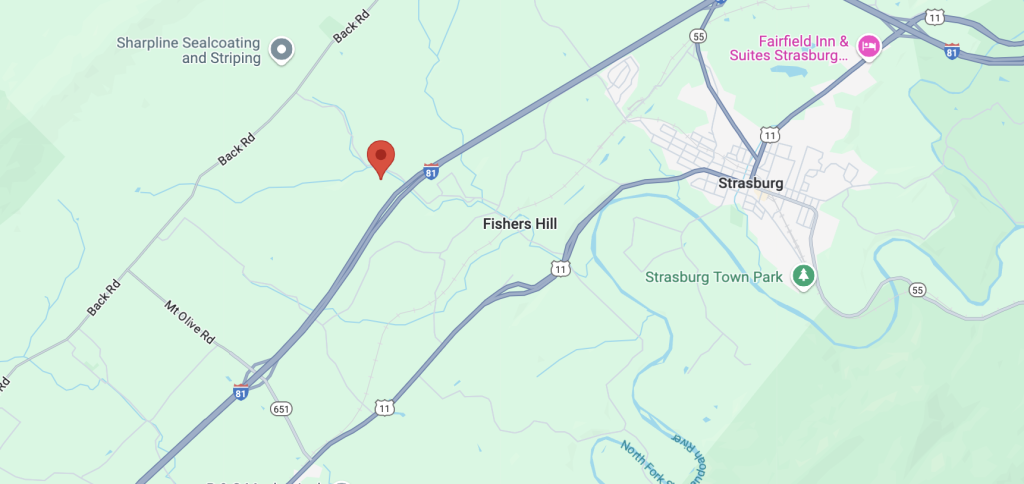
The Battle of Fisher’s Hill, fought September 21–22, 1864 near Strasburg, Virginia, was Sheridan’s second blow in the Shenandoah Valley, struck just three days after Third Winchester. Lt. Gen. Jubal Early had fallen back to a position so strong it was called the “Gibraltar of the Valley,” but Sheridan turned it with a concealed flank march by Crook’s corps and sent the Confederate army flying south. For the First New York Dragoons it was a day spent first leading Merritt’s division up the Valley pike to the enemy’s works, and then, when the line broke, taking the lead of the brigade in a hard pursuit that ran through the night.
The Gibraltar of the Valley
Beaten at Third Winchester on September 19, Early withdrew some twenty miles up the Valley to Fisher’s Hill, a steep ridge running across the narrow neck of the Valley just south of Strasburg. With Little North Mountain on his left and the Massanutten and the North Fork of the Shenandoah on his right, the position was reckoned almost impregnable. True to his word, Sheridan was after him at once. As Bowen recorded, at daylight Merritt’s division, the Dragoons in advance, pushed south up the Valley pike through Newtown and Middletown and met no opposition until reaching Fisher’s Hill, where they found Early strongly entrenched. Through the next day the Union infantry came up and took position in front of the Confederate works.
Crook’s Flank March
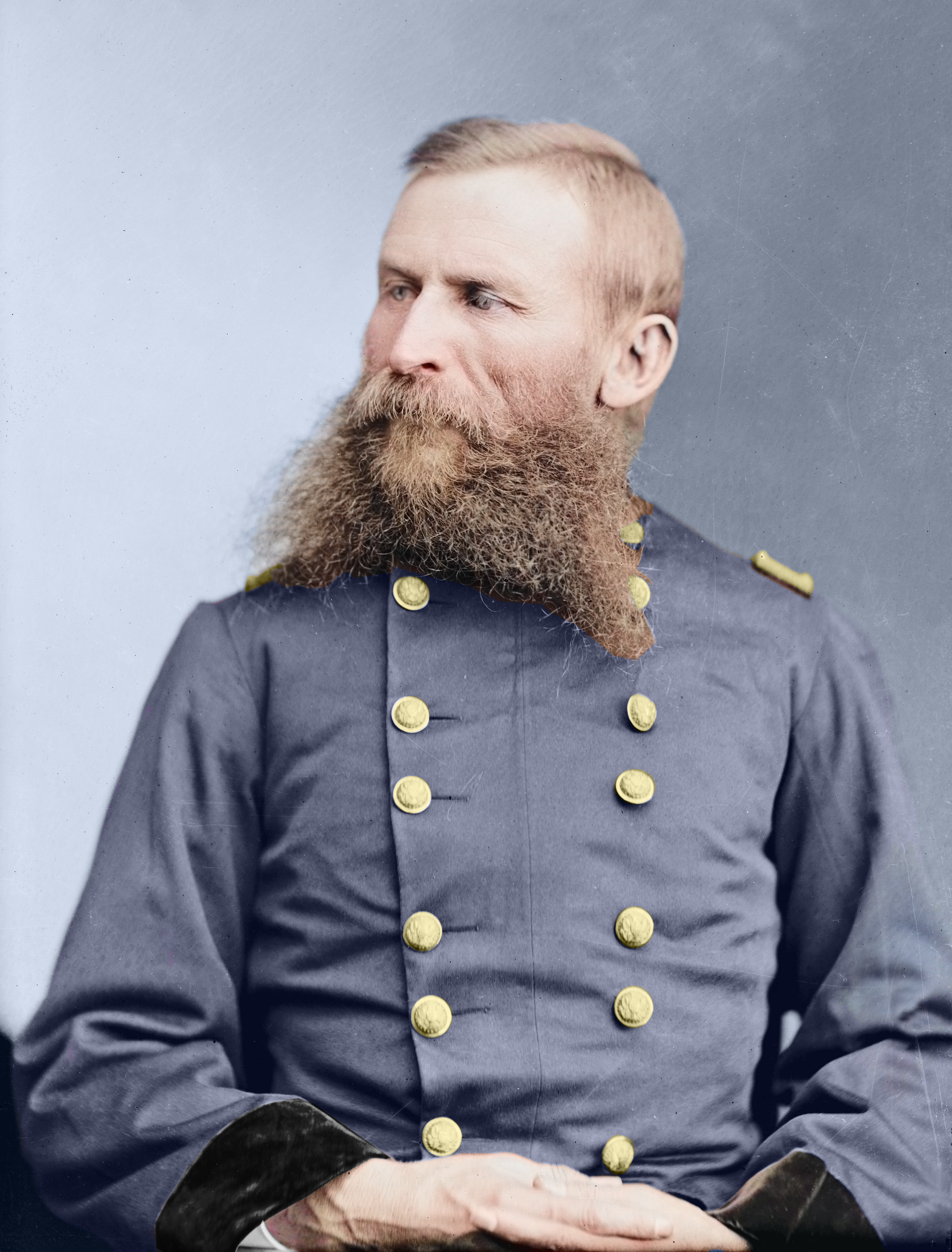
Sheridan did not mean to throw his men straight at that ridge. Learning from a guide that troops could be marched by forest paths behind Little North Mountain to strike the enemy’s left and rear, he sent Crook’s corps on a concealed march while the rest of the army made loud demonstrations in front. Bowen, watching the day unfold, put it plainly: Sheridan’s maneuverings led Early to believe he meant a direct front assault, “but he had other plans.” By late afternoon Crook had reached his point of attack, and the Confederates, absorbed by the troops to their front, were, in Bowen’s words, “wholly unconscious of the heavy force of men with loaded rifles and fixed bayonets stealing stealthily up behind them.”
The Line Breaks
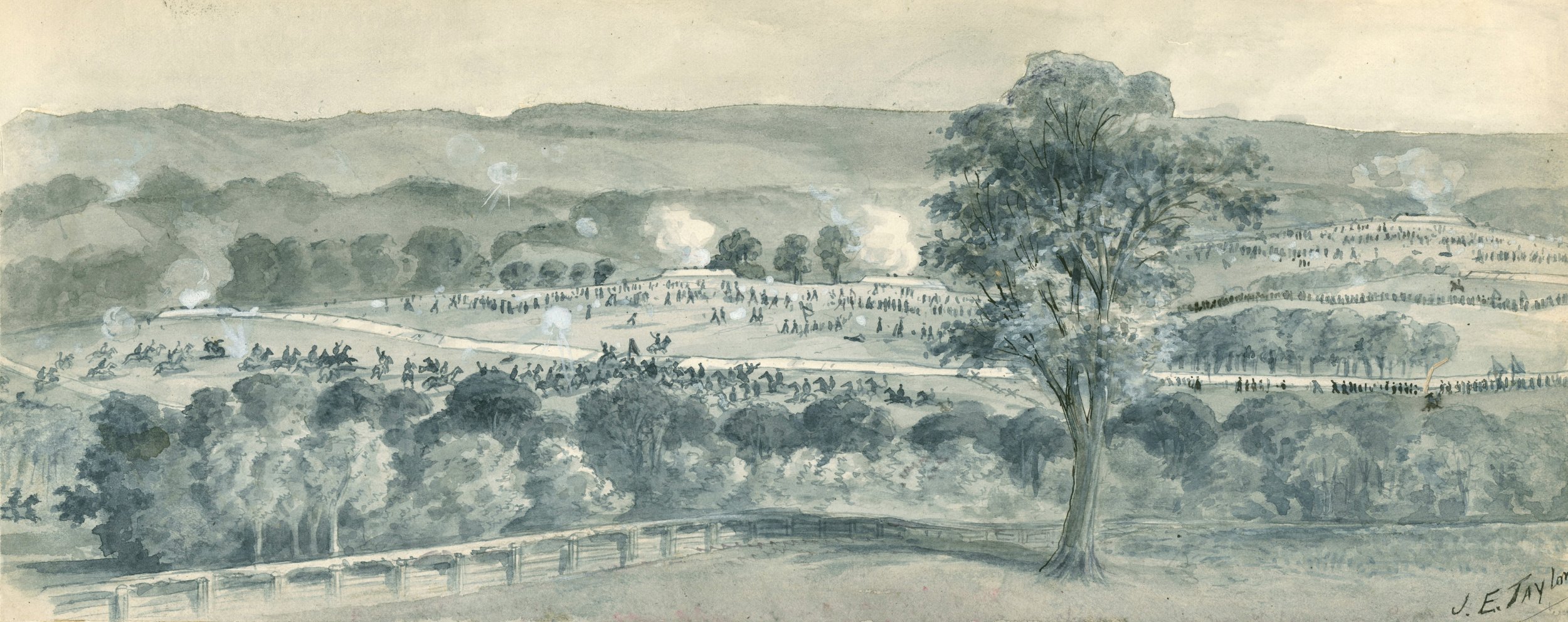
The blow fell from the flank. “A volley poured into their backs, a ringing cheer, and a furious charge into their trenches was the first warning the Confederates received of their impending calamity,” Bowen wrote. As the panic spread, the whole Union line in front went forward with a cheer, and Early’s army broke a second time in four days, “fleeing without semblance of organization, leaving fourteen hundred prisoners, sixteen cannon, and most of their wagon train” behind. The Gibraltar of the Valley had been turned.
The Dragoons Lead the Chase
Now the cavalry took up the work. Wilson’s division and all of Merritt’s except Devin’s brigade were sent around through the Luray Valley under Torbert to cut off Early’s retreat. The pursuit straight up the pike fell to Devin’s brigade, and, as Bowen tells it, the Dragoons were in the lead. They kept up the chase all night and into the next day until the enemy made a stand at Mount Jackson, where the regiment charged and routed them, gathering up a large number of stragglers and two more guns. The Luray expedition, by contrast, came to nothing: Sheridan looked for great results from it, but, Bowen records, “the incompetent and vacillating Torbert made a complete failure,” and Early’s shattered columns slipped away to fight again at Cedar Creek.
“Wilson’s cavalry, and all our division except Devin’s brigade, were sent around through the Luray Valley under Torbert, to cut off Early’s retreat. The chase on the pike was taken up by our brigade, the Dragoons in the lead, and kept up all night and part of next day, until the enemy made a stand at Mt. Jackson, where we charged and routed them.”— James R. Bowen, Regimental History of the First New York Dragoons (1900), ch. XVI, p. 240.
List of Wounded — Fisher’s Hill, Va., September 22, 1864
| Type | Name | Company | Rank |
|---|---|---|---|
| Wounded | Barnett, Robert | D | Private |
| Wounded | Harris, Thomas (also recorded as Harris, Thomas B.) | K | First Sergeant |
Sources & Further Reading
- Primary James R. Bowen, Regimental History of the First New York Dragoons (originally the 130th N.Y. Vol. Infantry) (1900), ch. XVI, “Battles of Fisher’s Hill and Woodstock Races,” pp. 239–243 — the regiment’s own historian and eyewitness. Full text: archive.org/details/regimentalhistor00bowe.
- Primary Brig. Gen. Thomas C. Devin, reports of the Valley pursuit, and Maj. Gen. P. H. Sheridan’s report of operations, in U.S. War Dept., The War of the Rebellion: Official Records of the Union and Confederate Armies, Series I, Vol. 43, Pt. 1.
- American Battlefield Trust — Battle of Fisher’s Hill: battlefields.org/learn/civil-war/battles/fishers-hill.
- National Park Service / CWSAC Battle Summary, Fisher’s Hill (VA111): nps.gov/abpp/battles/va111.htm.
Third Winchester · The Shenandoah Valley Campaign · The Audiobook
Views: 77
Explore the evidence
View this article’s connected sources and media →
About this page
This article was brought over from AlfredGibbs.com. Its preserved text, media and citations remain available for comparison.