
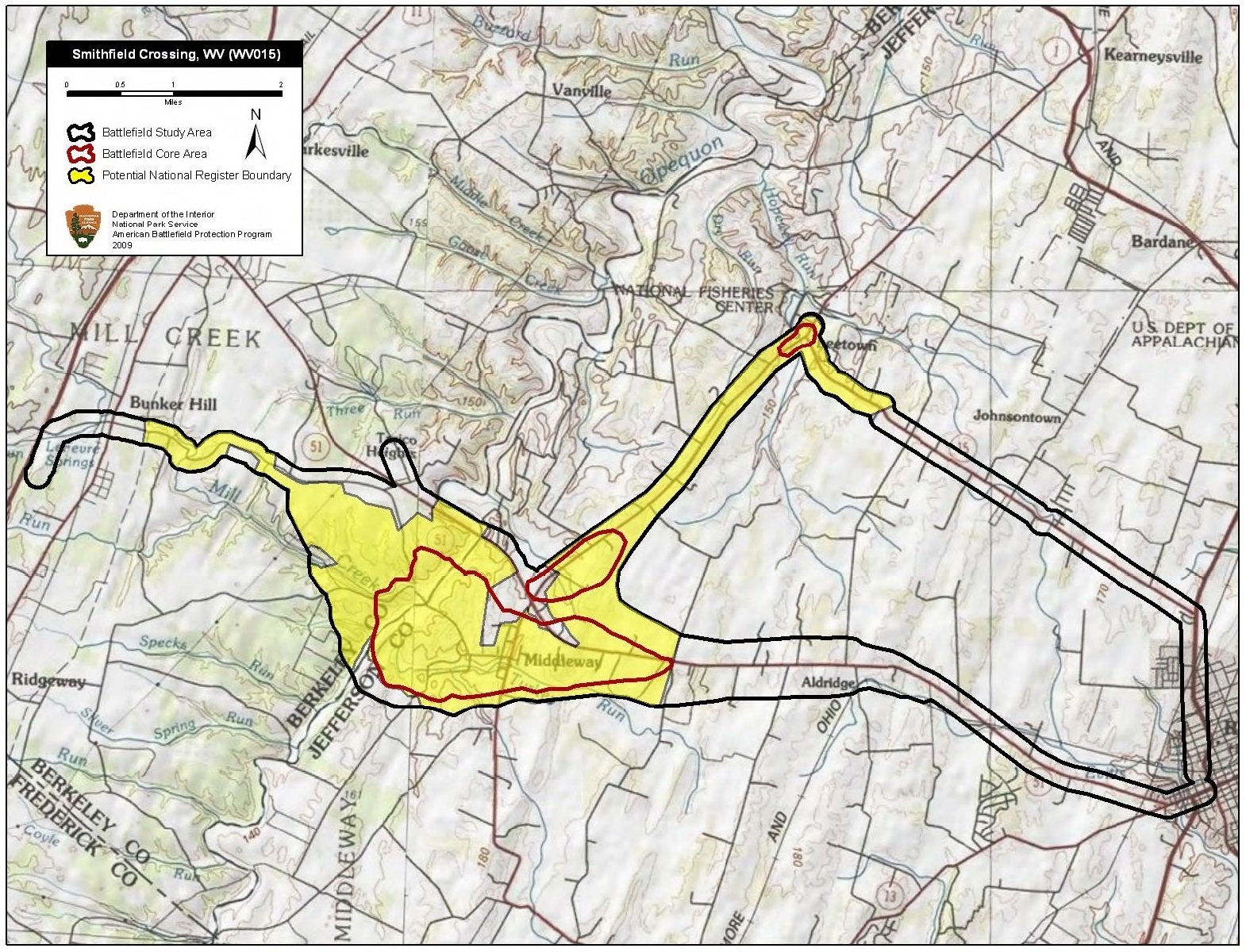
The engagements at Smithfield Crossing, fought August 28 and 29, 1864, along the Opequon Creek near the village of Smithfield (then called Middleway) in Jefferson County, were among the sharpest cavalry actions of the opening weeks of Sheridan’s Shenandoah Valley Campaign. For the First New York Dragoons — riding in the Reserve Brigade of Wesley Merritt’s First Cavalry Division under Colonel Alfred Gibbs — the two days brought a triumphant saber charge through the town on the 28th and, on the 29th, a stubborn fighting retreat in which the regiment held the center of the line and was, in the words of its own sergeant, “highly complimented” for it.
Strategic Setting
By the late summer of 1864, Lt. Gen. Jubal Early’s Confederates had been driven back into the lower Shenandoah Valley after their raid on the outskirts of Washington. Maj. Gen. Philip H. Sheridan, newly in command of the Union Army of the Shenandoah, was tasked with destroying Early’s army and stripping the Valley — the “Breadbasket of the Confederacy” — of the resources that fed the Southern war effort. Through the last days of August the two armies sparred along the Opequon, and the village of Smithfield, lying between Leetown and Charles Town, became the focus of a sharp two-day fight for control of the creek crossings.
The First Day — August 28, 1864
On the morning of Sunday, August 28, the cavalry left its camp near Harper’s Ferry and moved out toward Leetown. Near that place the advance struck the Confederate cavalry, and the First U.S. Cavalry — the “First Regulars,” brigaded alongside the Dragoons in Merritt’s Reserve Brigade — charged headlong in what Sergeant Chester B. Bowen called “a bloody hand-to-hand saber fight,” scattering the enemy horsemen. The Dragoons then swung into line, and the brigade, moving with a brigade front, drove the Confederates toward Smithfield. The graycoats tried more than once to make a stand, but each time the troopers charged and kept them on the run “through the place and across the Opequon Creek.” Eighteen Maryland prisoners of Harry Gilmor’s command were taken, every one bearing a saber cut about the head. That night the brigade encamped on the east bank, holding the bridge and the fords.
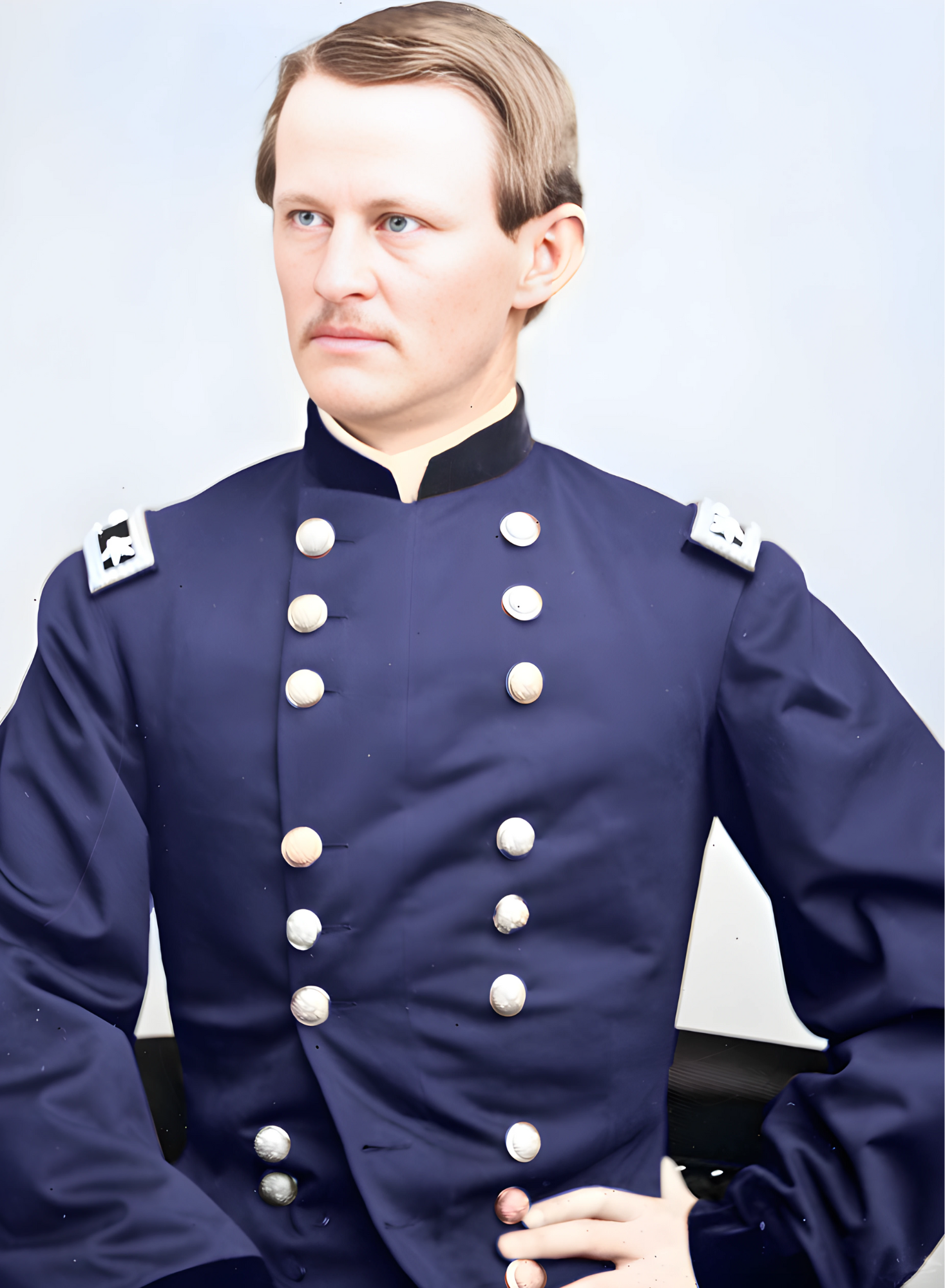
“Our regiment was highly complimented by many officers of the division for the stubbornness with which we held our line. The right gave way, and had we failed to hold the center, there would have been a panic, sure.”— Sergt. Chester B. Bowen, Co. I, First New York Dragoons, in a letter home dated August 31, 1864, describing the second day’s battle at Smithfield. Reproduced in J. R. Bowen’s regimental history.
The Second Day — August 29, 1864
The next day, Monday the 29th, brought what Sergeant Bowen called “a most desperate battle, being the twentieth since the fourth of May.” Early had pushed infantry forward to retake the crossing. Custer’s brigade crossed the creek but was quickly and hotly engaged, meeting the enemy’s cavalry and two divisions of infantry, and was driven back. The Dragoons’ brigade joined Custer’s and tried to hold the ground, but with Confederate infantry and two batteries pouring fire into their front and cavalry pressing the flanks, the troopers slowly fell back, their carbines and the supporting artillery tearing into a foe who, Bowen wrote, came on “yelling like demons — by all odds the bravest and most desperate rebs we had ever met in battle.”
Relief came when Brig. Gen. James B. Ricketts’s division of the old Sixth Corps arrived from the direction of Charles Town. “The tide was quickly turned,” Bowen recorded; with infantry against infantry and cavalry against cavalry, the Federals hustled the Confederates back through the town double-quick and recovered the field, where they were horrified to find their dead and wounded stripped of their clothing. The Dragoons held the center of the line throughout, and the regiment was singled out for praise. The cost was real: among the killed were First Lieutenant Charles B. Alford, Private Emerson M. Parker, Private Richard S. Southworth, and Private Francis H. Redmond, with others wounded or captured.
Aftermath & Significance
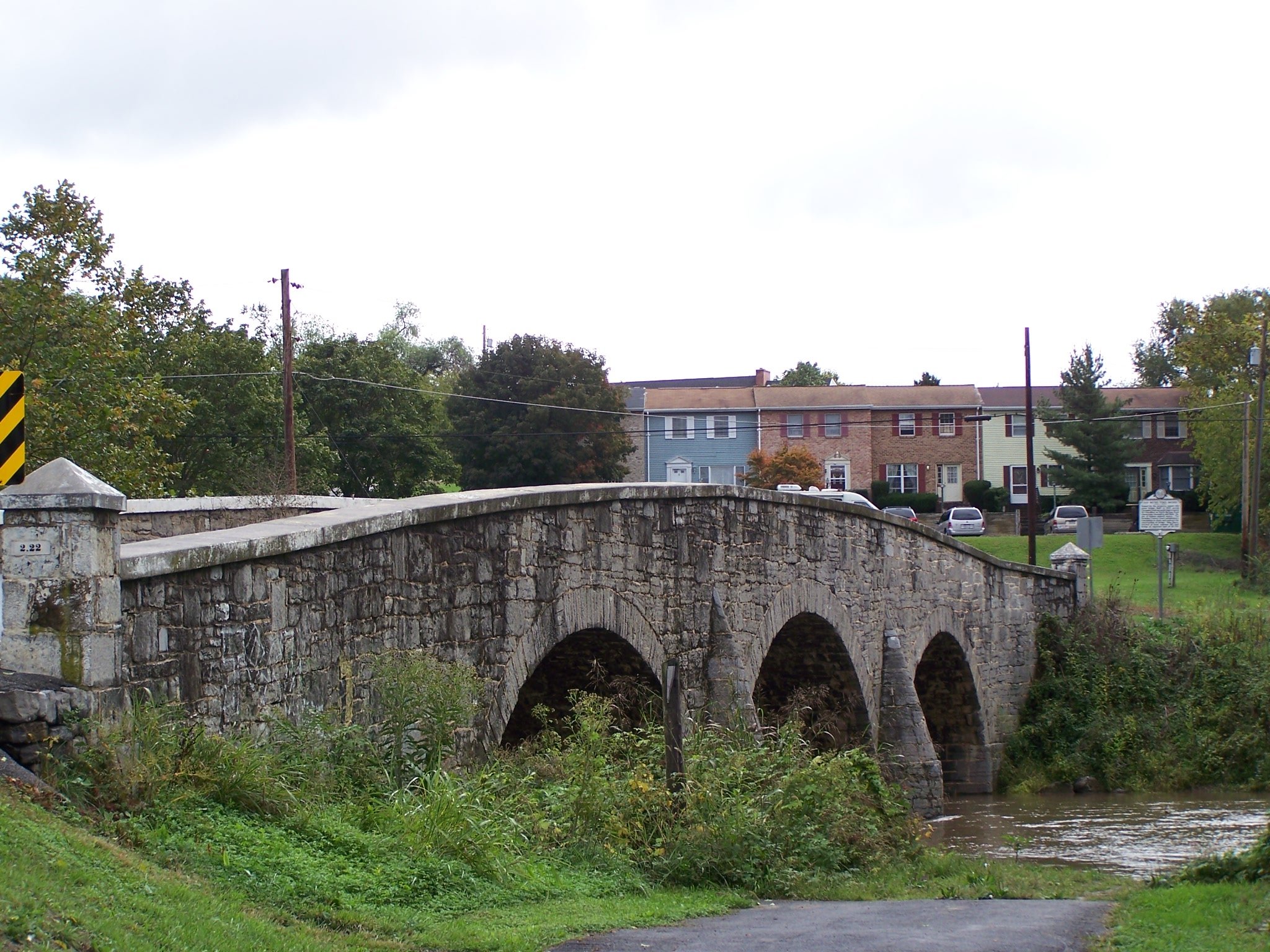
The Smithfield engagements ended without a decisive result. Sheridan, still feeling out Early’s strength and unwilling to risk his army on unfavorable ground, had repeatedly given way, and a chorus of complaint rose in the North demanding his removal. Yet General Grant, visiting the field to judge for himself, found Sheridan’s plans sound and left him with two words of instruction — “Go in.” The lull that followed Smithfield lasted some twenty days, until the great battle of Winchester, or Opequon, on September 19, where the same cavalry would help win the first sweeping Union victory of the Valley Campaign. The crossings the Dragoons had contested at Smithfield were among the last Civil War battlegrounds in what is today West Virginia.
Roll of Loss — Smithfield, Va., August 29, 1864
Named casualties of the First New York Dragoons at Smithfield, compiled from the regimental muster rolls in Bowen’s history. Each name below is confirmed in the regiment’s official record as killed, wounded, or captured at Smithfield on August 29, 1864.
| Type | Name | Company | Rank |
|---|---|---|---|
| Killed | First Lieut. Charles B. Alford | F | First Lieutenant |
| Killed | Emerson M. Parker | F | Private |
| Killed | Francis H. Redmond | B | Private |
| Killed | Richard S. Southworth | H | Private |
| Wounded | Elon D. Humphrey | D | Sergeant |
| Captured | Albert J. Dake | F | Private |
Sources & Further Reading
- Primary James R. Bowen, Regimental History of the First New York Dragoons (originally the 130th N.Y. Vol. Infantry) (1900), ch. XIV, “With Sheridan in the Shenandoah Valley” — “Two Days of Fighting at Smithfield, Va.,” pp. 219–222, reproducing Sergt. Chester B. Bowen’s verbatim letter of August 31, 1864, and the regimental muster rolls. Full text: archive.org/details/regimentalhistor00bowe.
- Primary U.S. War Dept., The War of the Rebellion: Official Records of the Union and Confederate Armies, Series I, Vol. 43, Pt. 1 (Sheridan’s and Merritt’s reports of operations in the lower Valley, August 1864).
- American Battlefield Trust — Smithfield Crossing and the 1864 Shenandoah Valley Campaign: battlefields.org/learn/civil-war/battles/smithfield-crossing.
- National Park Service / CWSAC Battle Summary, Smithfield Crossing (WV004): nps.gov/abpp/battles/wv004.htm.
- American Battlefield Protection Program, CWSAC Report Update and Resurvey: Individual Battlefield Profiles (2017), and the Middleway Conservancy, on the preservation of the Smithfield Crossing battlefield.
Third Winchester · The Shenandoah Valley Campaign · The Audiobook
Views: 401
Explore the evidence
View this article’s connected sources and media →
About this page
This article was brought over from AlfredGibbs.com. Its preserved text, media and citations remain available for comparison.