Table of Contents

Beaver Dam Station. Va., May 9, 1864

(UPDATED 02/2026)

The action at Beaver Dam Station on May 9, 1864, formed part of Union Major General Philip H. Sheridan’s independent cavalry operations during the Overland Campaign of the American Civil War. Though often described as a small engagement rather than a formally designated battle, the encounter represented a significant operational success for Union cavalry forces tasked with disrupting Confederate logistics, communications, and transportation networks in central Virginia. Taking place in Hanover County, the action involved Union cavalry striking Confederate resources along critical rail lines supporting General Robert E. Lee’s Army of Northern Virginia. Confederate cavalry forces operating within the broader command structure of Major General Fitzhugh Lee attempted to respond but were unable to prevent the destruction inflicted by Sheridan’s raiding column.

Prelude to the Action

In early May 1864, Sheridan sought to demonstrate the independent striking power of Union cavalry by targeting Confederate infrastructure rather than remaining tied to traditional screening roles. As noted in Bowen’s regimental history, Sheridan’s orders emphasized the destruction of railroads, supply depots, and communication lines in order to weaken Confederate operational capacity during the opening phase of Lieutenant General Ulysses S. Grant’s Overland Campaign (Bowen, 1900, p. 269).

Supported by experienced commanders including Brigadier General George A. Custer, Sheridan advanced toward Beaver Dam Station, a location of logistical importance along the Virginia Central Railroad. The objective was clear: damage Confederate supply distribution while forcing enemy cavalry to react defensively.

The Engagement at Beaver Dam Station

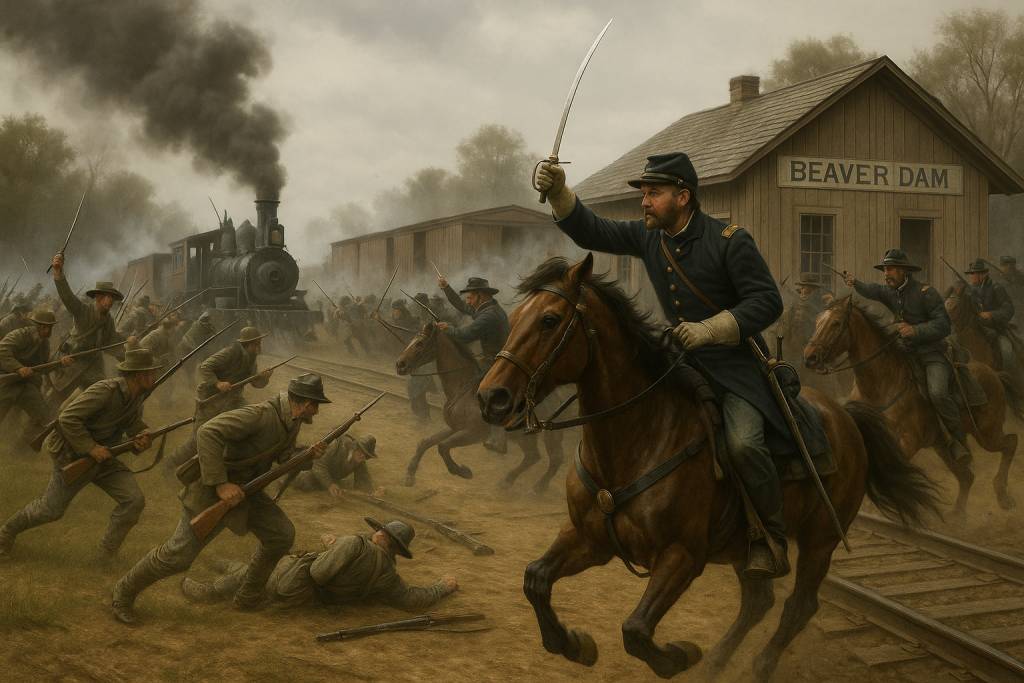
Sheridan’s cavalry advanced rapidly in column formation and struck the depot and surrounding infrastructure with speed and coordination. According to Bowen, Union forces captured two trains of cars and released approximately four hundred Union prisoners who had been held by Confederate authorities (Bowen, 1900, p. 269). The seizure of rolling stock and supplies temporarily disrupted Confederate transportation along the rail line.

Union cavalrymen destroyed portions of railroad track and burned large quantities of Confederate provisions, including food supplies and medical stores intended for the Army of Northern Virginia. Confederate cavalry elements attempted to contest the operation, and Bowen records that enemy forces “commenced an attack, firing on my pickets,” though these efforts failed to halt the Union raid (Bowen, 1900, p. 270).

Rather than a prolonged pitched battle, the action unfolded as a rapid strike characteristic of evolving cavalry doctrine. Mobility, surprise, and coordinated demolition efforts enabled Sheridan’s forces to achieve their objectives before Confederate units could mount a sustained counterattack.

Operational Impact and Significance

While limited in scale compared to major battlefield engagements, the action at Beaver Dam Station carried operational significance. The destruction of supplies — including approximately 200,000 pounds of bacon along with flour, meal, and medical stores, imposed temporary logistical strain on Confederate forces (Bowen, 1900, p. 270). Such disruptions forced Confederate commanders to divert resources toward repair and redistribution, complicating supply operations during a critical phase of the campaign.

Modern scholarship emphasizes that cavalry raids of this type rarely produced decisive strategic outcomes on their own; however, they contributed cumulatively to operational pressure on Confederate infrastructure. Sheridan’s success at Beaver Dam Station demonstrated the increasing effectiveness of Union cavalry as an offensive arm capable of independent action deep behind enemy lines.

Cavalry Warfare and Mobility

The engagement illustrates the broader transformation of cavalry roles during the later stages of the Civil War. No longer limited to reconnaissance and screening duties, Union cavalry units increasingly operated as mobile strike forces aimed at disrupting logistics and communications. Sheridan’s raid exemplified this shift, combining aggressive maneuver with targeted destruction of transportation networks.

Bowen’s account highlights how speed and coordination allowed Union forces to penetrate Confederate rear areas, seize resources, and withdraw before concentrated resistance could be organized (Bowen, 1900, pp. 269–270). Such operations foreshadowed later cavalry campaigns that emphasized maneuver warfare and deep operational reach.

Final Assessment

The action at Beaver Dam Station demonstrates how smaller-scale engagements could produce meaningful operational effects within the broader context of the Overland Campaign. By damaging rail infrastructure, destroying supplies, and freeing captured Union soldiers, Sheridan’s cavalry imposed immediate logistical challenges on Confederate forces while reinforcing the growing reputation of Union cavalry as an independent offensive force.

Though not a decisive battle in the traditional sense, the engagement remains a valuable example of how targeted raids contributed to the cumulative strain placed upon Confederate resources during the later years of the war.

References

Bowen, J. R. (1900). Regimental history of the First New York Dragoons.

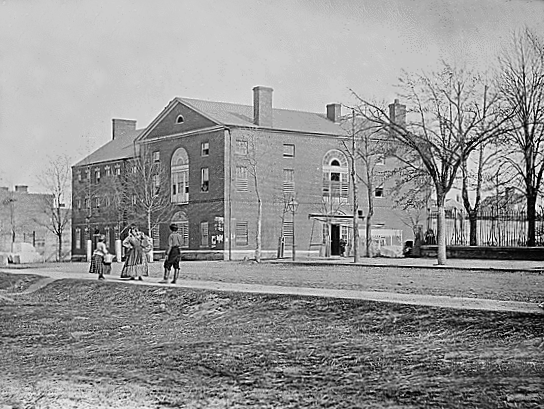
I have enhanced the photo of the former Old Brick Capitol building serving as a prison during the American Civil War, 1861-1865. Click the image to learn more about the prison, and to see the original image that I used for this photo.
Researcher’s Note:
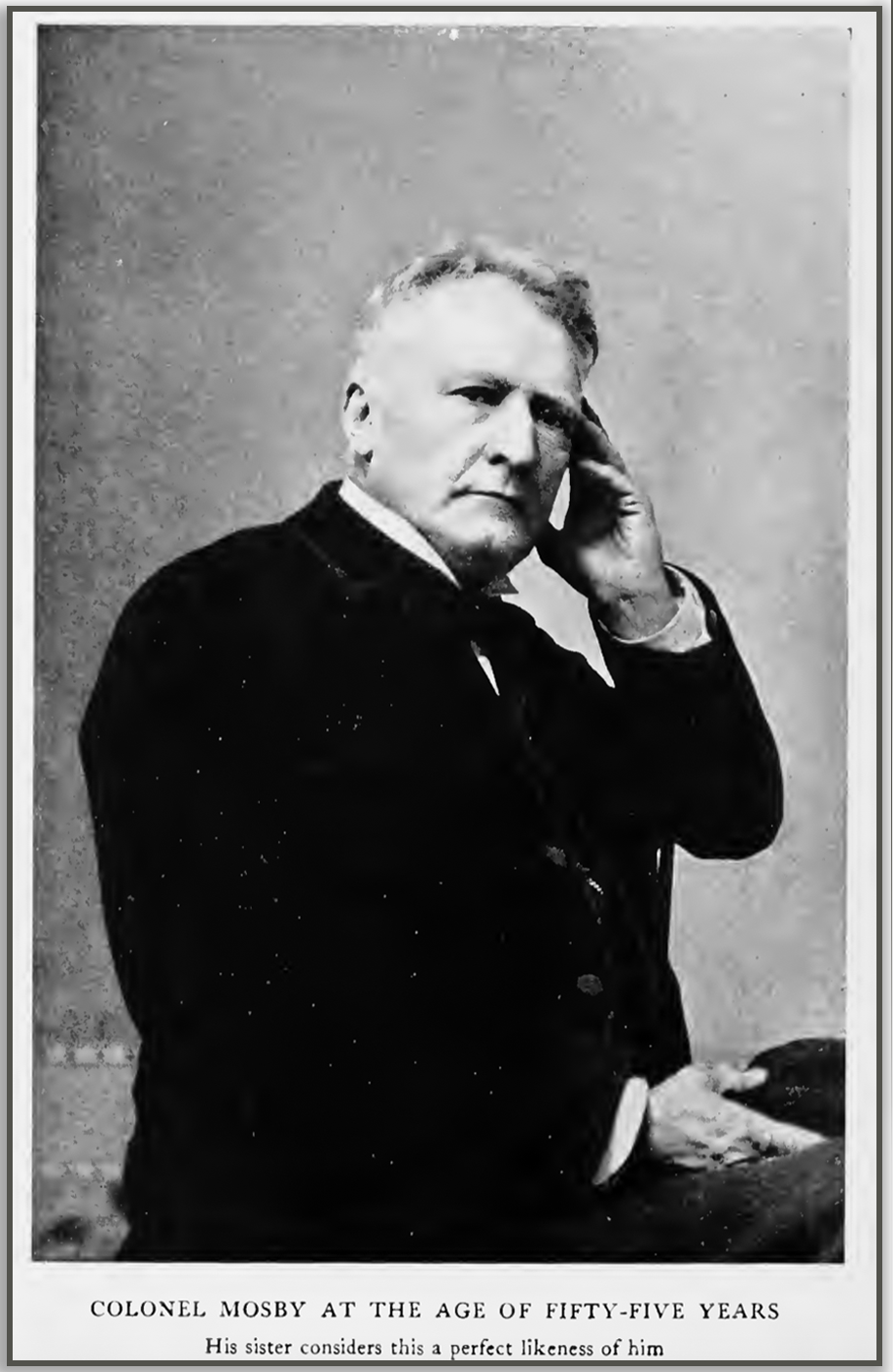
This is an enhanced and colorized image of John Singleton Mosby (December 6, 1833 – May 30, 1916), also known by his nickname “Gray Ghost”, was an American military officer who was a Confederate cavalry commander in the American Civil War. This image is of Mosby at the age of 55, and I have the original photograph linked to this image.

John S. Mosby’s capture on July 20, 1862, near the Beaverdam Depot in Hanover County, Virginia, marked a pivotal moment in his wartime experiences. While awaiting a train, Mosby fell into the hands of Union cavalry, underscoring the inherent risks faced by operatives engaged in clandestine activities behind enemy lines.

Subsequently imprisoned in the notorious Old Capitol Prison in Washington, D.C., Mosby endured ten days of captivity before being exchanged as part of the war’s inaugural prisoner exchange. His brief confinement, however, did not deter him from continuing his clandestine operations and intelligence gathering on behalf of the Confederate cause.

Mosby’s resilience in the face of adversity and his unwavering commitment to the Confederate effort exemplify the courage and dedication of individuals engaged in unconventional warfare tactics during the American Civil War. His capture and subsequent exchange serve as a testament to the fluid nature of wartime espionage and the enduring spirit of those who risked everything in service of their cause.

List of Captured, Wounded, Killed, or Deserted at Beaver Dam Station, Va.

TypeNameCompanyRank
WoundedWilliam Kramer Bio LinkedKFirst Sergeant
CapturedGeorge W. Lewis Bio LinkedKPrivate
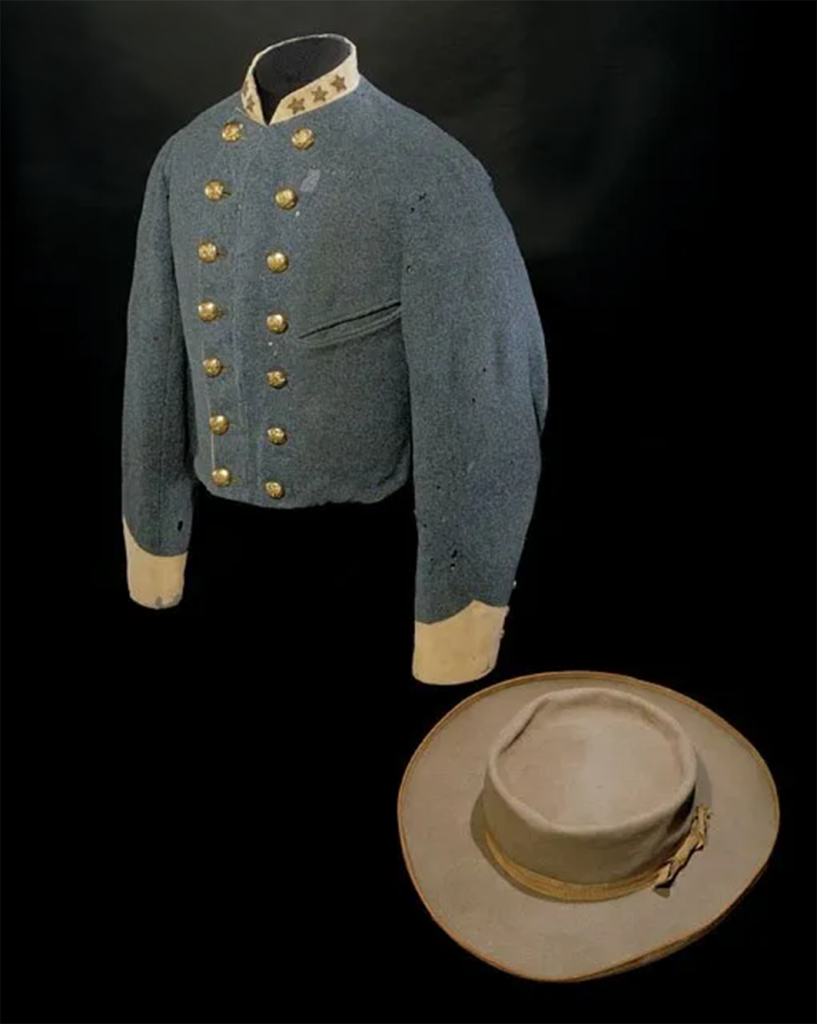
The original uniform for General John S. Mosby.

Views: 202

Explore the evidence

View this article’s connected sources and media →

About this page

This article was brought over from AlfredGibbs.com. Its preserved text, media and citations remain available for comparison.