
In the summer of 1862 Captain Alfred Gibbs was free again. He had been exchanged after a year on parole, and New York was raising regiments. On 12 August seven men of the city wrote to the Secretary of War, Edwin M. Stanton, and asked that Gibbs be given “a duty befitting his experience and services.” The first to sign was George Opdyke, the Mayor of New York.
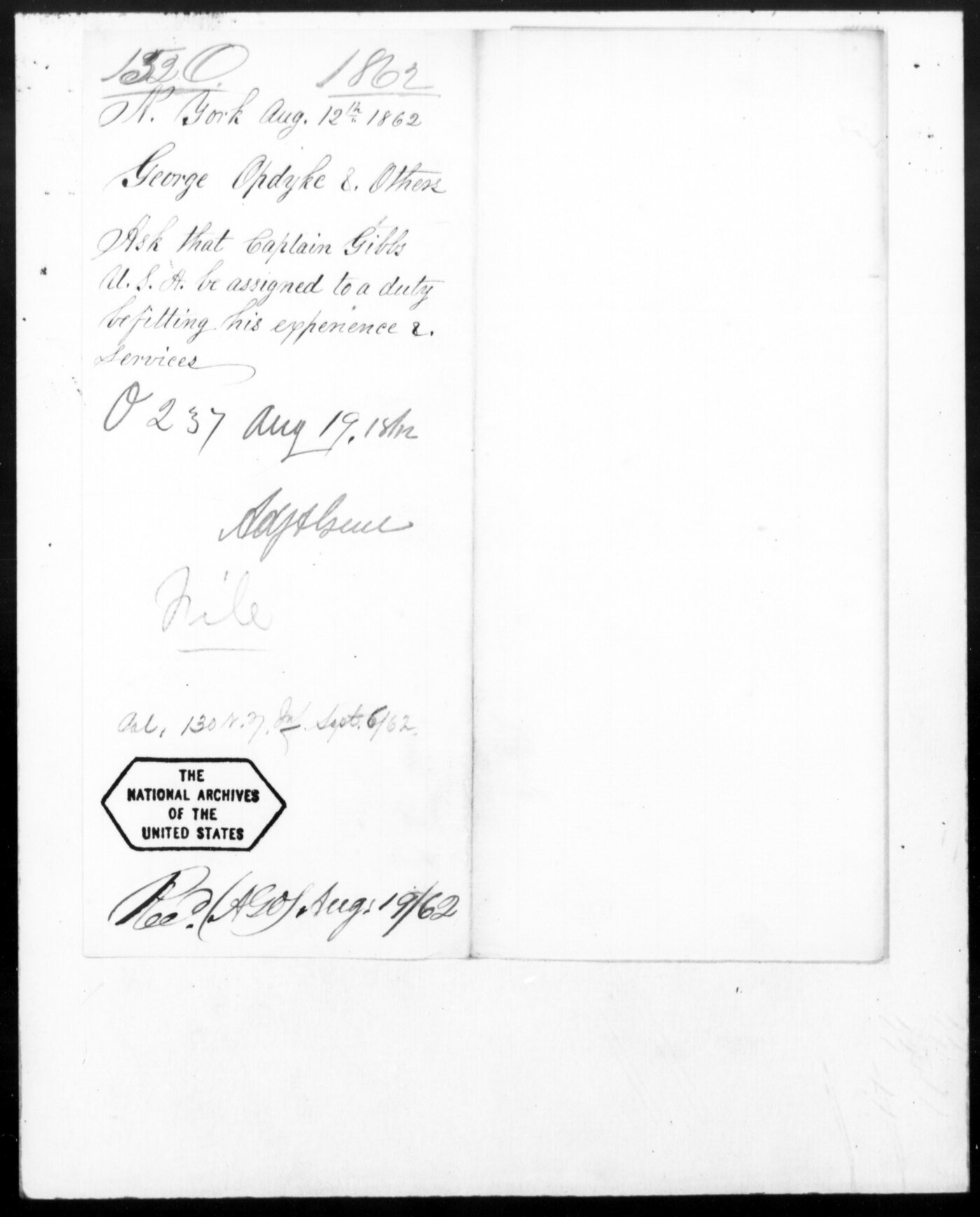
The letter went to the Adjutant General on 19 August. A clerk later wrote on its cover how the matter ended: “Col, 130 N.Y. Inf. Sept. 6/62.” On the sixth of September Gibbs was mustered in as colonel of the 130th New York, the regiment that became the First New York Dragoons.
Corrected 12 November 2026: the clerk’s docket on the cover reads “Col, 130 N.Y. Inf. Sept. 6/62,” not “Col. 130 N.Y. Vols” as this page first gave it. Read again from National Archives image 1 of 6.
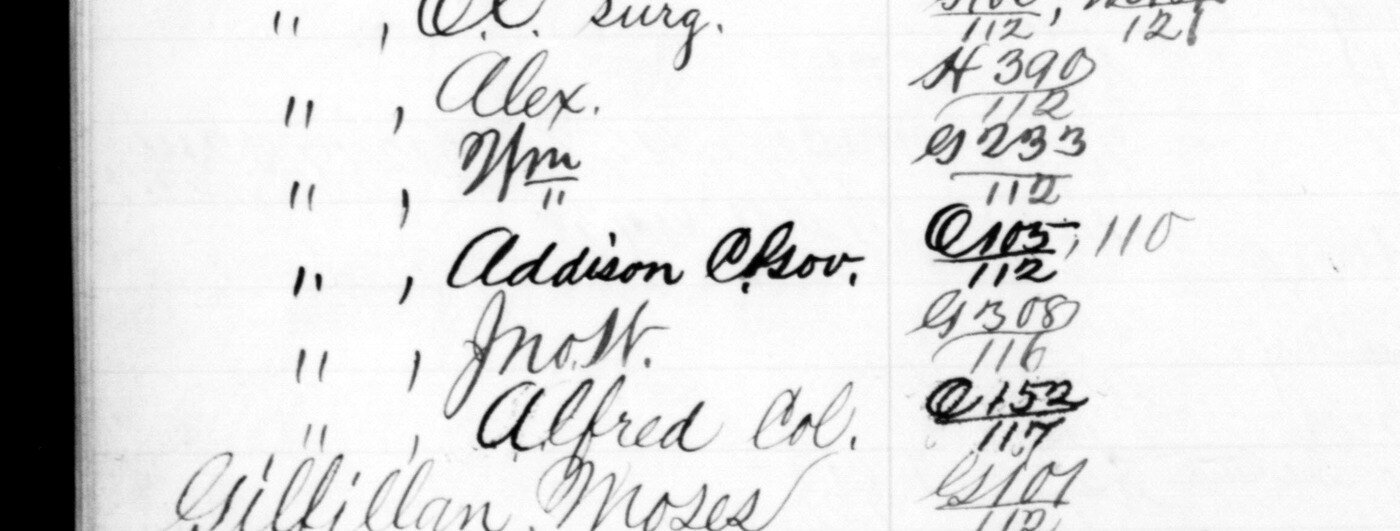
The National Archives filed this letter under its first signer, not under Gibbs, so a search on his name does not find it. It was found on 2 November 2026 by searching the Opdyke files after the Secretary of War’s 1863 register led to the mayor (below).
Who signed
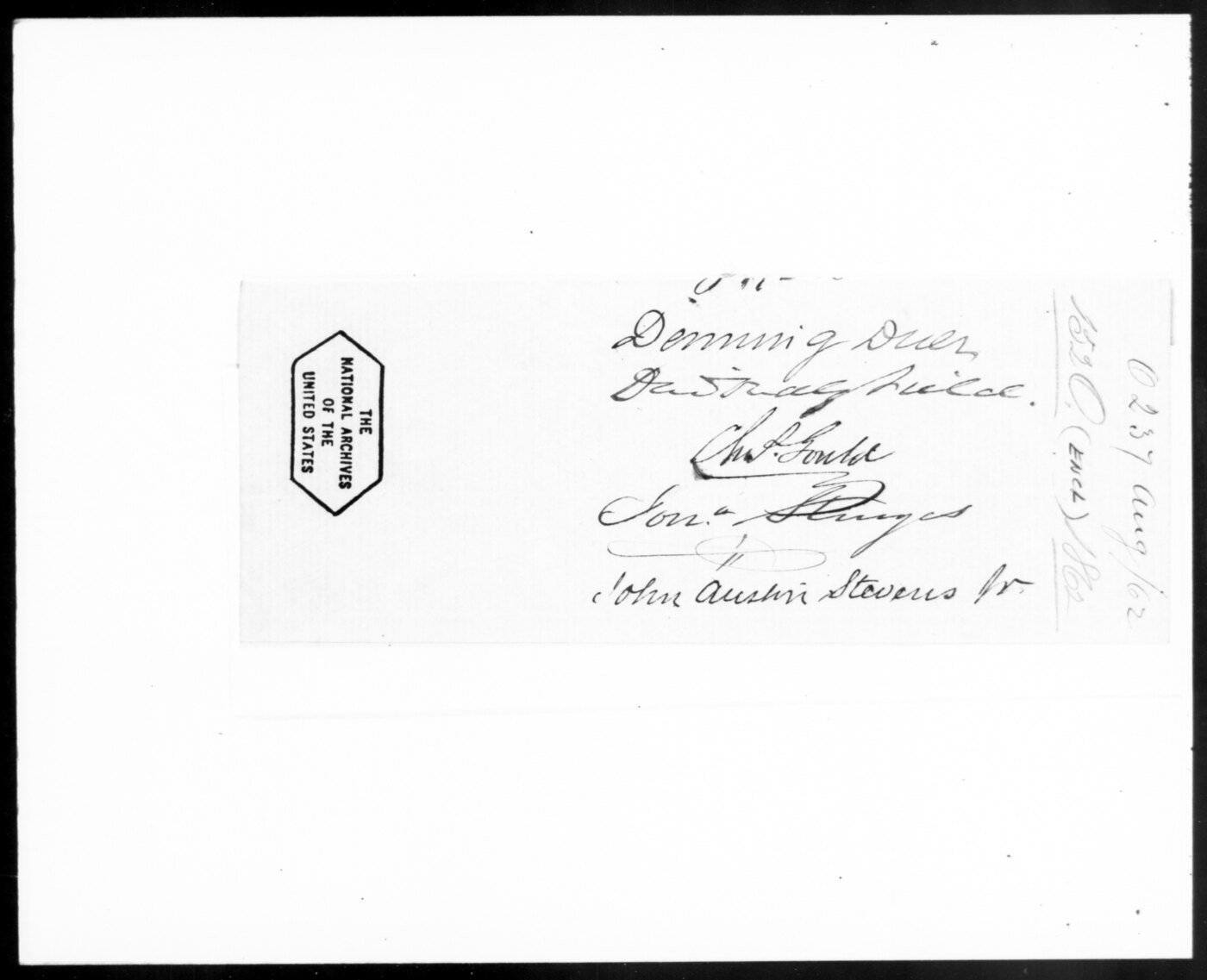
The signatures read George Opdyke, Jno. A. Stevens, Denning Duer, one name not yet read, Chs. Gould, Jona. Sturges and John Austin Stevens Jr. Five months later, John A. Stevens Jr., Jonathan Sturges and Denning Duer were among the first members of the Union League Club, which was founded at the house of Alfred’s brother Wolcott Gibbs; George Gibbs signed with them (Bellows, 1879, p. 39). Opdyke was a member too. The letter shows the family’s New York circle at work for Alfred.
How to read it
This is a letter of support written by his friends, not the testimony of witnesses. Its account of the surrender at San Augustine Springs in July 1861 is the story as his friends told it a year later: that Gibbs reached the springs, took the cavalry and the rear guard, and was watering his men when Major Lynde surrendered “without his knowledge or concurrence.” Read it beside the reports of the men who were there.
1862-08-12 · George Opdyke and others, New York, to the Secretary of War
152 O 1862
N. York Aug. 12th 1862
George Opdyke & Others
Ask that Captain Gibbs U.S.A. be assigned to a duty befitting his experience & services
O 237 Aug 19, 1862
Adjt Genl
File
Col, 130 N.Y. Inf. Sept. 6/62
Recd (AGO) Aug. 19/62
Letter
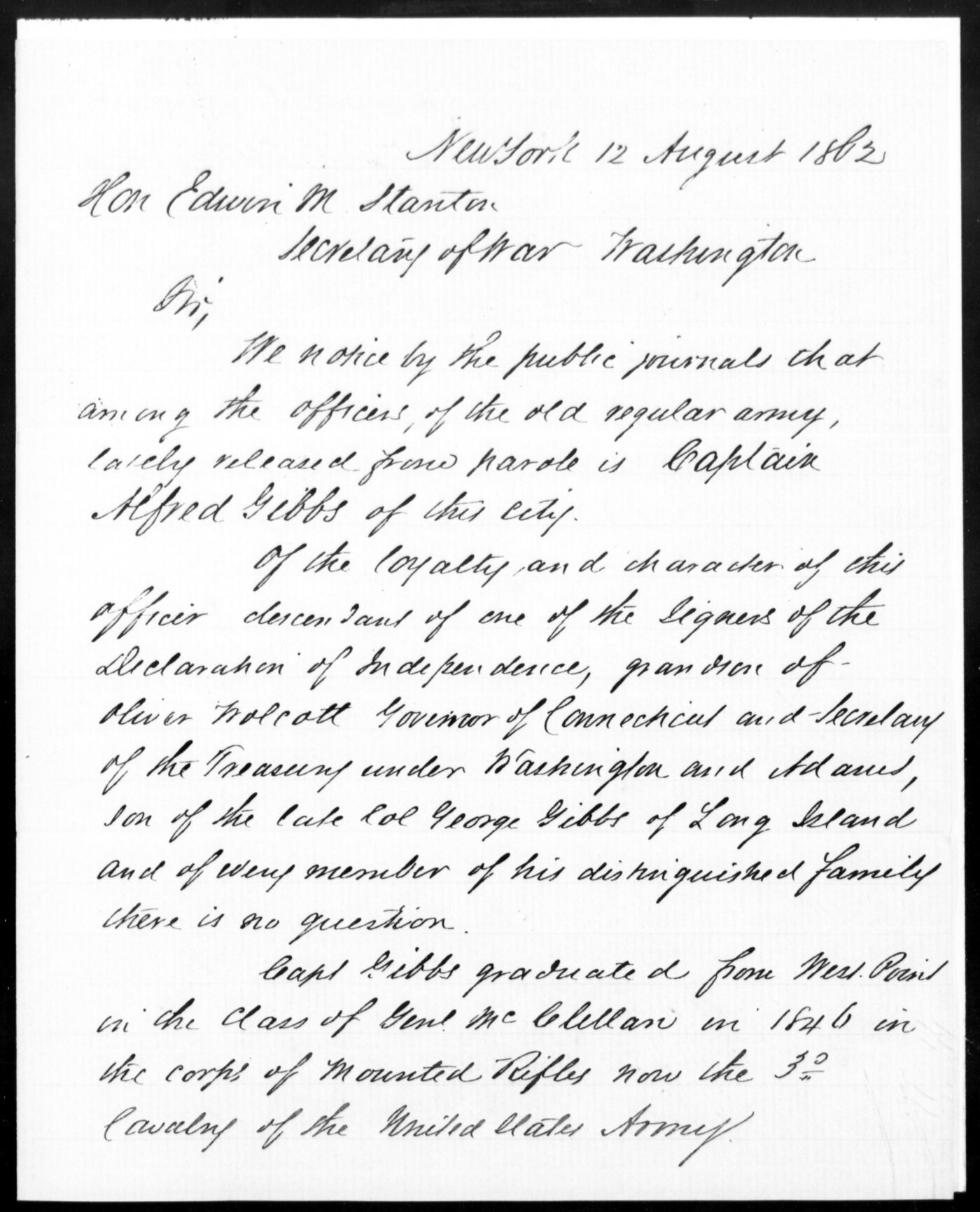
New York 12 August 1862
Hon Edwin M Stanton
Secretary of War Washington
Sir;
We notice by the public journals that among the officers of the old regular army, lately released from parole is Captain Alfred Gibbs of this city.
Of the loyalty and character of this officer descendant of one of the Signers of the Declaration of Independence, grandson of Oliver Wolcott Governor of Connecticut and Secretary of the Treasury under Washington and Adams, son of the late Col George Gibbs of Long Island and of every member of his distinguished family there is no question.
Capt Gibbs graduated from West Point in the class of Genl McClellan in 1846 in the corps of Mounted Rifles now the 3d Cavalry of the United States Army.
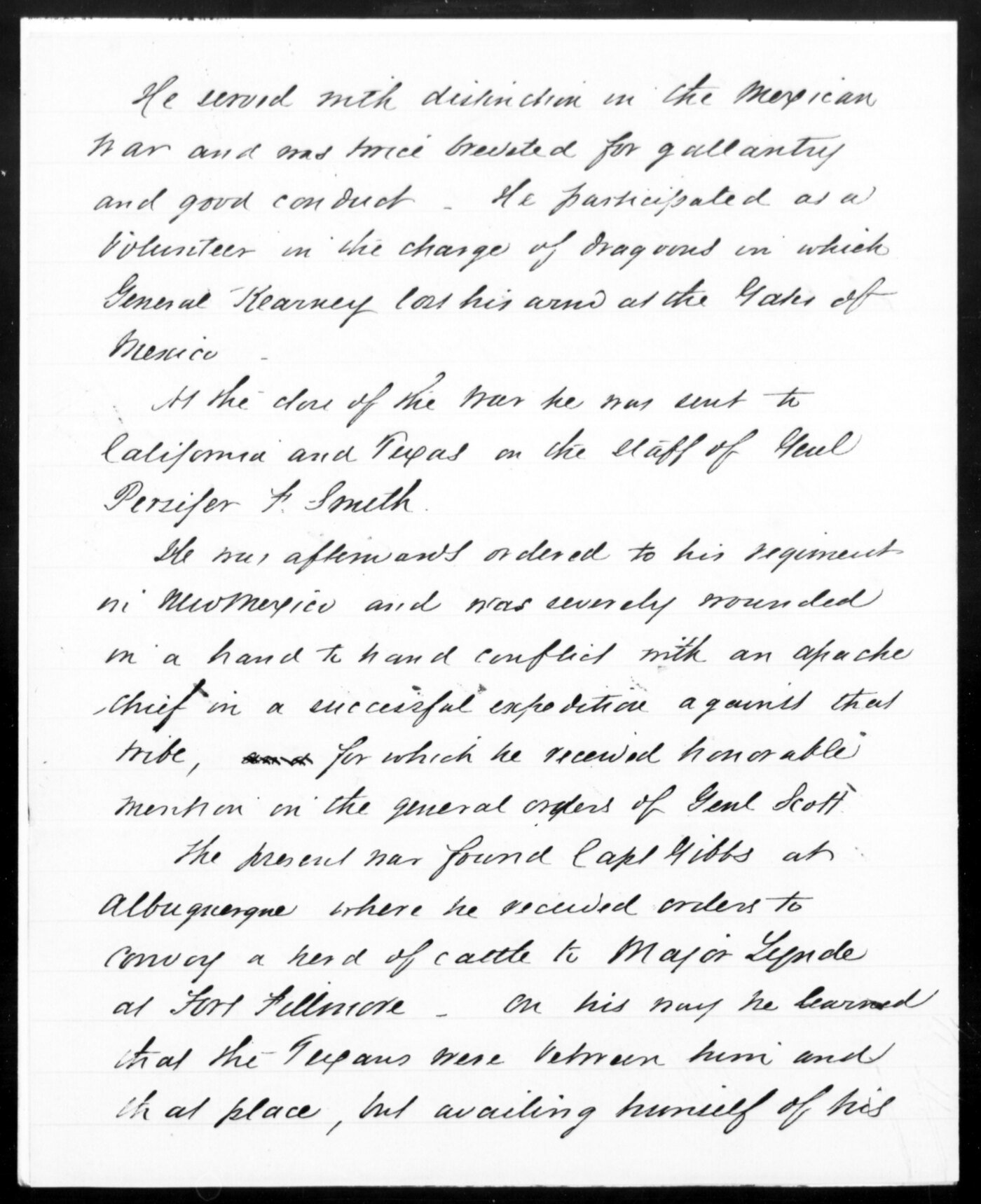
He served with distinction in the Mexican War and was twice brevetted for gallantry and good conduct. He participated as a Volunteer in the charge of Dragoons in which General Kearney lost his arm at the Gates of Mexico.
At the close of the War he was sent to California and Texas on the staff of Genl Persifor F. Smith.
He was afterwards ordered to his regiment in New Mexico and was severely wounded in a hand to hand conflict with an Apache chief in a successful expedition against that tribe, for which he received honorable mention in the general orders of Genl Scott.
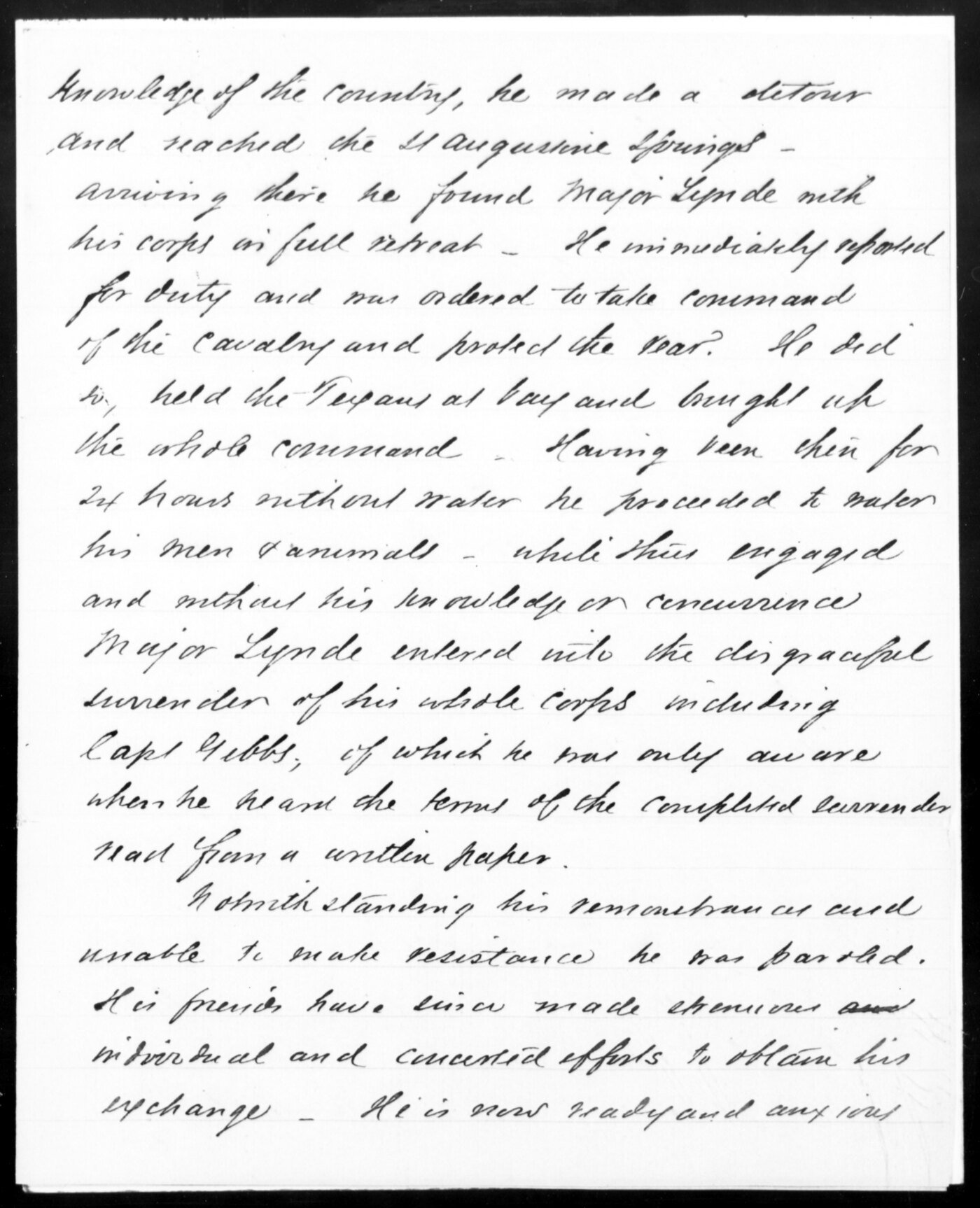
The present war found Capt Gibbs at Albuquerque where he received orders to convoy a herd of cattle to Major Lynde at Fort Fillmore. On his way he learned that the Texans were between him and that place, but availing himself of his knowledge of the country, he made a detour and reached the St Augustine Springs. Arriving there he found Major Lynde with his corps in full retreat. He immediately reported for duty and was ordered to take command of the cavalry and protect the rear. He did so, held the Texans at bay and brought up the whole command. Having been then for 24 hours without water he proceeded to water his men & animals. While thus engaged and without his knowledge or concurrence Major Lynde entered into the disgraceful surrender of his whole corps including Capt Gibbs, of which he was only aware when he heard the terms of the completed surrender read from a written paper.
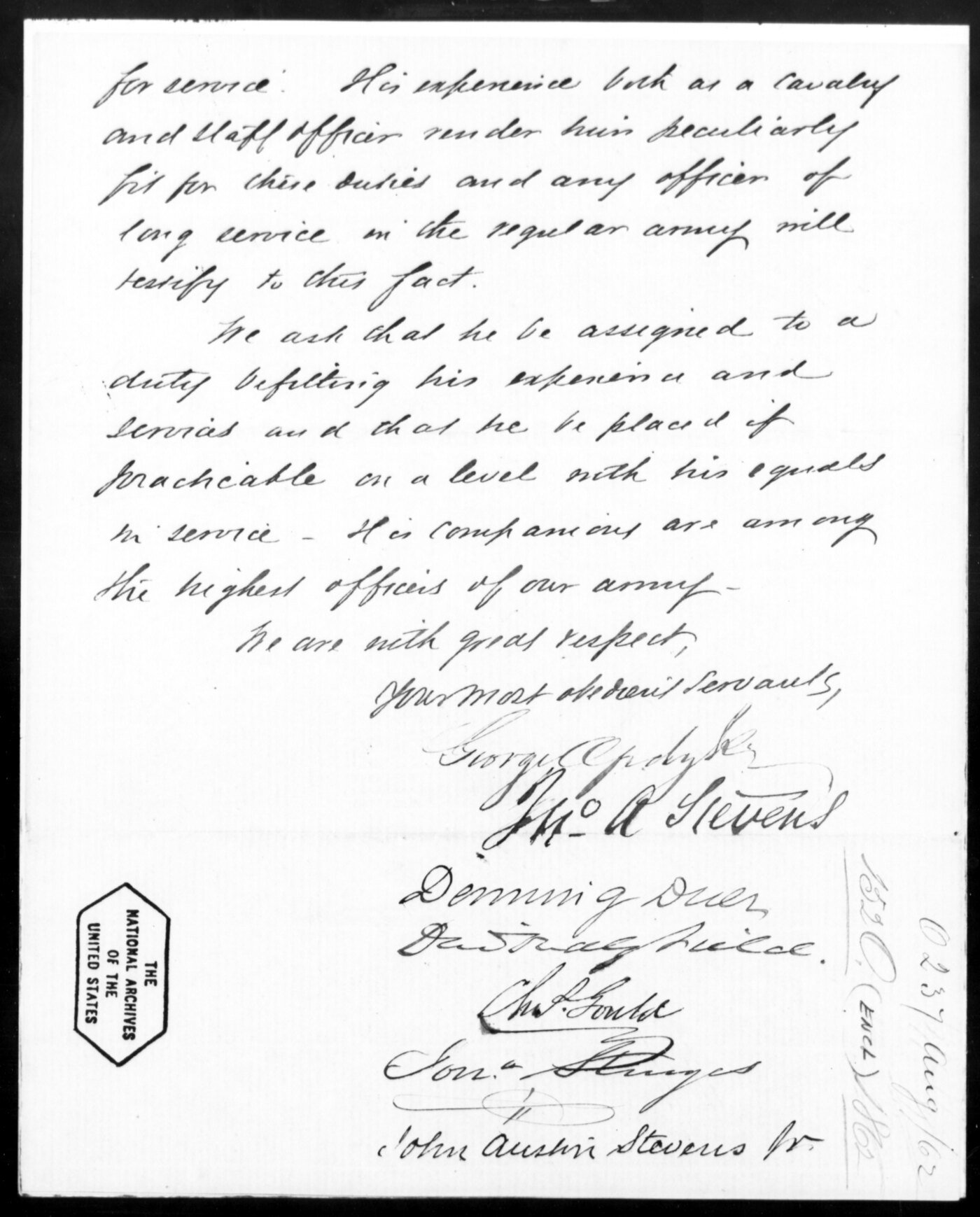
Notwithstanding his remonstrances and unable to make resistance he was paroled. His friends have since made strenuous individual and concerted efforts to obtain his exchange. He is now ready and anxious for service. His experience both as a cavalry and staff officer render him peculiarly fit for these duties and any officer of long service in the regular army will testify to this fact.
We ask that he be assigned to a duty befitting his experience and services and that he be placed if practicable on a level with his equals in service. His companions are among the highest officers of our army.
We are with great respect,
Your most obedient servants,
George Opdyke
Jno. A. Stevens
Denning Duer
[signature not read]
Chs. Gould
Jona. Sturges
John Austin Stevens Jr.
U.S. National Archives, Record Group 94, Records of the Adjutant General’s Office; Letters Received, 1862, file O152. National Archives Identifier 85602615. catalog.archives.gov/id/85602615. Transcribed from the National Archives scans, 2 November 2026. Spelling as in the original; one signature not yet read.
The sequel: June 1863
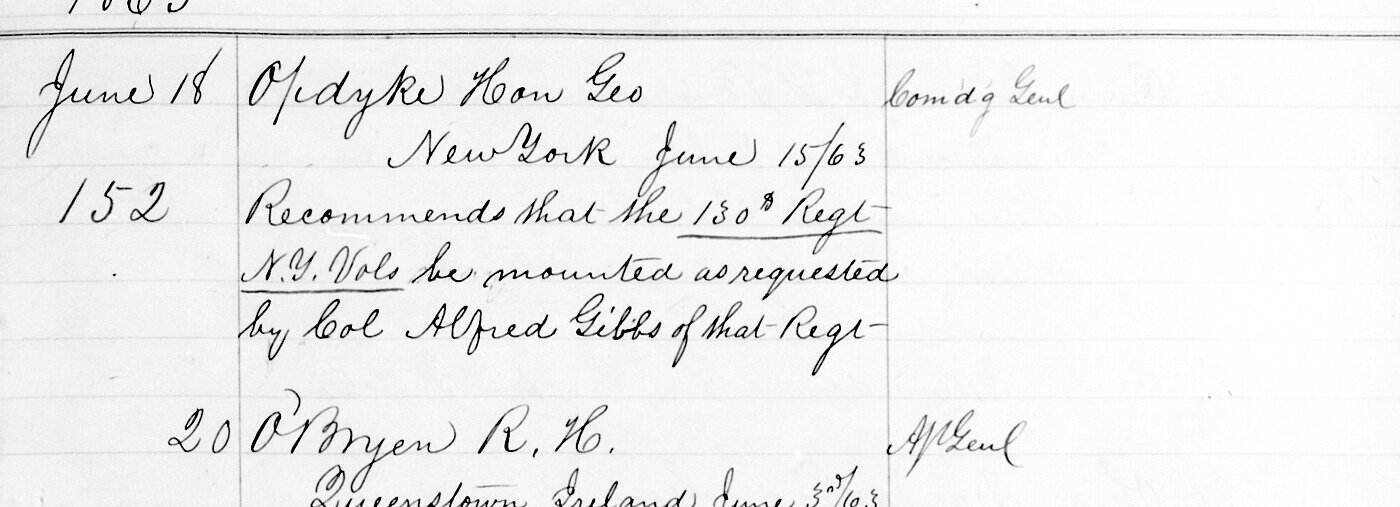
Ten months later the mayor wrote again. The Secretary of War’s register of letters received records it as entry O152, received 18 June 1863: Opdyke, writing from New York on 15 June, “Recommends that the 130th Regt N.Y. Vols be mounted as requested by Col Alfred Gibbs of that Regt.” The War Department sent it on to the Commanding General. Six days later the regiment was called into line to see how many men could furnish their own horses, and by the end of July the 130th New York had been made a regiment of cavalry. The register entry is the record, made at the time, that the request came from Gibbs himself. The letter it describes went to the General-in-Chief’s office and has not been found online.
References
Bellows, H. W. (1879). Historical sketch of the Union League Club of New York: Its origin, organization, and work, 1863-1879. Union League Club. https://archive.org/details/historicalsketch00bell
Opdyke, G., Stevens, J. A., Duer, D., Gould, C., Sturges, J., & Stevens, J. A., Jr. (1862, August 12). [Letter to E. M. Stanton asking a command for Capt. Alfred Gibbs] (File O152, 1862). Letters Received, Records of the Adjutant General’s Office, Record Group 94. National Archives and Records Administration. https://catalog.archives.gov/id/85602615
U.S. War Department, Office of the Secretary of War. (1863). Registers of letters received, vol. 117, May 1-September 30, 1863 (M-Z) (Microcopy M22, roll 107). Record Group 107. National Archives and Records Administration. https://catalog.archives.gov/id/295011243
U.S. War Department, Office of the Secretary of War. (1863). Name and subject indexes to registers of letters received, vol. 3 (1863, A-L) (Microcopy M495, roll 4). Record Group 107. National Archives and Records Administration. https://catalog.archives.gov/id/292793433
Views: 2
Explore the evidence
View this article’s connected sources and media →
About this page
This article was brought over from AlfredGibbs.com. Its preserved text, media and citations remain available for comparison.