
John Watts of Angelica, New York, enlisted in Company G of the regiment that became the First New York Dragoons, originally the 130th New York Volunteer Infantry, in August 1862, at the age of 29. He served through to the close of the war and mustered out with the regiment in 1865.
The Service Record
Enlisted: August 1862, at Angelica, N.Y.; age 29.
Company: Company G, 130th New York Volunteers → First New York Dragoons.
Rank: Private.
Mustered out: June 30, 1865 — Clouds Mills, Va.
Source: New York Adjutant-General’s register of the First New York Dragoons; Bowen, J. R. (1900). Regimental History of the First New York Dragoons.
The Record & the County History
The regiment’s own muster roll and the county history that remembered him, shown side by side.
From the Regimental Register
The regiment kept its own account of every man; his entry in the muster roll, printed in Bowen’s history, is reproduced below.
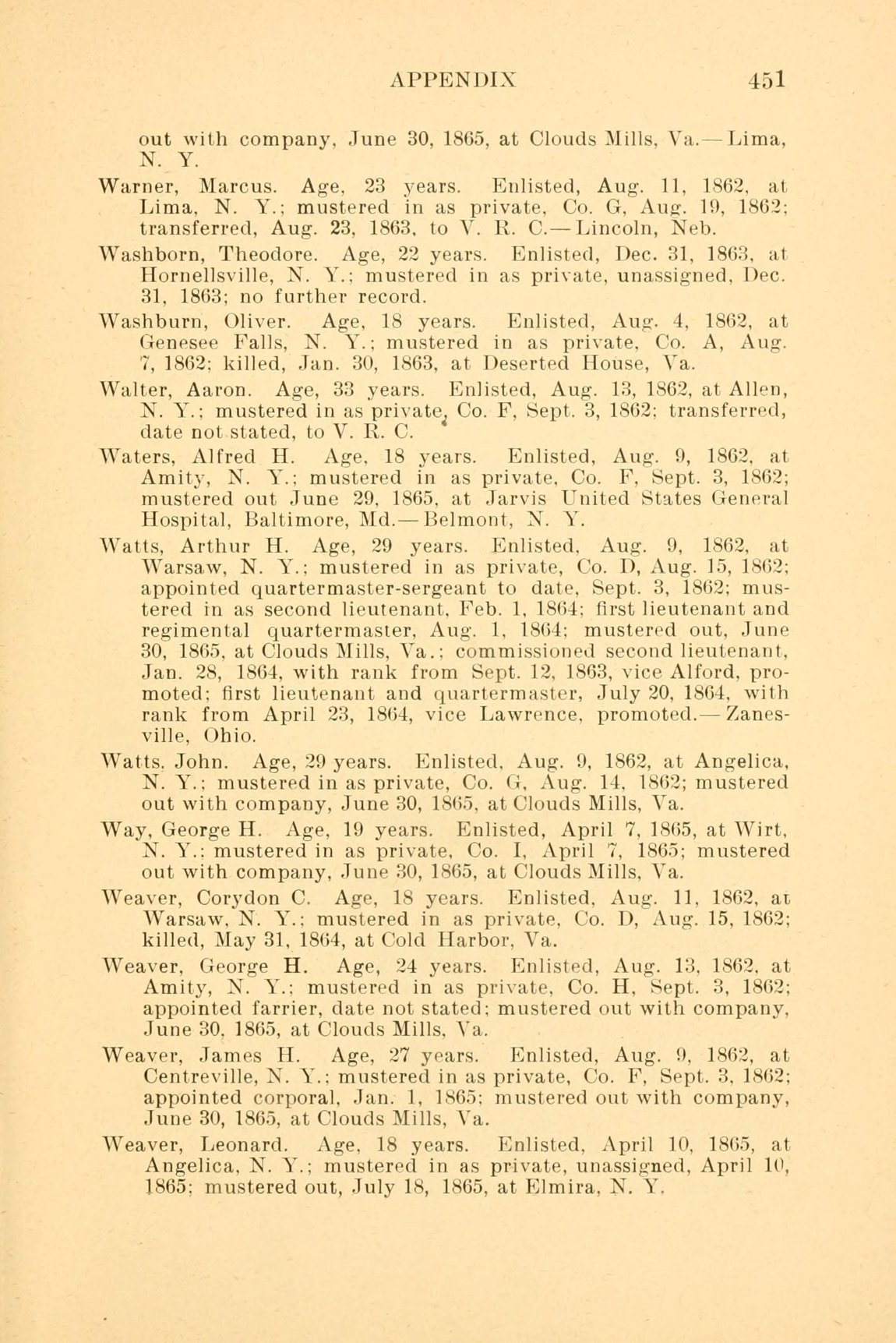
“John Watts. Mustered in as Private, Co. G, Aug. 14, 1862; mustered out with company, June 30, at Clouds Mills, Va.”
Verbatim from the roster of the First New York Dragoons in the New York Adjutant-General’s report. The page reproduced above is from Bowen, J. R. (1900). Regimental History of the First New York Dragoons (originally the 130th N.Y. Vol. Infantry) (p. 451). Internet Archive. archive.org/details/regimentalhistor00bowe
In the County Histories
The county histories compiled within twenty years of the war named the men who went, and often recorded what became of them. His name appears on the page reproduced below.
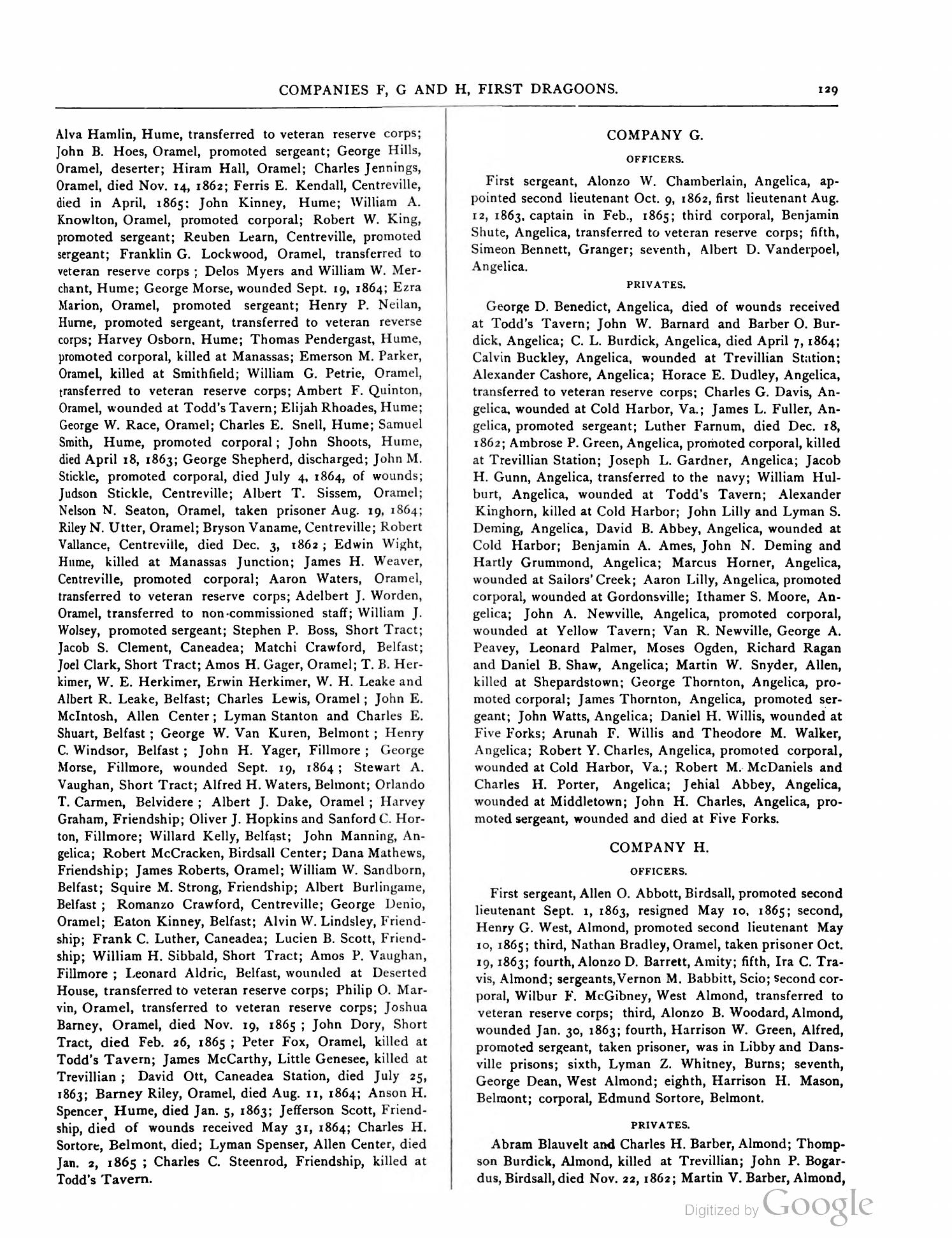
“John Watts, Angelica”
Source. F. W. Beers & Co. (1879). History of Allegany County, N.Y. (p. 129). New York, NY: F. W. Beers & Co.. Public domain; digitised copy held in the archive of this site.
Terms on this page, from brevet and mustered out to the classes of the Roll of Honor, are defined in the site Glossary.
Named in a Comrade’s Letter
Private George D. Benedict of Company G wrote home to his wife Sarah at Belvidere. His letters survive, and they name this man.
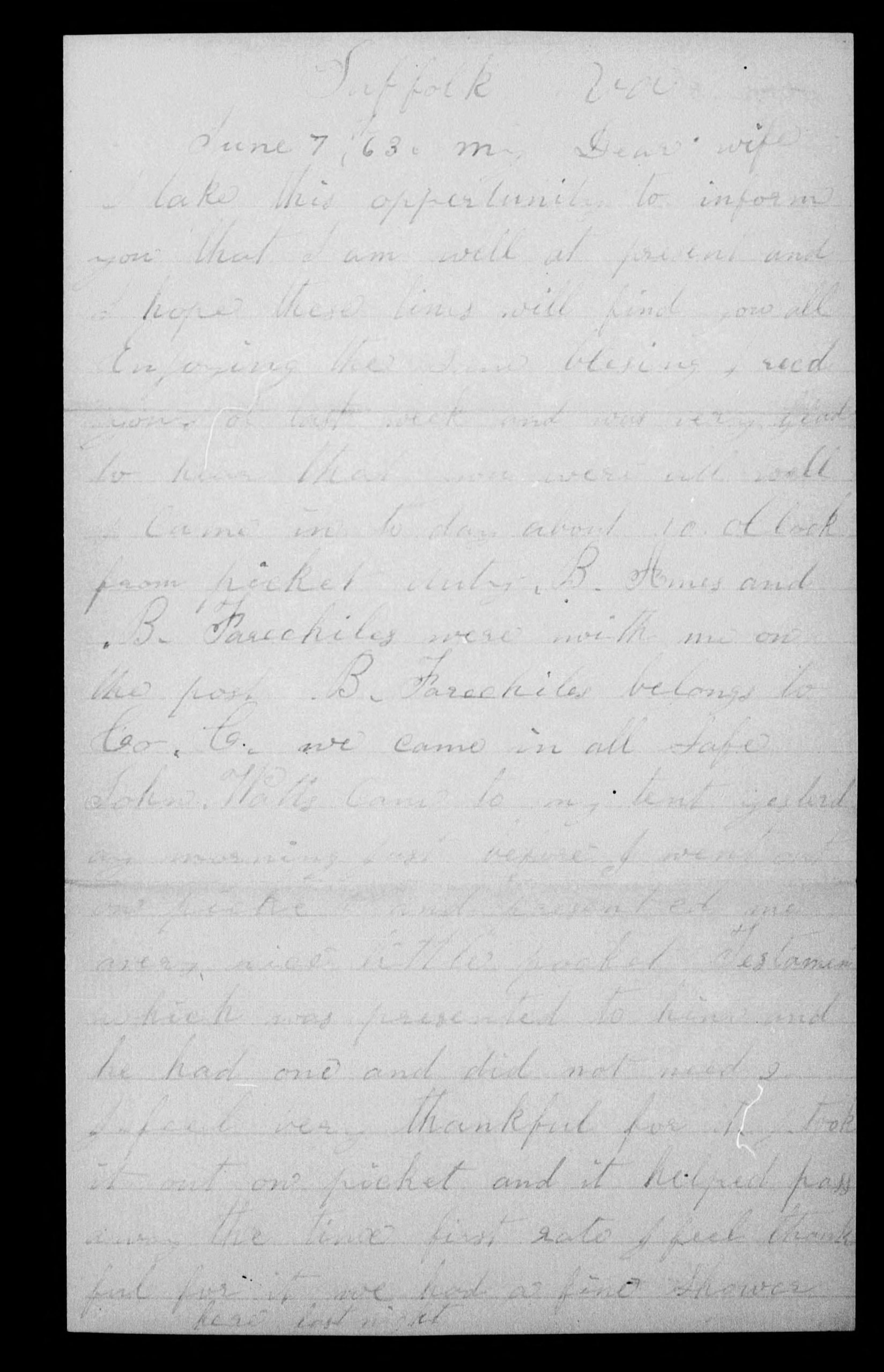
The manuscript. Click to enlarge.
Southern Historical Collection, UNC Chapel Hill, #4943.
The passage that names him
“I was well pleased with the Change, for Watts was disagreeable to tent with. the 2 Abbey Boys hate him and want to git red of him, for he is lazy … [five days later] John Watts Came to my tent yesterday morning just before I went out on picket and presented me a very nice little pocket Testament, which was presented to him and he had one and did not need 2. I feel very thankful for it. I took it out on picket and it helped pass away the time first rate.”
— George D. Benedict, 2 and 7 June 1863
These two passages are five days apart and both are Benedict’s. He was glad to stop sharing a tent with Watts, and then Watts walked over on the morning he was going out on picket and gave him a Testament. Benedict says he is thankful twice in three lines. Both entries stand here because the record contains both.
The whole page, transcribed
Suffolk VA June 7 63
my Dear wife I take this oppertunity to inform you that I am well at present and I hope these lines will find you all Enjoying the Same blesing I recd yours of last week and was very glad to hear that we were all well I Came in to day about 10 oClock from Picket duty B. Ames and B. Fairchilds were with me on the post B. Fairchilds belongs to Co. C we came in all Safe John Watts Came to my tent yesterday morning just before I went out on picket and presented me a very nice little pocket Testament which was presented to him and he had one and did not need 2 I feel very thankful for it I took it out on picket and it helped pass away the time first rate I feel thankful for it we had a fine Shower here last night
Transcribed from the manuscript, in Benedict’s own spelling and punctuation.
Men he served beside
Named alongside him in the same letters, or standing on the same post:
The letters themselves, transcribed page by page, are on the page of Private George D. Benedict, Company G, who wrote them.
Source. Benedict, G. D. (1863–1864). George D. Benedict Papers (Collection #4943). Southern Historical Collection, Louis Round Wilson Special Collections Library, University of North Carolina at Chapel Hill.
Views: 7
Explore the evidence
View this article’s connected sources and media →
About this page
This article was brought over from AlfredGibbs.com. Its preserved text, media and citations remain available for comparison.