
Table of Contents
This overview draws upon the excerpts from the “Gazetteer and business directory of Allegany County, N. Y. for 1875” and related historical documents, presenting a comprehensive picture of the county’s establishment, socio-economic life, infrastructure, and community structures in the mid-to-late 19th century.
I. Formation, Geography, and Early Settlement of Allegany County
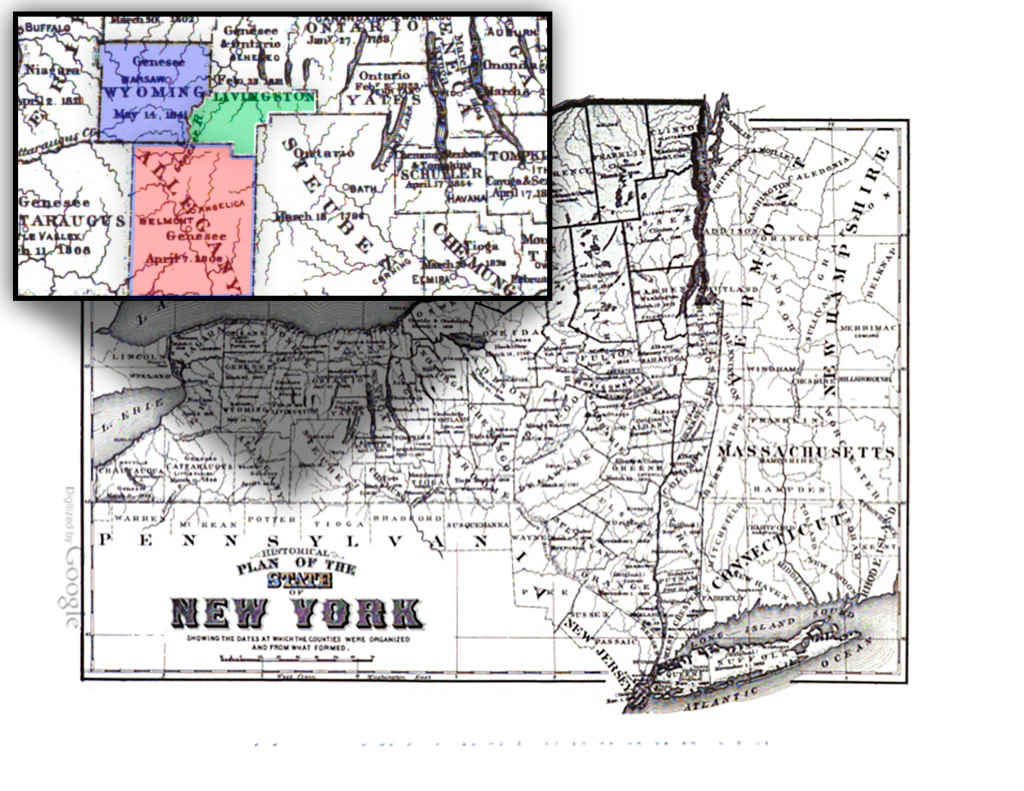
Allegany County was officially formed from Genesee on April 7, 1806. Its organization was deferred for one year following its creation. The county is situated on the south line of New York State, west of the center, encompassing 1,033 square miles. It is bordered by Pennsylvania to the south, Livingston and Wyoming counties to the north, Steuben County to the east, and Cattaraugus County to the west. A significant boundary change occurred on March 11, 1808, when the seventh range or western tier of townships of Steuben county was annexed.
Prior to its occupancy by white settlers, the territory was part of the domain of the Senecas, who maintained considerable numbers on the rich alluvial flats of the Genesee, where they cultivated corn and potatoes. They also camped and hunted on the uplands and resorted there to make maple sugar. The Indian title to the lands was part of the Phelps & Gorham’s Purchase.
Early settlement was characterized by extreme hardship and isolation. The region featured “rugged features” and was heavily timbered, making cultivation difficult. The early years were marked by involvement in the War of 1812, which drew men away from the already feeble settlements. Following the war, the cold and untoward season of 1816 brought biting frosts that destroyed crops on both hills and valleys, leading to severe distress and want. Settlers were forced to rely on game, fish, and wild roots and herbs to avoid famine. The settlements also provided quarters for the poor Indians of Caneadea, who were reduced to extreme want.
A key real estate division in Allegany County was the Church Tract, comprising 100,000 acres of the Morris Reserve. This tract, which was six miles wide, formed the towns of Allen, Angelica, Amity, most of Scio, a small portion of Wellsville, and more than half of Granger. It was acquired by Philip Church after his father, John B. Church, foreclosed on a mortgage held by Mr. Morris.
Specific towns have detailed settlement histories, reflecting the movement of pioneers primarily from New England and Pennsylvania:
- Alfred: Settlers came from Rhode Island, Connecticut, Massachusetts, and other parts of New York, including many Seventh-Day Baptists. Early settlers (c. 1814) included Richard Hull, Abel Burdick, Stephen Coon, and Jesse Whitford. Rodman Place, who took up 75 acres, arrived around 1815.
- Almond: The earliest settlers arrived in 1796, including Andrew Gray, William Gray, Major Moses Van Campen, Matthew McHenry, and Joseph Rathbun, locating in McHenry and Karr valleys. These settlers primarily came from Luzerne county, Pennsylvania.
- Andover: Settlement began in 1796 by Stephen Cole, who located at Elm Valley. His son, Daniel Cole, born February 18, 1797, was recorded as the first white male child born in the county.
II. Civil Administration, Governance, and Political Landscape
The political identity of Allegany County was often fraught with conflict, particularly regarding the issue of Slavery and Anti-Slavery. In its earlier history, the county saw political divisions involving the Bucktails, Clintonians, Masons, Anti-Masons, Democrats, and Whigs.
The county seat was initially established at Angelica, where courts were directed to be held starting June 2, 1807. An act in 1808 officially designated Angelica for the erection of the court house and jail. The jail was quickly built, but the court house was delayed until 1819. However, in 1858, an act was passed to move the county seat to a location on the Erie railroad line. The current court system holds Circuit Courts, Special Terms of the Supreme Court, and Courts of Oyer and Terminer alternately at the court houses in Angelica and Belmont.
As of the date of the Gazetteer (1875), key county officers included:
- County Judge: Hon. James S. Green (Angelica).
- County Clerk: William H. H. Russell (Belmont).
- County Treasurer: Daniel D. Gardiner (Angelica), who has held the office since 1854.
- District Attorney: Charles N. Flanagin (Hume).
The town of Angelica served as the “mother of the towns of Allegany county,” as its original territory encompassed the entire county until the subsequent formation of other towns like Alfred and Caneadea (1808) and Allen and Scio (1823).
III. Economic Life, Industry, and Resources
By the 1870s, the economic focus had shifted significantly from the defunct lumbering business towards agriculture and manufacturing, particularly dairy products.
1. Agricultural Statistics (Census 1875): The sources provide comprehensive agricultural statistics for 1874/1875:
- Grains: 800,600 bushels of oats, 135,850 bushels of Indian corn, 98,770 bushels of winter wheat, and 90,945 bushels of spring wheat were produced.
- Dairy/Animal Products: Allegany County produced 1,908,721 pounds of butter and 220,880 pounds of cheese. The milk sold amounted to 3,397,465 gallons. Wool production was 410,108 pounds.
- Other Crops: 384,087 bushels of potatoes and 134,797 tons of hay were produced. Maple sugar production reached 492,508 pounds.
2. Manufacturing and Business:
- Alfred Center hosted a steam saw mill, a cheese-box factory, and a sash, door, and blind factory.
- Angelica featured Blair & Franklin’s Flouring Mill, capable of grinding tens of thousands of bushels of various grains annually. The Joncy Paper Mill produced manilla, wrapping, and tea paper using straw and rags, being the first paper manufactured in Allegany county (starting in 1853).
- Belmont was a center for trade and industry, boasting two banks, three hotels, two tanneries, a grist mill, a foundry, and a brewery. The Crabtree Mill and Watson’s Tannery were notable establishments. The Belmont Butter Package Factory and the Lion Sulky Rake are also mentioned.
- Rushford was known for its lumber production, hosting saw, planing, and shingle mills.
- Dairying Industry: Cheese factories are mentioned across various towns, including Rushford, West Almond, and Andover. John C. Vincent’s cheese factory in McHenry valley, Almond, turned out between 80,000 and 100,000 pounds annually.
3. Infrastructure and Transportation: The Erie Railroad was vital, having developed the county’s resources and ended its isolation. Its stations included Almond, Alfred, Andover, Wellsville, Scio, Phillipsville, Belvidere, Friendship, and Cuba. The presence of the railroad allowed manufactured goods and lumber, which previously had to be hauled long distances or rafted down streams, to find a ready market. The Rochester, Nunda & Pennsylvania R. R. was surveyed to pass through several towns, including Grove, Birdsall, and Cuba.
IV. Education, Religion, and Community Life
Education: The advancement in culture and education in the new county, often achieved through enormous personal sacrifices by its poor inhabitants, is highlighted as equally important as its material progress.
- Alfred University (Alfred Center) was founded in December 1836. In addition to general studies, it offered seven regular graduating courses: Literary and Scientific, Classical, College Preparatory, Teachers’ Normal, Musical, Commercial, and Light Gymnastics. The faculty was extensive, listing professors or teachers in Latin, Greek, Biblical Theology, Physics, Natural Sciences, Music, and Modern Languages.
- Chamberlain Institute (Randolph) was established about 23 years prior to 1875.
- Riverside Collegiate Institute was located in Wellsville.
- Rushford Academy had Wm. Goodell as its principal.
Religion: Numerous denominations were represented in Allegany County in 1875:
- Methodist Episcopal (33 organizations, 1,885 members).
- Seventh-Day Baptists (10 organizations, 1,337 members).
- Roman Catholic (8 organizations, 1,889 members).
- Baptist (16 organizations, 1,460 members).
- Presbyterian (8 organizations, 586 members).
The American Sabbath Tract Society published the weekly newspaper, the Sabbath Recorder, at Alfred Center.
The Press: Besides the religious press, the county supported several secular papers, including The Allegany County Reporter (Wellsville), the Andover Advertiser, the Angelica Republican, the Friendship Register, and the Weekly Herald (Cuba).
Community Figures and Incidents: David D. How was the subject of the first legal execution in Allegany County in 1824, for the murder of Othello Church in 1823. The first gallows was erected for this purpose.
West Almond Cemetery records provide a glimpse into the late 19th-century population, listing burials such as Hattie C. Adams (died 1869, age 3) and Calvin C. Boom (died 1879, age 7 months).
V. Military Service
Allegany County contributed significantly to military efforts, particularly during the Civil War. The source documents list men serving in various New York Volunteer Infantry and Cavalry regiments.
- 23rd Volunteer Infantry: Allegany’s first contribution to the Union Armies.
- 85th New York Veteran Volunteers: Included men from Alma, Cuba, Friendship, Ward, and Clarksville.
- 130 Volunteers (later 1st N. Y. Dragoons): Known for its brilliant career. Harrison W. Green of Alfred served in Company H of the 1st New York Dragoons and was imprisoned for six months in Libby and Dansville prisons. Delos Remington also served three years in the 1st N. Y. Dragoons.
VI. Town Specifics and Key Concepts
Alfred: The town hosts Alfred University and Alfred Center (population ~500). Alfred Center is distant two miles from Alfred, the nearest railroad station. Residents noted in the directory often worked as farmers, carpenters, cheese manufacturers, or affiliated with the university. Almond: Pioneers resorted to unique methods during the early days; for example, 16 bushels of wheat was the going price for a pair of calf boots. The village population was about 500 inhabitants in the mid-19th century. Amity (Belmont/Belvidere): The village of Belmont was founded as a business center and eventually grew to hold the county court functions. The town had a bond debt. Rushford: This town contains Babbitt & Hall’s cheese factory. J. G. James, a Rushford resident, was engaged in the manufacture of cheese. Scio: The town was settled early, and William Wright, an Englishman, settled on Knight’s creek in 1822. The town was involved in stave and shook manufacturing. West Almond: The town was formed from Angelica in 1833. It saw rapid settlement, reaching a population of 976 in 1850. The town’s history notes the trial of David H. Carpenter for murder. J. M. Johnson established a cheese factory here in 1872.
The detailed directory sections, though focused on individuals, reveal the pervasive reliance on farming, with thousands of farmers listed, often detailing the size of their land holdings (e.g., IRA B. CRANDALL, Alfred Center, farmer 900 acres). Business listings often combine trades, such as “shoemaker and farmer” or “carpenter and builder”.
The historical material provides a picture of Allegany County as a region transitioning from rugged, isolated pioneer territory—where natural features determined village locations and transportation was primitive—to a developing agricultural and industrial center connected by modern rail lines and supporting established religious and educational institutions. This progress occurred rapidly, transforming the “dark forests” into “verdant meadows” and thriving farmlands in the decades following the establishment of key infrastructure.
A Pioneer Family’s Life in Early Allegany County
Introduction: A Journey into the Wilderness
Imagine it is the early 1800s. The land that will one day be called Allegany County is a vast, untamed wilderness. An ocean of pine, hemlock, and maple trees stretches for miles in every direction, broken only by the winding paths of rivers and the tracks of wild animals. Into this dense forest, a pioneer family has just arrived. After a long, bone-jarring journey by covered wagon, they have reached the small clearing they will now call home. With only the tools they could carry, an axe, a rifle, and a few precious supplies, their mission is simple but enormous: to build a new life from scratch. This is the story of their daily lives, their struggles against the harsh frontier, and their small victories that would lay the foundation for a new community.
——————————————————————————–
1. Building a Home with Their Own Hands
The family’s first and most urgent task was to build a shelter before the harsh winter arrived. Working from dawn until dusk, they began the back-breaking work of turning the raw forest into a home.
Step 1: The Log Cabin
With axe in hand, the father and older sons felled trees, trimming them into logs for the walls of their new cabin. It was a simple, rugged structure, what the pioneers called a “rude hut,” measuring only twelve by fifteen feet square. Once the walls were notched and stacked, they laid poles across the top to support the roof. For shingles, they carefully peeled wide strips of bark from large trees and laid them across the poles, holding them in place with more poles tied down with tough, green bark strips. They left a hole in the roof to let out the smoke from their fire. It wasn’t much, but it was a shield against the wind and rain.
Step 2: Simple Comforts
The inside of the cabin was as primitive as the outside, furnished with only what they could build themselves or find in the forest.
- The Fireplace: A simple hearth and chimney were built against one wall, made of sticks plastered with thick clay. This was the heart of the home—the only source of heat and the place for all their cooking.
- The Floor: The floor was nothing more than the bare earth, packed down hard and smooth by their footsteps.
- The Window: For light, a small opening was cut into one of the log walls. Glass was an impossible luxury, so they took a precious newspaper from their wagon, greased it with lard or bear’s oil to make it translucent, and fastened it over the hole to let in a dim, uncertain light.
- The Door: Instead of a wooden door, a simple curtain of canvas hung over the doorway, offering little protection from the cold but providing a bit of privacy.
- The Furniture: The furniture was a testament to their resourcefulness, crafted directly from the surrounding woods.
The family’s furnishings were primitive: “rude stools made of blocks of wood, a table made of slabs split from a log…and a bed of hemlock boughs.”
Step 3: A Home in the Forest
When the work was finally done, the family stood back and looked at their creation. It was small, dark, and drafty, but it was theirs. The source text captures their feelings perfectly: “the family stand and look at it with a feeling of such relief as they have not felt during all their long journey. It is but a cabin of logs, a rude hut…but it is a home!” In the heart of the immense forest, they had carved out a space for themselves.
Now that the family had a roof over their heads, their next challenge was finding enough food to eat in this new land.
——————————————————————————–
2. Finding Food in a New Land
Survival depended entirely on what the family could grow or hunt. The soil was rich, but the forest was a powerful opponent, and they had to learn quickly how to live off its bounty.
2.1. The First Farm
Before they could plant, they had to clear the land. The men spent countless hours chopping down trees, burning the stumps, and clearing the underbrush. In the small patch of cleared ground, they planted their first crops: “potatoes, corn and beans among the logs.”
Farming was a constant gamble. The pioneers faced “cold seasons” that could kill their crops and leave them with nothing. During these times of near-famine, they were forced to make long, difficult journeys to established towns like Bloomfield to buy provisions. To earn a little money or trade for goods, the family’s cow was essential. They made butter and cheese, which they could sell or trade for supplies they couldn’t produce themselves.
2.2. The Forest’s Bounty
While the farm was their future, the forest was their immediate lifeline. Hunting and fishing were not sports but essential daily tasks that kept the family from starving.
Hunting for Game
The forests and rivers of Allegany County were teeming with wildlife, providing a vital source of protein for the pioneers.
- Deer: Venison was a staple of the pioneer diet. The source notes that “deer were very abundant,” and in the winter, when deep snow with a hard crust formed, the deer became trapped and were easy for the settlers to hunt.
- Birds: The skies were often dark with migrating birds. The text describes “countless numbers” of pigeons, ducks, and geese, providing another plentiful food source.
- Fish: The rivers offered up their own bounty. One young pioneer recounted seeing a man with a rifle shoot a large fish in the creek, “as much as three feet long,” a quick and effective way to secure a meal.
A Hunter’s Skill
Every member of the family who could handle a rifle was expected to contribute. A pioneer son might have spent his day tracking game, just as Moses Ward described in his narrative. On one hunt, he saw a deer coming toward him through the thick brush. He wrote: “It came within gunshot, I fired, it fell; my brother came to me and we dressed it, hung it up and went on our way.” This single deer could feed the family for many days.
While the forest provided food, it also held many dangers that the settlers had to face every day.
——————————————————————————–
3. Facing the Dangers of the Frontier
Life on the frontier was a life of constant hardship and vigilance. From dangerous animals to profound isolation, the pioneers faced challenges that are hard for us to imagine today.
3.1. Wild Neighbors
The same forests that provided deer and birds were also home to predators that threatened the settlers’ lives and their precious livestock.
- The Wolf Pack: Wolves were a constant and serious menace. In one account, a pioneer named Moses Ward and his brother tracked a wounded wolf through “thick brush, and the water and snow about knee deep.” Their multi-day hunt through swamps and thickets shows the determination required to deal with these dangerous animals. The threat was so severe that the county offered a $40 bounty on wolves—a huge sum of money at the time.
- Bears and Other Threats: The family’s small collection of livestock was always at risk. The source mentions the “frequent incursions of hungry bears in quest of pork,” meaning that a farmer constantly had to be on guard to protect his pigs from being carried off.
3.2. A Life of Hardship
The pioneers lived a life of isolation and scarcity that stands in stark contrast to our modern world of convenience and connection.
Pioneer Challenge | Life Today |
Difficult Travel: Following paths marked only by “blazed” trees; a trip to the grist mill could take three days. | Paved roads and cars make travel fast and easy. |
Isolation: Living miles from the nearest neighbor, with “but one house to pass” in a fourteen-mile walk. | Towns and cities mean neighbors are right next door. |
Scarcity of Supplies: Going weeks without bread; the “famine” of 1816 when flour had to be rationed. | Grocery stores are filled with food from all over the world. |
Lack of Money: Very little cash was available; pioneers often had to trade or make “black salts” from ashes to get money. | Money is the common way to buy goods and services. |
Despite these great hardships, the pioneers were not alone for long; slowly, a community began to grow in the wilderness.
——————————————————————————–
4. A Community Takes Root
As more families like our own arrived and carved out their homesteads, the isolated clearings began to connect. Through shared work, education, and mutual support, a true community started to form.
4.1. The First School Days
Once a few families had settled near each other, their first thought was for their children’s education. The community came together to build their first school.
- The schoolhouse was a log structure, built by the settlers working together in a “bee,” a community work gathering.
- Inside, the classroom was incredibly primitive. The source describes it in detail: “The seats were benches made of slabs,” there was no blackboard, and the most important teaching tool was often “a half-dozen well-seasoned switches.”
- Teachers were often not professionals, but “strangers who were traveling through the country” and would stop for a few months to earn some money before moving on.
4.2. Neighbors Helping Neighbors
Shared projects were essential for the growth of the settlement. The first saw-mills and grist-mills were often built by the community and became central hubs for social and economic life. Another important gathering was the “general training” day for the local militia. Men from several towns would come together to drill. One observer wrote that on these days, “they appeared as though they were one family,” showing the strong bonds that formed among these frontier neighbors.
4.3. Living with the Seneca
The pioneer family was not the first to call this land home. The Seneca people lived on the nearby Caneadea reservation, and the relationship between the settlers and their Native American neighbors was crucial.
- The source describes the Seneca as “generally well disposed, quiet and orderly” and friendly toward the new settlers.
- The two groups often traded. Pioneers would exchange a loaf of bread for a “plump venison ham,” a fair trade that benefited both sides.
- This friendship was proven during the War of 1812. Fearing an attack from Canada, Seneca leaders offered to guard and protect pioneer women like Mrs. Church and Mrs. Burr while their husbands were away, a powerful gesture of trust and cooperation.
Through years of hard work, courage, and cooperation, these first families turned their small clearings into prosperous farms and growing towns.
——————————————————————————–
5. From Log Cabins to Thriving Towns
The journey of our pioneer family is the story of Allegany County itself. Their first home, a rough log cabin with an earth floor and a canvas curtain for a door, eventually gave way to an improved house with “a floor of hewn planks” and a real door. The small, stump-filled clearing where they planted their first crops grew into a proper farm, enclosed by “substantial rail fences.” What began as a desperate struggle for survival slowly transformed into a life of stability and progress. The hard work and perseverance of these first families, who faced down the wilderness with little more than their own two hands, laid the foundation for the towns, schools, and communities of Allegany County that exist today, leaving behind a powerful legacy of strength, resilience, and courage.
Views: 52
Explore the evidence
View this article’s connected sources and media →
About this page
This article was brought over from AlfredGibbs.com. Its preserved text, media and citations remain available for comparison.