
Table of Contents
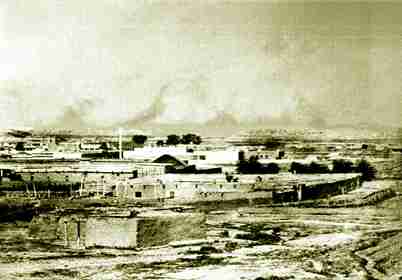
Fort Craig, New Mexico
Stretching across the high desert plains some 35 miles south of Socorro, New Mexico, perched above the west bank of the Rio Grande, lies the weather-worn remnant of Fort Craig. At first glance this place may seem nothing more than another scattering of adobe and rock walls, softened into the earth by time and weather. But in fact it stands as a sentinel of the frontier, a witness to the sweep of westward expansion, the conflicts of the Civil War, and the brutal theatre of the Indian Wars in the American Southwest. Its story is far more than ruins—it is a chapter of change, conflict, and survival.
The Site and the Setting
The site chosen for Fort Craig is raw and elemental: an arid terrace above the Rio Grande, scrub‐grass and mesquite brushing the desert wind, the distant volcanic mesas and mountain ridges etched into the skyline. The terrain is at once exposed and isolating, a place where life is hard and the margin for error small. In 1867, one Army officer described the location as being “of no earthly value” — yet it is precisely that harshness that made the site valuable to the U.S. Army (National Park Service, n.d.).
In terms of geography and strategic design, the fort occupied around 40 acres, laid out roughly 1,050 feet east–west by 600 feet north–south (Wikipedia, n.d.). Situated on the west bank of the Rio Grande, it overlooked one of the main north–south corridors for travel—El Camino Real de Tierra Adentro—and guarded the approach to the long, forbidding stretch known as the Jornada del Muerto, the “Dead Man’s Journey,” where water was scarce and danger greater than most travelers imagined (National Park Service, n.d.).
This fort, then, served not just as an isolated outpost but as a hinge point—between the settled lands and the frontier, between civilization and the hostile unknown; between the northward push of the U.S. government in its new territories and the migrations of Apache, Navajo, Comanche, and the legacy of Spanish routes and missions.
The Precursor: Fort Conrad and the Move South
Before Fort Craig existed in earnest, the Army had planted its flag a little upriver at Fort Conrad (established in 1851) in an effort to secure this region. But that fort had its flaws: it stood on private land, was located near marshy ground prone to malaria, and suffered from geographic and sanitary neglect (Wikipedia, n.d.; National Park Service, n.d.).
Recognizing the weakness of the site, Army planners directed their gaze about nine miles downstream to a higher bluff and in April 1854 companies of the 3rd Infantry under Capt. Daniel Chandler relocated to the newly built Fort Craig (American Battlefield Trust, n.d.). Thus began the story of Craig—built not because the land was pleasant, but because the land’s difficulties could serve as a defensive asset.
The Construction and Early Life
Work on the fort began in 1853, and by 1854 the new post was up and running. It was named for Capt. Louis T. Craig, an officer who had served in the Mexican–American War and was later killed by deserters in California (Wikipedia, n.d.).
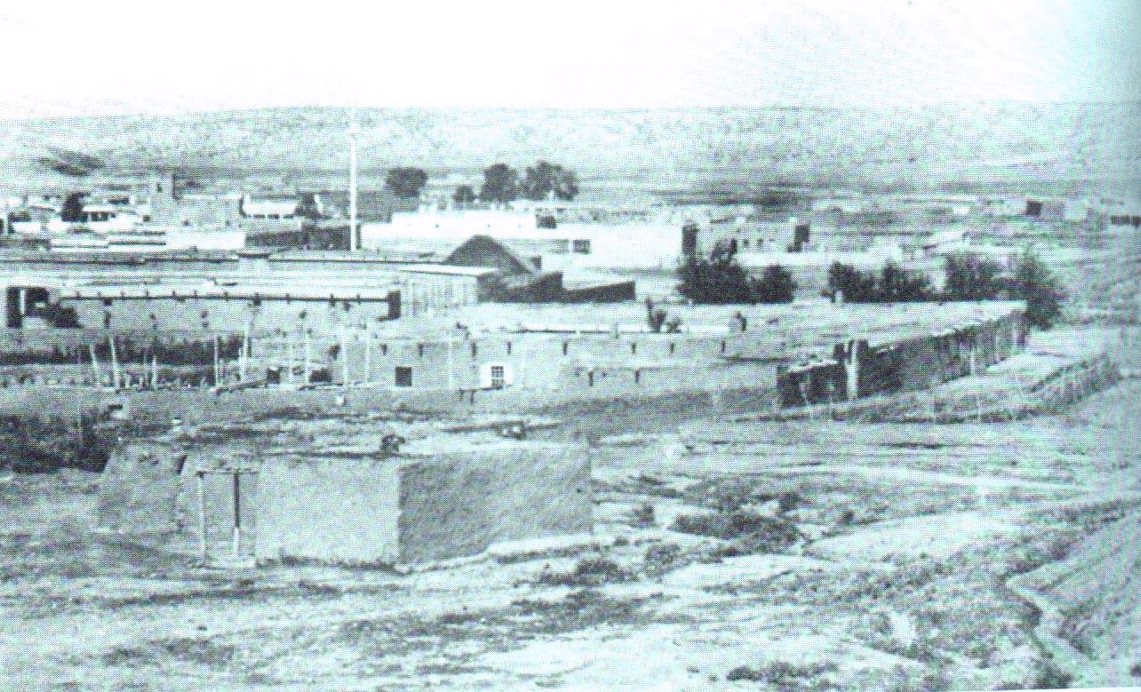
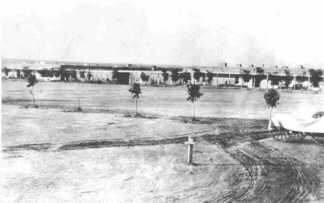
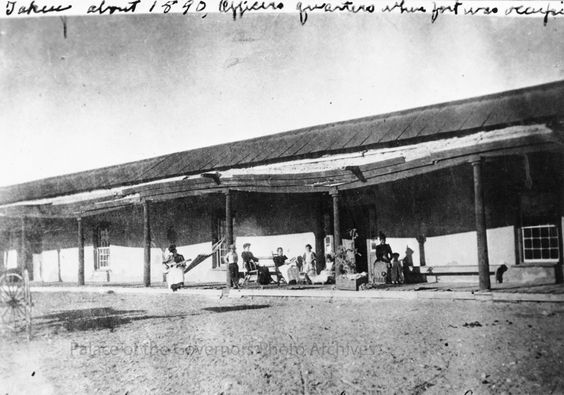
The layout was imposing for its time: 22 buildings constructed of adobe and rock, arranged around a large parade ground. Among these structures: officers’ quarters, enlisted barracks, stores, stables, a hospital, ordnance sheds and a sutler’s store—a little commercial corner inside a military complex (American Battlefield Trust, n.d.; Wikipedia, n.d.).
Around the exterior stood an adobe wall with a single sally-port (gate) on the west side. Outside that wall was a defensive ditch—a feature uncommon for frontier posts in the Southwest but present here (Wikipedia, n.d.). The design suggests that the Army anticipated more than mere patrol duty; they expected serious conflict.
Yet despite the formidable architecture, life at Fort Craig was often monotonous. For many soldiers, the real war was boredom. Patrols, guard duty, drills—all in a remote, raw land far from home. One private, Andrew Ryan, stationed there for more than a year, wrote home of his near-despair: “I never was in a place in my life that was so void of any news. Month in and month out, it’s the same monotonous routine from morning to night. I am horribly sick of this place” (National Park Service, n.d.).
But that quiet would not last, because the frontier soon roared.
Guarding the Frontier: Indian Wars and the Camino Real
From its earliest days, Fort Craig’s purpose was to guard travelers and settlers from Apache, Navajo, and Comanche raids; protect the livestock, the ranchers, the traders moving up and down the El Camino Real; and secure the U.S. presence in a territory freshly ceded by Mexico in 1848 (American Battlefield Trust, n.d.; National Park Service, n.d.).
The fort’s frontier role was immense. The Jornada del Muerto, with its arid expanse, offered few places to hide—and even fewer places to rest. Fort Craig’s proximity to that stretch meant it was a waypoint, a shield, a supply source. The Army sent out numerous campaigns from here to pursue and confront hostile bands; the men stationed at Craig often found themselves on patrols, escort missions or punitive expeditions (National Park Service, n.d.).
Despite that mission, the day-to-day at Craig could still feel more like endurance than adventure. The building materials (adobe, rock), and the environment (desert wind, heat) meant constant maintenance. Some soldiers complained of leaky roofs, crumbling chimneys and the perpetual task of keeping the post habitable (Wikipedia, n.d.).
Collision Course with the Civil War
The real turning point for Fort Craig came with the outbreak of civil war in the eastern states in 1861. Far away though it may have seemed, this remote post in New Mexico became a focal point in the high-stakes game of Confederate ambition and Union defense (American Battlefield Trust, n.d.).
In early 1862, the Confederate forces under Henry Hopkins Sibley—a native Texan turned Confederate brigadier—marched north up the Rio Grande valley, aiming to seize New Mexico Territory (including today’s Arizona), capture the minerals and gold of Colorado, and open a path to California for the South (National Park Service, n.d.).
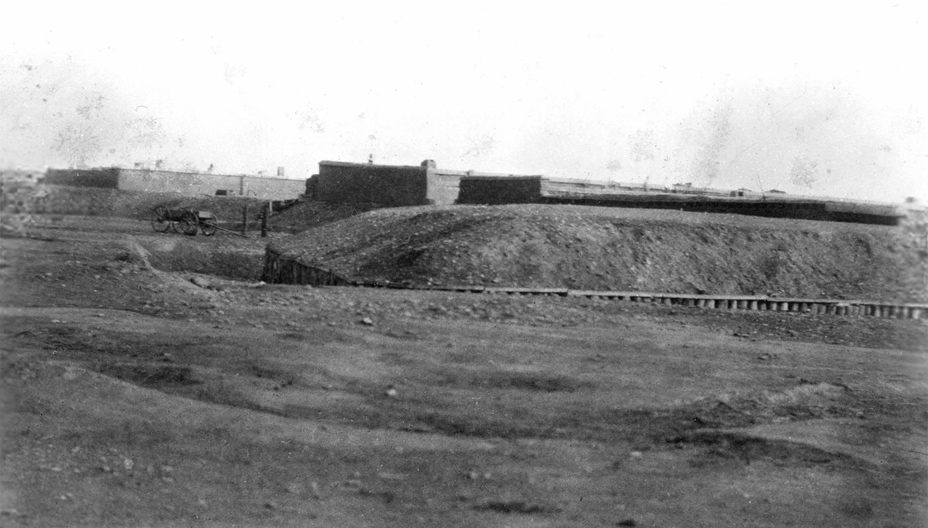
Meanwhile, the Union commander in the territory, Edward R. S. Canby, fortified Fort Craig. He gathered volunteers—among them the famed frontier mountaineer Kit Carson—raised the garrison to nearly 4,000 men, and built earthen fortifications, a moat and mounted real and fake cannons (“Quaker guns”) to bolster the post’s defense (National Park Service, n.d.).
When the Texans arrived along the Rio Grande in mid-February 1862, they found the path blocked. Rather than attempt a costly assault on the fort itself, Sibley opted to bypass Fort Craig, forcing the Union troops to leave their stronghold and engage him at the shallow ford of the Rio Grande near Valverde. On February 21, 1862, the battle erupted, known as the Battle of Valverde (Wikipedia, n.d.; National Park Service, n.d.).
Though the Confederates claimed the field (and inflicted higher casualties on the Union force), they had not captured Fort Craig. Moreover, the loss of their supply wagons and the inability to neutralize Craig—leaving it in their rear—would prove fatal in the months to come (National Park Service, n.d.).
In the grand calculus of the war, the southern push through New Mexico stalled. Sibley’s expedition pressed on to Albuquerque and Santa Fe but finally met defeat at the Battle of Glorieta Pass in March 1862—a battle sometimes dubbed the “Gettysburg of the West.” With Craig uncompromised, the Union retained strategic leverage in the territory (Wikipedia, n.d.; National Park Service, n.d.).
The Postwar Years and the Dawning of Decline
After the Civil War, Fort Craig returned to its quieter role: frontier garrison, patrol station, supply depot. The Indian Wars pressed on, with the Army at Craig launching campaigns against Apache leaders such as Victorio and Geronimo (Recreation.gov, n.d.; Bureau of Land Management, n.d.).
Yet the world around the fort was changing. The route of El Camino Real, once so vital, began to fade in importance as railroads and new transportation modes emerged. Settlements shifted, the frontier contracted, and Fort Craig’s strategic value diminished. According to one soldier who served there in 1869, the fort was a “lonesome sort of a hole” (secondary summaries cited in American Battlefield Trust, n.d.).
By 1879 the Army had determined the fort was no longer essential and ordered its abandonment. Though briefly reactivated during the Victorio campaign, the last troops finally marched away in July 1885, leaving the walls to the wind and the sun (National Park Service, n.d.; Bureau of Land Management, n.d.).
Ruins and Remembrance
Once the fort closed, the land passed through private ownership. In the 1890s it was sold at auction. Time, weather and neglect took their toll. But by the mid-20th century interest in the site’s history began to awaken. It was placed on the National Register of Historic Places in 1970 and in 1981 the Bureau of Land Management (BLM) assumed stewardship (Bureau of Land Management, n.d.).
Today Fort Craig is a designated historic site: visitors can follow self-guided trails through the adobe foundations, read interpretive signage, picnic in the desert quiet, and imagine the bustle of garrison life in a bygone era (Bureau of Land Management, n.d.; Recreation.gov, n.d.).
Why Fort Craig Matters
You might ask: why fuss over a dusty old fort in the New Mexico desert? Because Fort Craig stands at the intersection of multiple stories—stories about expansion and conflict, about cultures colliding, about strategy and survival.
- It is a physical embodiment of the U.S. Army’s effort to secure the newly acquired territories after the Mexican–American War and the Treaty of Guadalupe Hidalgo (American Battlefield Trust, n.d.; National Park Service, n.d.).
- It guarded the Camino Real, the ancient trade and migration route that stretched from Mexico City to Santa Fe, underscoring the continuity of movement and commerce long before railroads (National Park Service, n.d.).
- It entered the epic sweep of the Civil War, proving that the war was not confined to the East but stretched even into the remote deserts of the Southwest (National Park Service, n.d.; Wikipedia, n.d.).
- It played a part in the Indian Wars that followed—conflicts whose shadows linger in this land to this day (Recreation.gov, n.d.; Bureau of Land Management, n.d.).
- It reminds us that frontier military infrastructure was not just about glory or dramatics, but about the mundane element of soldiering—weathering storms, repairing adobe, clearing brush, standing guard in isolation (American Battlefield Trust, n.d.; National Park Service, n.d.).
Visiting Today: What You’ll See
Walking through Fort Craig today you’ll find:
- Walls of the commanding officer’s quarters, guardhouses and warehouse foundations—sun-bleached, eroded, still pointing their finger toward history (Bureau of Land Management, n.d.).
- The parade ground, now hemmed in by desert plants but once the heart of daily life at the fort (Bureau of Land Management, n.d.).
- Earthworks on the south side of the post—the defensive embankments built during the Civil War which still trace the outlines of urgency and preparation (National Park Service, n.d.).
- A visitor center (on property managed by BLM) that offers interpretive signage and orientation—though you are warned the roads are gravel and the terrain sometimes challenging (Recreation.gov, n.d.).
- The vista: the Rio Grande to the east, the volcanic mesas to the west, the open sky above. A humbling perspective of just how remote this post really was—and still is.
Reflections and Lessons
As you imagine the soldiers at Fort Craig—you picture rifle stacks, adobe huts, the stinging desert sun, and the dry wind at sunset. You imagine the campaign dispatches, the muster-rolls, the daily grind of guarding, the occasional flare of battle. You imagine the Native warriors watching from the ridges. You imagine the weary traveler emerging from the Jornada del Muerto, sighting the fort’s walls with relief, grateful for a water stop, a roof, perhaps a friendly word.
We often romanticize the frontier, but Fort Craig reminds us of its reality: isolation, vulnerability, tough living conditions, strategic importance determined by geography rather than comfort. Its adobe walls were not built for luxury—they were built for necessity.
As Director of Technology, there’s a parallel here: infrastructure, site selection, and purpose shape outcomes. The fort’s designers chose harsh ground for strategic reasons, not comfort. Context shaped the system—just as it does in modern tech environments.
Final Word
Fort Craig may be “just ruins” in the desert today—but what a story those ruins tell. From its birth in the era of Mexican–American transition, to its peak during the Civil War, to its final years guarding the fading frontier, Fort Craig encapsulates a vital chapter of American—and New Mexico—history. As you stand on that terrace above the Rio Grande, looking out over scrub grass and mesas, you’re not just in a lonely spot—you’re in a place where the currents of empire, settlement and survival all ran together.
Whether you’re a historian, a technology director with a fascination for structure and strategy, or simply a curious visitor, Fort Craig offers more than a look back. It offers a context for where things came from—and how choice of place and purpose can echo across generations. In short: it’s worth the drive, worth the reflection, and worth the story.
Resources
American Battlefield Trust. (n.d.). Fort Craig. https://www.battlefields.org/learn/articles/fort-craig
Bureau of Land Management. (n.d.). Fort Craig Historic Site. https://www.blm.gov/visit/fort-craig-historic-site
National Park Service. (n.d.). Fort Craig (New Mexico) [Article/overview]. https://www.nps.gov/articles/000/new-mexico-fort-craig.htm
Recreation.gov. (n.d.). Fort Craig Historic Site. https://www.recreation.gov/gateways/14631
Wikipedia contributors. (n.d.). Fort Craig. In Wikipedia, The Free Encyclopedia. Retrieved 11/02/2025, from https://en.wikipedia.org/wiki/Fort_Craig
Views: 34
Explore the evidence
View this article’s connected sources and media →
About this page
This article was brought over from AlfredGibbs.com. Its preserved text, media and citations remain available for comparison.