
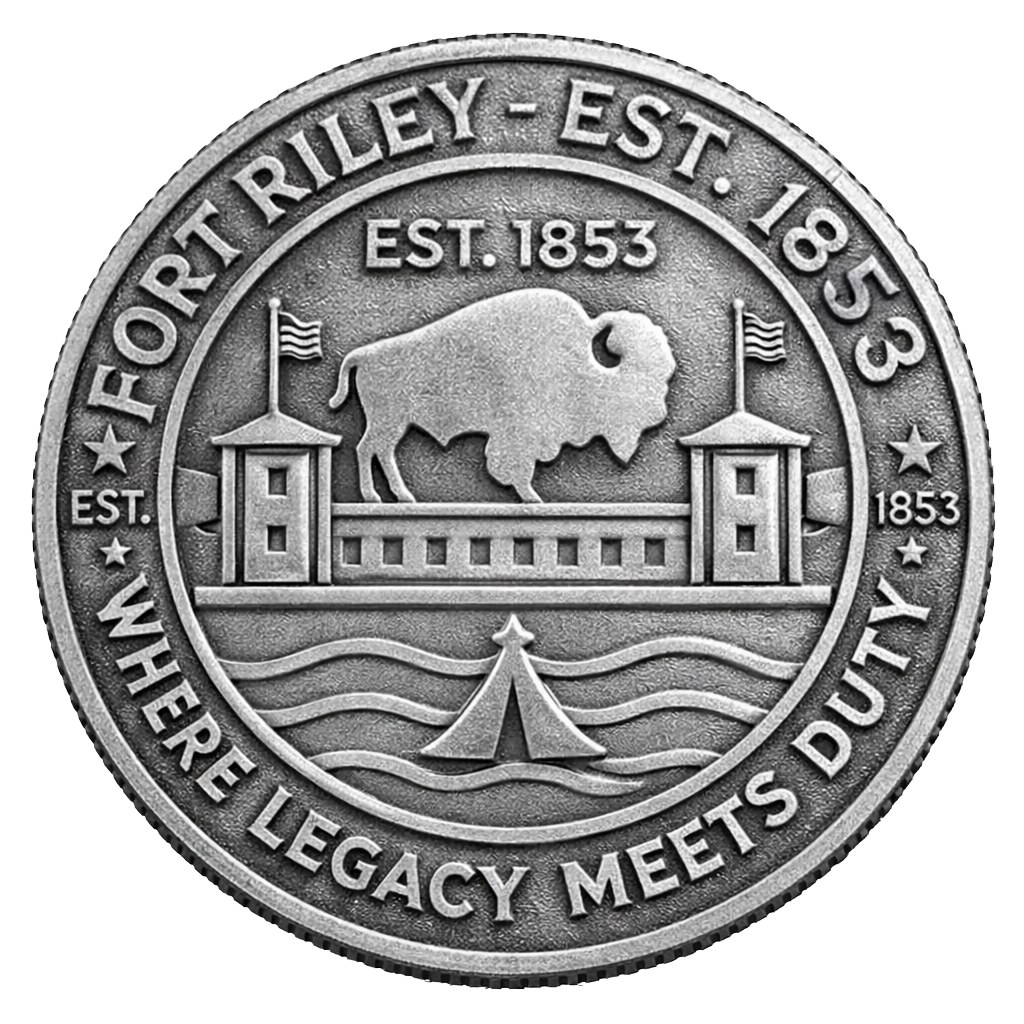
Part I: Origins and Early Development
Introduction
Fort Riley stands as a testament to America’s westward expansion and military evolution, its history deeply interwoven with the nation’s development from frontier wilderness to global power. Situated at the confluence of the Republican and Kansas Rivers in the heart of Kansas, this historic military installation has witnessed and participated in nearly every major American conflict since the mid-19th century. From its origins as a frontier outpost designed to protect pioneer wagon trains to its modern role as a premier training facility, Fort Riley’s story mirrors the transformation of the American military and the nation itself.
The landscape of Fort Riley carries the echoes of countless historical moments—cavalry charges across the plains, the thundering of artillery during training exercises, and the steady march of soldiers preparing for conflicts across the globe. The rolling hills and expansive prairies that once hosted buffalo herds and Native American tribes became the training grounds for generations of American soldiers, each adding their own chapter to the fort’s rich narrative.
One iconic image associated with Fort Riley is the famous painting of “Old Bill” by Fredric Remington (1861-1909). This artwork, which adorned the cover of The Cavalry Journal for 40 years, captures the spirit of the American cavalry tradition that found its home at Fort Riley. The painting later inspired the monument on the Cavalry Parade Ground, marking the grave of Chief, the last Cavalry horse on government rolls. This connection between art and military tradition exemplifies how Fort Riley has maintained its historical identity even as its mission evolved with the changing nature of warfare.
As we explore Fort Riley’s historic past, we embark on a journey through American military history, encountering legendary figures like George Armstrong Custer and George S. Patton, witnessing the transition from horse cavalry to mechanized warfare, and understanding how a remote outpost on the Kansas frontier became an enduring symbol of American military heritage. The story of Fort Riley is not merely a chronicle of buildings and battles, but a narrative of adaptation, resilience, and service that continues to this day.
This multi-part report examines Fort Riley’s development chronologically, from its founding in the 1850s through its various transformations during the Civil War, Indian Wars, Spanish-American War, World Wars, Cold War, and into the modern era. Through this exploration, we gain insight into not only the history of a military installation but also the evolving role of the American military in shaping the nation’s destiny.

The Founding of Fort Riley (1850s)
Fort Riley was born of frontier necessity and pioneer tenacity. The story of its founding and growth is an integral part of the American West’s development. In 1850, the vast rolling plain that stretches from what is now the state of Missouri to Utah and from Minnesota to Texas was known as the Platte Country or Indian Territory. That portion of it from the Missouri River west for 350 miles would eventually become the state of Kansas.
The establishment of Fort Riley was one of the first crucial steps toward the development and pacification of this territory. In the mid-1800s, the land was primarily inhabited by herds of buffalo and Native American tribes, often referred to as “hostiles” by the settlers and military of the time. Raiding Indian war parties would ride down through the bluffs of Eastern Kansas and strike at the pioneer wagon trains moving westward across the Great Plains. As westward expansion accelerated, it became increasingly evident that greater military protection would have to be provided for these pioneers.
The United States Army was called upon to erect a suitable outpost that could serve as a base of operations against the raiding Indians. On July 31, 1852, Colonel T.T. Fauntleroy of the First Dragoons made a formal recommendation “that a post be established, at or near a point on the Kansas River where the Republic fork unites with it.” This strategic location would allow military forces to protect the main routes of westward travel while maintaining access to water and other essential resources.
In the fall of 1852, a board of officers was appointed to select the precise location for the new post. Under escort of a detachment from the First Dragoons, this board proceeded to the present site of Fort Riley. Finding the location suitable, they established a temporary camp. Interestingly, they initially named this original camp “Camp Center” because they believed it to be near the geographic center of the United States—a symbolic placement for a fort that would help secure America’s expanding frontier.
The following year, in 1853, Congress appropriated $65,000 to begin construction of the new post, a substantial sum for the time that reflected the strategic importance placed on this installation. Work began that summer under the command of Brevet Major E.A. Ogden, who would play a pivotal role in the fort’s early development.

The final event that had a bearing upon the establishment of the new outpost was the death in June of 1853 of Major General Bennett Riley, who had served with distinction as an Indian fighter and as a commander in the Mexican War. On June 27, 1853, the Secretary of War directed that the military outpost under construction in the Kansas Territory be named Fort Riley in his honor, ensuring that this distinguished officer’s legacy would be permanently associated with the American frontier.
Under Major Ogden’s able direction, construction of a permanent Cavalry post at Fort Riley began in earnest in July 1855. The building process was challenging, as materials unobtainable in the vicinity had to be shipped by boat to Fort Leavenworth and then transported by wagon train to Fort Riley—a logistical feat in the pre-railroad era. The work was proceeding rapidly when tragedy struck on August 1, 1855, in the form of a cholera epidemic that decimated the labor force. Major Ogden himself became one of the victims of this outbreak, a significant loss for the developing fort.
As a tribute to Major Ogden’s contributions, the post commander in 1887, Colonel James W. Forsyth of the 7th Cavalry, erected a monument to him which stands today just above the post cemetery near Highway 40—a lasting reminder of the sacrifices made during Fort Riley’s founding years.
The establishment of Fort Riley represented more than just the construction of a military outpost; it marked the beginning of permanent American settlement in the region and signified the government’s commitment to securing the nation’s expanding frontier. From these humble beginnings amid the vast Kansas prairie, Fort Riley would grow to become one of the most significant military installations in American history, its development paralleling the nation’s own growth and transformation.
Part II: Civil War Era and Indian Wars
Fort Riley During the Civil War
Prior to the outbreak of the Civil War, Fort Riley reflected the growing tensions that would soon divide the nation. Many of the officers stationed at Fort Riley were southerners and ardent pro-slavery men, a reflection of the era when the old aristocracy of the South furnished many of the officers of the United States Army. This concentration of southern sympathies at a strategic western outpost would soon be tested by the eruption of national conflict.
Among those who were stationed at Fort Riley and who later distinguished themselves in the Civil War as Confederate Generals were J.E.B. “Jeb” Stuart, the legendary cavalry commander, and Lewis A. Armistead, who would fall at Gettysburg leading his brigade during Pickett’s Charge. These men, who had served the United States at this frontier outpost, would soon face former comrades across bloody battlefields.
The Civil War tore many families apart, and the military community at Fort Riley was no exception. Philip St. George Cooke, a well-known Cavalry officer at Fort Riley during the 1850s, became a Union General, while his son, John R. Cooke, and his son-in-law, “Jeb” Stuart, both became Confederate Generals. These divided loyalties mirrored the nation’s own painful schism and demonstrated how deeply the conflict penetrated even the most remote military installations.
During the Civil War itself, Fort Riley served as an important base for Union forces in the West. Many organizations occupied or were camped for varying periods in and around Fort Riley. With the outbreak of war, there was an influx of Kansas and other militia regiments, transforming the once-small outpost into a bustling center of military activity. The fort’s strategic location made it valuable for organizing and supplying troops operating on the western frontier.
In the summer of 1862, Fort Riley even served as a prisoner-of-war facility, housing about one hundred and thirty Confederate prisoners from the Texas Mounted Volunteers. This added another dimension to the fort’s wartime role, requiring facilities and personnel for the secure containment of enemy combatants.
Interestingly, even as the Civil War raged across the eastern and southern United States, the original mission of Fort Riley—pacification of hostile Indian bands—continued unabated. In July 1864, Major General S.R. Curtis was posted to Fort Riley for the purpose of raising militia to go to the relief of trains corralled at Cow Creek on the Santa Fe Trail by hostile Indians. This dual mission of supporting the Union war effort while continuing to protect settlers from Indian attacks demonstrated the complex challenges facing western military installations during this period.
A significant development for Fort Riley’s future came in the fall of 1866, when the Kansas Pacific Railroad reached the fort. This technological advancement dramatically changed the fort’s strategic importance and operational capabilities. Prior to the coming of the railroad, supplies and equipment reached Fort Riley by wagon train via “The Golden Belt Highway.” The present-day Highway 40 closely parallels this old wagon route from Fort Leavenworth to Fort Riley. The arrival of the railroad meant faster transportation of troops and supplies, enhancing the fort’s ability to respond to threats and support operations across the western territories.
The Civil War period marked a transformative time for Fort Riley, as it did for the nation as a whole. The fort emerged from the conflict with an expanded role and enhanced infrastructure, poised to play a crucial part in the next chapter of American westward expansion and the intensifying conflicts with Native American tribes that would characterize the post-war period.
The 7th U.S. Cavalry and Indian Wars
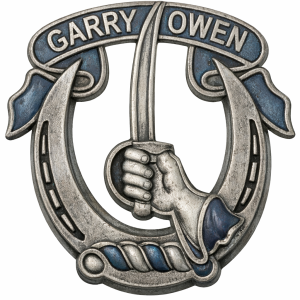
One of the most famous and distinguished cavalry units that have served at Fort Riley is the 7th U.S. Cavalry, known as “The Garry Owens.” This legendary regiment was organized at Fort Riley under an act of Congress dated July 28, 1866, in the aftermath of the Civil War when the nation turned its attention to securing the western frontier. Colonel Andrew J. Smith, a veteran of both the Mexican and Civil Wars, commanded the regiment, while Lieutenant Colonel George Armstrong Custer served as second in command, beginning a relationship between the 7th Cavalry and Fort Riley that would become an integral part of American military lore.
The regiment derived its nickname from its regimental song, “Garry Owen,” a rollicking Irish tune that became synonymous with the unit’s spirit and identity. This music lifted the hearts of the troopers at the “Battle of the Washita” near Cheyenne, Oklahoma, and was the last melody heard by General Custer and his men when the 7th Cavalry Band played the regiment out of Fort Lincoln, Nebraska Territory, in its march to the tragic “Battle of the Little Big Horn.”
The Indian foes of the 7th Cavalry, many of whom went down under Cavalry carbines in defense of their homeland, included some of the most renowned Native American leaders of the era. Chiefs such as “Black Kettle,” “Sitting Bull,” “Crazy Horse,” “Medicine Arrow,” “Chief Joseph,” “Chief Gall,” “Red Horse,” “Santanta,” “Dull Knife,” “Yellow Bird,” “Wooden Leg,” “Two Moons,” and “Little Raven” led their people in resistance against the encroachment of white settlers and the military forces that supported them.
Early battles and engagements of the “Garry Owens” near Fort Riley included confrontations at the Cimmaron Crossings, North and South Forks, the Republican River, Monument Station, and Downer’s Station in Kansas. The regiment also fought in the Battles of Sand Hills on the Cimmaron and Canadian Rivers. Perhaps most notably, they participated in the famous “Battle of the Washita against “Black Kettle” in 1868, a controversial engagement that resulted in the death of Black Kettle and many of his people.
Other famous frontier engagements involving the 7th Cavalry included those at Fort Harker, Yellowstone River, Big Horn, Montana, and the Little Big Horn—the latter immortalized as “Custer’s Last Stand,” where Lieutenant Colonel Custer and five companies of the regiment were annihilated by a combined force of Sioux and Cheyenne warriors in June 1876. This devastating defeat became one of the most studied and debated military engagements in American history, forever linking the 7th Cavalry with the complex and often tragic history of American-Indian relations.
The regiment’s frontier service continued long after the Little Big Horn. As late as 1896, Cavalry troopers of this famous regiment were engaging hostile bands of Apache in Arizona, demonstrating the extended period during which the U.S. Army was involved in conflicts with Native American tribes.
In more recent history, as part of the 1st Cavalry Division, the regiment added greater glory to its name in the battles for the Admiralty and Philippine Islands during World War II, and later in the Korean conflict. This evolution from Indian fighting to participation in global conflicts reflects the broader transformation of the American military from a frontier force to a worldwide power.
The 7th Cavalry’s history is emblematic of Fort Riley’s role in the settlement of the American West and the conflicts that accompanied it. The regiment’s exploits, both glorious and tragic, have become an indelible part of American military history and popular culture, with Fort Riley serving as the stage for many of its formative moments.

Comanche: The Legendary Survivor
A cavalry horse named Comanche was one of the most honored members of the garrison of Fort Riley, his story embodying both the glory and tragedy of the American frontier cavalry. Comanche joined the 7th Cavalry as a five-year-old in the spring of 1868 and became the personal mount of Captain (Brevet Lieutenant Colonel) Myles W. Keough, an officer who would later perish at the Battle of the Little Big Horn.
Comanche’s remarkable career was marked by both resilience and valor. He won his first wound stripe on the Cimarron River when a Comanche arrow pierced his flank during a skirmish with Native American warriors—an incident that likely gave rise to his name. His tenacity was further demonstrated when he was wounded again in 1870 and 1873 in skirmishes with renegade Indians, yet each time recovered to return to service.
The horse’s place in American military history was cemented on June 25, 1876, when he rode with Captain Keough into the Battle of the Little Big Horn. In this infamous engagement, commonly known as “Custer’s Last Stand,” Lieutenant Colonel George Armstrong Custer and five companies of the 7th Cavalry were annihilated by a combined force of Sioux and Cheyenne warriors. Captain Keough, like many others, perished in the battle, but Comanche, despite suffering grievous wounds, survived the massacre.
When discovered after the battle, Comanche was in a pitiful state. Cheyenne arrows protruded from his body, and he had bullet wounds in a dozen places. Yet remarkably, he lived, becoming the sole survivor of Custer’s battalion of the 7th Cavalry to be recovered from the battlefield. This distinction would make him not merely a horse, but a living symbol of one of the most dramatic moments in American military history.
Comanche was carefully transported back to Fort Riley, where he was nursed back to health through the dedicated efforts of the regiment’s veterinary staff and soldiers. His survival and recovery were viewed as almost miraculous given the severity of his wounds and the complete destruction of the unit he had served with.
Recognizing the historical significance of this remarkable horse, Colonel Sturgis, the Commanding Officer of the 7th Cavalry, issued a special order regarding Comanche that elevated the horse to an almost sacred status within the regiment:
“The horse known as Comanche, being the only living representative of the bloody tragedy of the Little Big Horn, June 25, 1876, his kind treatment and comfort shall be a matter of special pride and solicitude on the part of every member of the 7th Cavalry to the end that his life be preserved to the utmost limit. Wounded and scarred as he is, his very existence speaks in terms more eloquent than words of the desperate struggle against overwhelming numbers, of the hopeless conflict and the heroic manner in which all went down on that fatal day.”
The order further specified that Comanche would receive special accommodations: “The commanding officer of Troop I will see that a ‘special and comfortable stable is fitted up for him, and he will not be ridden by any person whatsoever, under any circumstances, nor will he be put to any kind of work.” Additionally, the order mandated that “Hereafter, upon all occasions of ceremony (of mounted regimental formation) Comanche, saddled, bridled, draped in mourning, and led by a mounted trooper of Troop I, will be paraded with the regiment.”
Comanche lived out his days as a revered member of the 7th Cavalry until his death on November 6, 1891. He was buried with full military honors at Fort Riley, a testament to the deep bond between cavalry soldiers and their mounts, as well as to his unique place in American military history. His legacy was further preserved when his skin was mounted and is now housed in the museum of Kansas University at Lawrence, Kansas.
The story of Comanche transcends that of a mere military mount; he became a symbol of survival against overwhelming odds and a living memorial to those who perished at the Little Big Horn. His presence at Fort Riley in the years following the battle provided a tangible connection to one of the most studied and remembered engagements of the Indian Wars, ensuring that the sacrifices made would not be forgotten.
Part III: Transition and Modernization
Spanish-American War and Early 20th Century
The year 1898 marked a significant turning point for both the United States and Fort Riley. On February 25, 1898, the battleship “Maine” was blown up in the harbor of Havana, Cuba, an event that precipitated the Spanish-American War, which was formally declared on April 25, 1898. This conflict, though brief, would have lasting implications for American foreign policy and military development.
During the period of the Spanish-American War, most school work on the post was suspended, and Fort Riley was transformed into a staging area for troops destined for the Philippine Islands. The fort’s strategic location, enhanced by railroad access, made it an ideal gathering point for soldiers being deployed overseas. This marked a significant evolution in Fort Riley’s mission, as it shifted from a frontier outpost primarily concerned with local and regional security to a facility supporting America’s emerging global military presence.
The aftermath of the Spanish-American War brought further changes to Fort Riley and the U.S. military as a whole. In September 1902, the first maneuvers of any magnitude ever held in the United States took place at Fort Riley. These exercises represented a new emphasis on large-scale training and coordination that would characterize American military preparation in the 20th century. The troops were encamped on the site now occupied by the Fort Riley Hospital, an area that was named Camp Root for Elihu Root, the Secretary of War at that time.
Following the Spanish-American War, formal military instruction at Fort Riley returned to normal. During this period, the Post was the home of the Cavalry and Light Artillery School, which offered instruction in subjects as diverse as Hippology, Tactics, Equitation, Horse Training, Horseshoeing, and Topography. This curriculum reflected the continuing importance of mounted warfare in military doctrine, even as technological developments were beginning to transform the battlefield.
The Infantry and Cavalry Boards of the Army were first established at Fort Riley in March 1903, creating a formal structure for the development and evaluation of doctrine, equipment, and tactics for these branches. This institutionalization of military thought and planning represented an important step in the professionalization of the U.S. Army.
A significant organizational change came on September 13, 1907, when War Department General Order No. 191 changed the designation of the Cavalry and Light Artillery School to the Mounted Service School. The curriculum was devoted primarily to subjects directly relating to the horse, reflecting the continuing centrality of mounted operations in military thinking. The report of the commandant for 1908 highlighted the intensive nature of the training, stating that: “Student officers each averaged 892 hours in the saddle, and many owning private mounts greatly exceeded these figures.”
The first United States Army Team to compete in a National Horse Show was organized and trained at Fort Riley in 1909, and subsequently it captured the Heavy Weight Chargers and Military Jumping events in Madison Square Garden. Among the more famous alumni of the Mounted Service School during this period were Generals A.R. Chaffee, I.P. Swift, Ben Lear, Terry Allen, Jonathan Wainwright, and George S. Patton. The latter was also “Master of the Sword” at Fort Riley as a second lieutenant in 1913, beginning a relationship with the post that would continue throughout his distinguished career.
This period of Fort Riley’s history, spanning from the Spanish-American War to the eve of World War I, was characterized by a blend of tradition and innovation. While the fort maintained its focus on cavalry training and horsemanship, it was also adapting to America’s new role as a global power with expanded military responsibilities. The developments at Fort Riley during this time reflected broader changes in American military thinking and organization, setting the stage for the dramatic transformations that would come with the World Wars.
Development of the Cavalry School
In 1921, the Cavalry School Hunt, founded in 1895, was officially recognized as a member organization of the Masters of Foxhounds Association. A typical hunt at Fort Riley was a colorful scene that captured the traditions and pageantry of cavalry life. The hounds were blessed at the chapel in the traditional manner, and the hunt staff in hunting “pink” (the distinctive scarlet coats), accompanied by the hounds, paraded the post, led by mounted buglers in the picturesque uniform of the 2nd Dragoons. The field followed in uniform or appropriate civilian hunting dress, creating a spectacle that connected Fort Riley to centuries-old military equestrian traditions.
Horse shows were another highlight of the Cavalry School’s activities. Throughout the year, numerous formal and informal shows were held, as well as the spring and fall hunter trials and point-to-point races. These events not only showcased the horsemanship skills developed at the school but also served as important social occasions that brought together military and civilian communities.
An outstanding feature of the Cavalry School year during the early 1920s was the graduation of the Officers’ Class. The exercises lasted ten days, and contests in all military and equestrian skills were conducted for the faculty and students. The most demanding event was a 55-mile ride conducted between sunset and dawn. The record for this grueling test of endurance and horsemanship was five hours and three minutes, demonstrating the exceptional standards maintained by the school.
Competent critics have declared that the U.S. Cavalry School, during the period between the great wars, was the finest school of its kind in existence. Only the Saumur Cavalry School in France and the Tor di Quinto Cavalry School in Italy could be compared with it. This international reputation reflected the high standards and comprehensive training provided at Fort Riley.
Fort Riley also was the training ground for the finest horsemen and mounts in the country. The U.S. Horse Show Team trained here, not only for national events in this country but also for the major international shows of Europe and South America. From 1924 to 1940, preceding the Olympic Games, Fort Riley assembled some of the country’s finest jumping horses and military horsemen for strenuous conditioning. Colonel Hiram E. Tuttle trained for dressage competition in the 1932, 1936, and 1940 Olympic Games, bringing international recognition to the equestrian programs at Fort Riley.
The interwar period is often remembered as the “Golden Days of the Cavalry,” and on bright mornings, when there was a bite in the air, all Cavalrymen yearned for “The Life of Riley.” This phrase, which has entered common parlance to describe a comfortable and pleasant existence, had its origins in the desirable posting at Fort Riley, where cavalry traditions were maintained at their highest standards.
During this period, Fort Riley was the home of three famous cavalry regiments: the Second, Ninth, and Thirteenth. Between World Wars I and II, these regiments were used by the Cavalry School and the Cavalry Board to test new equipment, methods, tactics, and doctrine. In one of the first moves to modernize the Cavalry arm, the Thirteenth Cavalry was mechanized, beginning the transition that would eventually transform mounted warfare.
In 1931, three officers, Lt. Colonels Jonathan M. Wainwright, Bruce Palmer, and Charles L. Scott, all of whom later became general officers, conceived the idea of determining the maximum practicable marching ability of horse cavalry under modern conditions. The first test was conducted in 1931, with a selected group of officers and men organized as approximately one horse cavalry squadron. This unit, with full field equipment, successfully completed a march of 100 miles in a period of 24 consecutive hours.
The following year, the experiment was repeated with a reinforced brigade of horse cavalry. This brigade, comprising the Second and Thirteenth Cavalry Regiments, together with Battery “D” of the 18th Field Artillery, all Cavalry School students, and a detachment of the Ninth Cavalry, completed a forced march of 100 miles in slightly more than 23 hours with full field equipment. After a few hours’ rest, the brigade turned out for a march and tactical exercise as final proof of its ability to fight after such an unprecedented march.
These experiments demonstrated the continuing relevance of horse cavalry in certain conditions, even as mechanization was beginning to transform warfare. The Cavalry School at Fort Riley thus straddled two eras—maintaining the finest traditions of mounted warfare while simultaneously preparing for the mechanized future that was rapidly approaching.
Part IV: World Wars and Transformation
World War I Era
While the ominous clouds of war gathered over a troubled Europe in 1939, activity at Fort Riley increased rapidly. The nation was arming, and the United States Army’s vast expansion program involved the mechanization of the U.S. Cavalry—a process of reorganizing, retraining, and reequipping the Cavalry for combat as separate units and as elements of Armored and Infantry divisions.
In addition to their reconnaissance functions, the new mechanized Cavalry had to be capable of taking independent action, mounted or dismounted, when engaged in offensive or defensive combat. To train officers and enlisted men to perform these missions, the Cavalry Replacement Training Center was established in 1941 in the area presently designated Camp Forsyth.
An officer candidate training program also was established at the Cavalry School. The first officer candidates reported July 1, 1941. Their numbers increased until about 100 candidates entered each week. Most were trained for mechanized warfare, although instruction in horsemanship was still given to certain classes. The course was intensive, with candidates studying Cavalry weapons and tactics, map reading, intelligence, administration, communications, care of motor vehicles, and many other subjects. Successful candidates were commissioned second lieutenants in the Army of the United States. The Cavalry School was eminently successful in its wartime task, and its graduates participated in campaigns in Sicily, Europe, Africa, and the Pacific during World War II.
World War I resulted in many changes at Fort Riley. Facilities on the post were expanded tremendously, and the great cantonment named Camp Funston was established five miles east of the permanent post. The advent of World War I marked the end of the Mounted Service School as far as officers were concerned. The school concentrated on turning out qualified horseshoers and stable sergeants, and several special classes for non-commissioned officers were conducted.
Among the Cavalry units stationed at Riley during the war were the Thirteenth, Twentieth, and Twenty-First Cavalry Regiments. The Camp Funston of World War I was the largest semipermanent type training camp in the nation. The sprawling cantonment area could accommodate 50,000 men. It was built at an estimated cost of $10,000,000, and it was named in honor of General Frederick L. Funston, a distinguished soldier who commanded the 20th Kansas Regiment in the Philippine Insurrection. Construction began in July 1917, and the cantonment was completed December 1, 1917. Consisting mainly of two-story buildings, Camp Funston had complete waterworks, electrical, and refrigeration systems.
Troops of the initial draft trained at Camp Funston in overalls and with wooden guns. The first division to train at Camp Funston was the 89th, commanded by Major General Leonard Wood. The division sailed for France late in the spring of 1918 without General Wood. The General remained at Fort Riley to train the 10th Division.
“Army City” on the east of the post mushroomed with miles of paved streets, theatres, and business houses which catered to soldier trade. This city vanished along with Camp Funston when it was dismantled and sold at auction at the end of the war. In 1924, the Post Quartermaster stated in a report that the cement floors and foundations had been removed from 100 acres, and it was planned to clean 50 acres yearly until all had been removed from the site. Camp Funston, like the storied Phoenix, was to rise from the ruins to play a prominent part in the later history of Fort Riley.
World War II and Mechanization
Based on training experience gained during World War I, the War Department in June 1919 directed that service schools be created for all arms. As a result, the Mounted Service School’s designation was officially changed to that of the Cavalry School, and its mission changed to the conduct of instruction devoted exclusively to the Cavalry Arm. Between 1919-1941, Cavalry officers and many officers from other arms, the reserve components, and certain foreign countries attended the Cavalry School for training in mounted tactics, equitation, and instruction in the care of horses.
During this period, Fort Riley was the home of three famous cavalry regiments: the Second, Ninth, and Thirteenth. Between World Wars I and II, these regiments were used by the Cavalry School and the Cavalry Board to test new equipment, methods, tactics, and doctrine. In one of the first moves to modernize the Cavalry arm, the Thirteenth Cavalry was mechanized.
In 1931, three officers, Lt. Colonels Jonathan M. Wainwright, Bruce Palmer, and Charles L. Scott, all of whom later became general officers, conceived the idea of determining the maximum practicable marching ability of horse cavalry under modern conditions. The first test was conducted in 1931, with a selected group of officers and men organized as approximately one horse cavalry squadron. This unit, with full field equipment, successfully completed a march of 100 miles in a period of 24 consecutive hours.
The following year, the experiment was repeated with a reinforced brigade of horse cavalry. This brigade, comprising the Second and Thirteenth Cavalry Regiments, together with Battery “D” of the 18th Field Artillery, all Cavalry School students, and a detachment of the Ninth Cavalry, completed a forced march of 100 miles in slightly more than 23 hours with full field equipment. After a few hours’ rest, the brigade turned out for a march and tactical exercise as final proof of its ability to fight after such an unprecedented march.
In 1946, with the passing into history of all horse units, the War Department ordered the Cavalry School at Fort Riley redesignated the Ground General School. Among its missions were the training of all newly commissioned officers in basic military subjects, the conduct of an Army Officer Candidate Course, the training of officers and enlisted men in intelligence techniques and methods, and the preparation and conduct of non-resident correspondence courses in intelligence and basic military subjects. Aggressor, the mythical maneuver enemy of U.S. Forces, was developed as a vital part of the school. The school was redesignated the Army General School, January 1, 1950, and it assumed most of the missions of the Ground General School.
Subsequently, the training of newly commissioned officers in basic military subjects, and the conduct of officer candidate training, were discontinued here. The school concentrated on combat intelligence training, applying the lessons learned in World War II and the Korean conflict, thus assuring that trained intelligence personnel always would be available for combat units of the United States Army.
Part V: Cold War to Modern Era
Post-WWII Reorganization
In fiscal year 1965, Congress authorized the acquisition of 49,500 acres lying north, northwest, and west of the area acquired in 1940. At the time of preparation of justification data, the Milford Reservoir was also in the planning stage. It was anticipated that the military acquisition would extend to the reservoir water’s edge, significantly expanding Fort Riley’s footprint and capabilities.
The Milford Reservoir acquisition program preceded the Fort Riley program, and all land required for the reservoir was purchased with civil works funds. After all the remaining land within the limits of the military acquisition program had been purchased, it was determined to contain 46,383 acres. The portion of civil works land, within the limits approved by Congress for Fort Riley, was determined to contain 3,435 acres. This land was made available for Army use through a memorandum of understanding between the Commanding General, Fort Riley, and the District Engineer, Kansas City District, Corps of Engineers. The present reservation contains 97,475 acres, with the addition of 3,445 by special permit making 100,920 acres available for military use.
In 1955, Fort Riley’s 10th Division learned it would be the first to participate in Operation Gyroscope, in which the 10th and 1st Infantry Division in Germany would change places. The formal change of command after the huge move from continent to continent was on September 27, 1955, and for the next 10 years, Fort Riley became the home of the “Big Red One.”
The 1st Division was activated on June 8, 1917, and was the first American division to engage the enemy during World War I, participating in six major campaigns and suffering 22,320 casualties with over 3,700 killed in action. World War II saw the “Big Red One” back in action. It was the first division to reach England, first ashore in North Africa and Sicily, first at Normandy on D-Day, and first to crack the Siegfried Line. Casualties totaled 20,659 with 3,616 killed in action.
The 1st Division called Fort Riley home until September 28, 1965, when it returned to combat, this time in Vietnam. The same year, a provisional basic combat training brigade was organized at Fort Riley, and on February 1, 1966, the 9th Infantry Division – “Old Reliables” – was reactivated at the post and followed the “Big Red One” across the Pacific in the Fall of 1966.
In 1968, the “Victory” Division left Germany and was stationed in the United States for the first time in its history. From Germany came the first units of the Division. Its colors were planted at Fort Riley on May 1, 1968. In January 1969, the Division again deployed to Germany during the JCS Reforger I, a NATO training exercise, and returned to Fort Riley in March. More than 10,000 men of Fort Riley’s 24th Infantry Division were airlifted to and from the Federal Republic of Germany.
The 24th Infantry Division (Mech) was tasked by Fifth United States Army to support a state funeral for Former President Dwight D. Eisenhower in Abilene, Kansas. On 28 March 1969 at 1147 hours, Fort Riley received official notification of the death of Former President Dwight D. Eisenhower. The 24th Infantry Division (Mech) and Fort Riley units were alerted to implement the plan. The participation from the 24th Infantry Division (Mech) and Fort Riley units for the six-day state funeral totaled 1,633 troops.
Similarly, the 1st Infantry Division (Mech) and Fort Riley was tasked by Fifth United States Army to support a state funeral for Former President Harry S. Truman upon his death, in Independence, Missouri. On 26 December 1972 at 0820 hours, Fort Riley received official notification of the death of Former President Harry S. Truman. The 1st Infantry Division (Mech) and Fort Riley units were alerted to implement the plan. The participation from the 1st Infantry Division (Mech) and Fort Riley for the three-day state funeral totaled 2,132 troops.
For 4½ years, the 1st Division fought with a two-fold mission in Vietnam: first, to defend the villages and second, to pacify the countryside. Besides performing search and clear missions in Vietnam, the Division actively participated in civil action programs to “Vietnamize” the war, or to help the Vietnamese help themselves. The programs were designed toward improving the living, health, and educational standards of the people.
When the Big Red One returned to its home at Fort Riley April 15, 1970, it assumed the commitment that had been the responsibility of the 24th Infantry Division (Mechanized), which was inactivated and redesignated the 1st Infantry Division (Mechanized) pursuant to General Order 150, Headquarters Fifth United States Army, dated 24 March 1970. The 1st Infantry Division is now dual-based, with the major portion of the division in the United States and one brigade in the Federal Republic of Germany, fulfilling our NATO commitments.
Shortly after the 1st Infantry Division’s return to Fort Riley, 11,000 troops participated in Operation Reforger II in the Federal Republic of Germany, during October 1970. The highlight of the operation was a five-day field problem involving the Big Red One, the 3d Infantry Division, and the 35th Panzer Grenadier Brigade.
NATO Exercises and Modern Operations
In September 1971, the Big Red One participated in the Joint Chiefs of Staff directed NATO Exercise REFORGER III. This exercise moved over 11,000 troops and accompanying equipment to the Federal Republic of Germany. The highlight of this exercise was a five-day field problem, Certain Forge, involving the Big Red One, 1st Armor Division, 35th Panzer Grenadier Brigade, and the 4th Canadian Mechanized Battle Group.
In January 1973, the Big Red One participated in the Joint Chiefs of Staff directed NATO Exercise REFORGER IV. This exercise moved 10,000 troops and accompanying equipment to the Federal Republic of Germany. The highlight of this exercise was a five-day field problem, Certain Shield, involving the Big Red One, 3d Brigade, 2d Armor Division, Fort Hood, Texas; 1st Armor Division; 4th Canadian Mechanized Battle Group; 200th Panzer Regiment; and the 252d German Airborne Battalion.
The 1st Infantry Division is recognized as one of America’s finest fighting units and remains ready to perform “No Mission Too Difficult, No Sacrifice Too Great, Duty First.”
Fort Riley Today continues to serve as a vital training and deployment center for the U.S. Army. The installation has evolved from its frontier cavalry post origins to become a modern military facility that supports combat-ready forces. With its extensive training areas, state-of-the-art facilities, and strategic location in the heart of America, Fort Riley remains an essential component of the nation’s defense infrastructure.
The post has adapted to changing military requirements while preserving its rich heritage. Historic buildings stand alongside modern training facilities, symbolizing the continuity between Fort Riley’s storied past and its vital present role. As home to major units including elements of the 1st Infantry Division, Fort Riley continues the tradition of excellence established throughout its history.
Through periods of war and peace, expansion and contraction, Fort Riley has remained a constant in America’s military landscape. Its evolution from a frontier outpost protecting westward-bound settlers to a sophisticated installation training soldiers for global deployments reflects the broader transformation of the American military and the nation it serves.
Part VI: Final Thoughts
Fort Riley’s Historical Significance
Fort Riley’s journey from a frontier outpost to a modern military installation encapsulates the broader evolution of the United States Army and the nation it serves. Established in the mid-19th century as a response to the challenges of westward expansion, Fort Riley has adapted to changing military requirements while maintaining a continuous thread of service to the nation for over 170 years.
The fort’s strategic location at the confluence of the Republican and Kansas Rivers initially made it an ideal base for protecting pioneer wagon trains moving westward across the Great Plains. From this foundation, Fort Riley evolved to meet each new challenge presented by America’s changing role in world affairs. During the Indian Wars, it served as the home of the legendary 7th Cavalry. In the Spanish-American War, it became a staging area for troops deploying overseas. Through two World Wars, it trained thousands of soldiers for combat in Europe and the Pacific. During the Cold War, it housed the “Big Red One” and supported NATO operations. This adaptability has been a hallmark of Fort Riley’s history and a key to its enduring relevance.
The transformation of Fort Riley mirrors the technological evolution of warfare itself. From the days of horse cavalry charging across the plains to the mechanized forces of today, Fort Riley has been at the forefront of military innovation and adaptation. The Cavalry School’s experiments with long-distance horse marches in the 1930s occurred even as the first steps toward mechanization were being taken. This willingness to embrace change while honoring tradition has characterized Fort Riley throughout its history.
Fort Riley has also been home to some of America’s most distinguished military figures. From George Armstrong Custer to George S. Patton, from “Jeb” Stuart to Jonathan Wainwright, the roster of officers who served at Fort Riley reads like a who’s who of American military leadership. These individuals, along with the countless soldiers who trained and served at the fort, have carried Fort Riley’s influence far beyond its Kansas boundaries to battlefields and military installations around the world.
The fort’s physical evolution—from a collection of frontier buildings to a sprawling modern installation—reflects the growth of the American military establishment. The expansion of Fort Riley’s territory, the construction of Camp Funston during World War I, and the continuous modernization of facilities demonstrate the increasing sophistication and scale of American military operations over time.
Beyond its military significance, Fort Riley has played an important role in the development of Kansas and the surrounding region. As one of the earliest permanent American settlements in the area, the fort contributed to the economic and social development of the region. The arrival of the Kansas Pacific Railroad at Fort Riley in 1866 was just one example of how the fort’s presence influenced regional development.
Fort Riley’s history also encompasses poignant human stories that personalize the broader historical narrative. The tale of Comanche, the horse who survived the Battle of the Little Big Horn, reminds us of the individual experiences that make up the collective history. The divided loyalties of officers during the Civil War illustrate how national conflicts affected personal relationships and professional identities.
Today, Fort Riley stands as both a working military installation and a living museum of American military history. Historic buildings and monuments share the landscape with modern training facilities and housing areas. This juxtaposition of past and present serves as a daily reminder of the continuity of service and sacrifice that defines Fort Riley’s legacy.
As we reflect on Fort Riley’s historic past, we recognize that its story is far from complete. Just as the fort has adapted to meet the challenges of previous eras, it continues to evolve to address the security needs of the 21st century. The lessons of adaptability, innovation, and service that emerge from Fort Riley’s history remain relevant as the fort and the Army it supports face new challenges in a changing world.
In conclusion, Fort Riley’s history is more than a chronicle of a military installation; it is a microcosm of American history itself. From the frontier conflicts of the 19th century to the global engagements of the 20th and 21st centuries, Fort Riley has been an integral part of America’s military experience. Its legacy of service, adaptation, and excellence continues to inspire and inform as it moves forward into its next chapter of history.
Views: 337
Explore the evidence
View this article’s connected sources and media →
About this page
This article was brought over from AlfredGibbs.com. Its preserved text, media and citations remain available for comparison.