
Primary Sources & Records
Original documents located in federal and state archives that name this soldier. Each is shown with its full transcription and citation.
New York Muster Roll Abstract
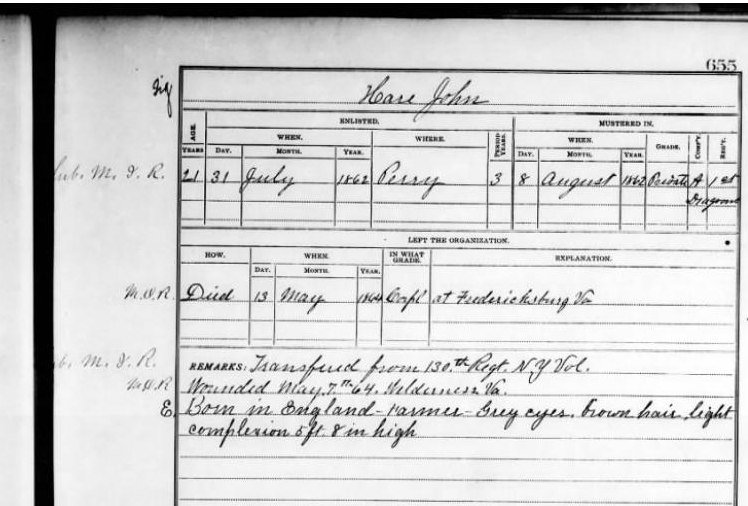
HARE, JOHN.
Enlisted. Age 21. July 31, 1862, at Perry, for three years. Mustered in August 8, 1862, a Private, Company A, 1st Dragoons.
Left the organization. Died May 13, 1864, a Corporal, at Fredericksburg, Va.
Remarks. Transferred from the 130th Regiment N.Y. Vol. Wounded May 7, 1864, Wilderness, Va. Born in England. Farmer. Grey eyes, brown hair, light complexion, 5 ft. 8 in. high.
Source. New York (State). Adjutant General’s Office. Abstract of the muster roll of John Hare, Company A, 1st New York Dragoons (Civil War muster roll abstracts, 1861-1900). New York State Archives, Albany, N.Y. Digital image accessed via Fold3 (record 316488223). fold3.com/file/316488223
The State’s abstract and Bowen’s regimental roster agree: the English-born corporal was wounded at the Wilderness on May 7, 1864, and died of those wounds at Fredericksburg six days later.
The Regimental Register (Bowen, 1900)
380 APPENDIX
Harding, Charles. Age, 18 years. Enlisted, Aug. 4, 1862, at Mt. Morris, N. Y.; mustered in as private, Co. B, Aug. 9, 1862, to serve three years; appointed corporal, July 18, 1864; sergeant, March 20, 1865; mustered out with company, June 30, 1865, at Clouds Mills, Va. Mt. Morris, N. Y.
Hardy, Henry F. Age, 18 years. Enlisted, Aug. 6, 1862, at Gainesville, N. Y.; mustered in as private, Co. A, Aug. 7, 1862, to serve three years; mustered out with company, June 30, 1865, at Clouds Mills, Va.
Hardy, Roswin. Age, 23 years. Enlisted, Aug. 9, 1862, at Andover, N. Y.; mustered in as private, Co. E, Aug. 16, 1862, to serve three years; appointed corporal, Feb. 1, 1865; mustered out with company, June 30, 1865, at Clouds Mills, Va. Andover, N. Y.
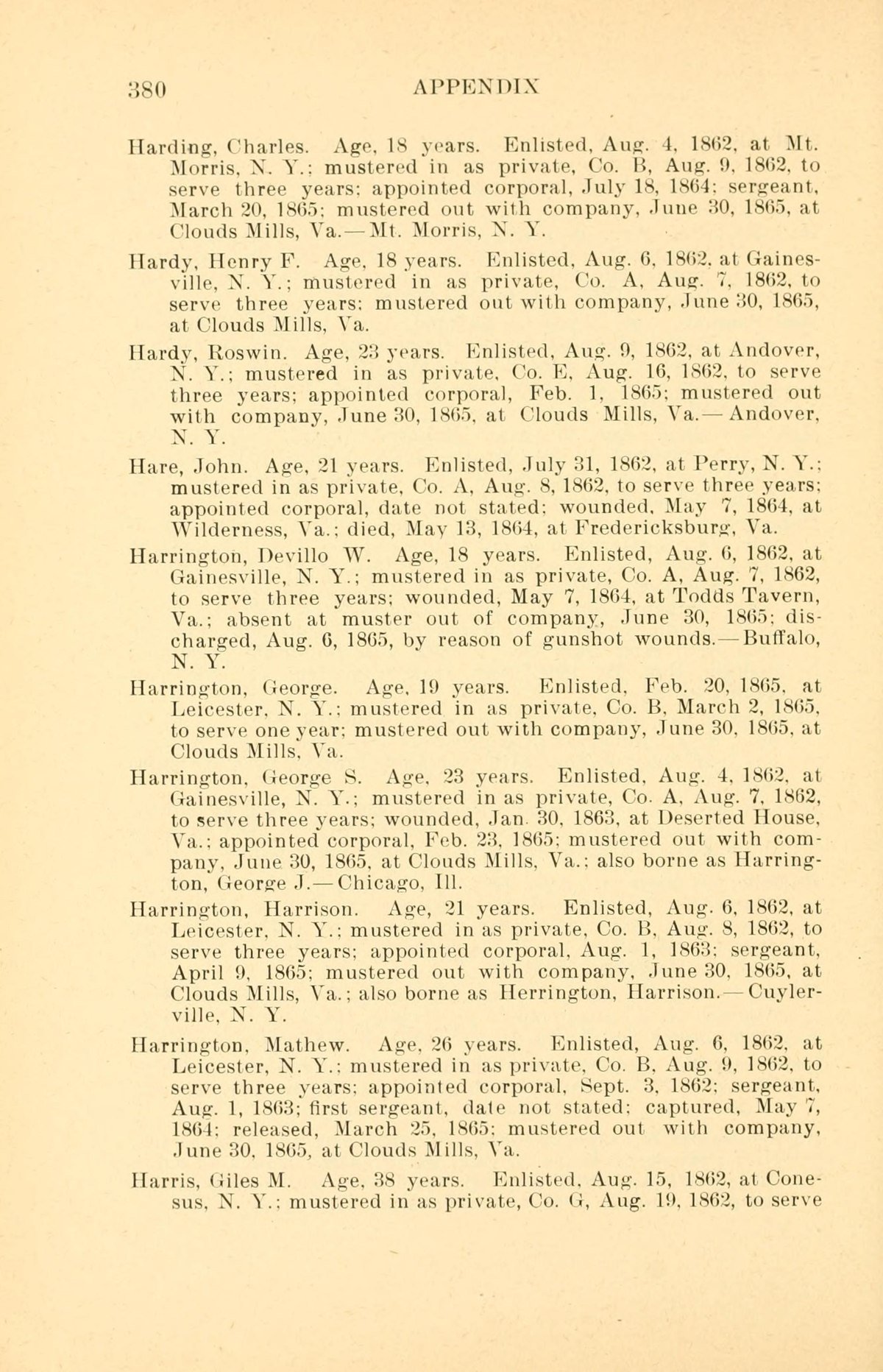
Hare, John. Age, 21 years. Enlisted, July 31, 1862, at Perry, N. Y.; mustered in as private, Co. A, Aug. 8, 1862, to serve three years; appointed corporal, date not stated; wounded, May 7, 1864, at Wilderness, Va.; died, May 13, 1864, at Fredericksburg, Va.
Harrington, Devillo W. Age, 18 years. Enlisted, Aug. 6, 1862, at Gainesville, N. Y.; mustered in as private, Co. A, Aug. 7, 1862, to serve three years; wounded, May 7, 1864, at Todds Tavern, Va.; absent at muster out of company, June 30, 1865; discharged, Aug. 6, 1865, by reason of gunshot wounds. Buffalo, N. Y.
Harrington, George. Age, 19 years. Enlisted, Feb. 20, 1865, at Leicester, N. Y.; mustered in as private, Co. B, March 2, 1865, to serve one year; mustered out with company, June 30, 1865, at Clouds Mills, Va.
Harrington, George S. Age, 23 years. Enlisted, Aug. 4, 1862, at Gainesville, N. Y.; mustered in as private, Co. A, Aug. 7, 1862, to serve three years; wounded, Jan. 30, 1863, at Deserted House, Va.; appointed corporal, Feb. 23, 1865; mustered out with company, June 30, 1865, at Clouds Mills, Va.; also borne as Harrington, George J. Chicago, Ill.
Harrington, Harrison. Age, 21 years. Enlisted, Aug. 6, 1862, at Leicester, N. Y.; mustered in as private, Co. B, Aug. 8, 1862, to serve three years; appointed corporal, Aug. 1, 1863; sergeant, April 9, 1865; mustered out with company, June 30, 1865, at Clouds Mills, Va.; also borne as Herrington, Harrison. Cuylerville, N. Y.
Harrington, Mathew. Age, 26 years. Enlisted, Aug. 6, 1862, at Leicester, N. Y.; mustered in as private, Co. B, Aug. 9, 1862, to serve three years; appointed corporal, Sept. 3, 1862; sergeant, Aug. 1, 1863; first sergeant, date not stated; captured, May 7, 1864; released, March 25, 1865; mustered out with company, June 30, 1865, at Clouds Mills, Va.
Harris, Giles M. Age, 38 years. Enlisted, Aug. 15, 1862, at Conesus, N. Y.; mustered in as private, Co. G, Aug. 19, 1862, to serve [entry continues on the following page]
Source. Bowen, J. R. (1900). Regimental history of the First New York Dragoons (originally the 130th N.Y. Vol. Infantry) during three years of active service in the great Civil War (p. 380). Internet Archive identifier regimentalhistor00bowe, leaf n399. https://archive.org/details/regimentalhistor00bowe/page/n399
Fate discrepancy: the supplied roster label says died of disease, but Bowen records that Hare was wounded May 7, 1864 at the Wilderness and died May 13, 1864 at Fredericksburg, a death from wounds; the enriched-roster fate field should be re-checked before publishing a cause of death.
In the County Histories
The county histories compiled within twenty years of the war named the men who went, and often recorded what became of them. His name appears on the pages reproduced below.
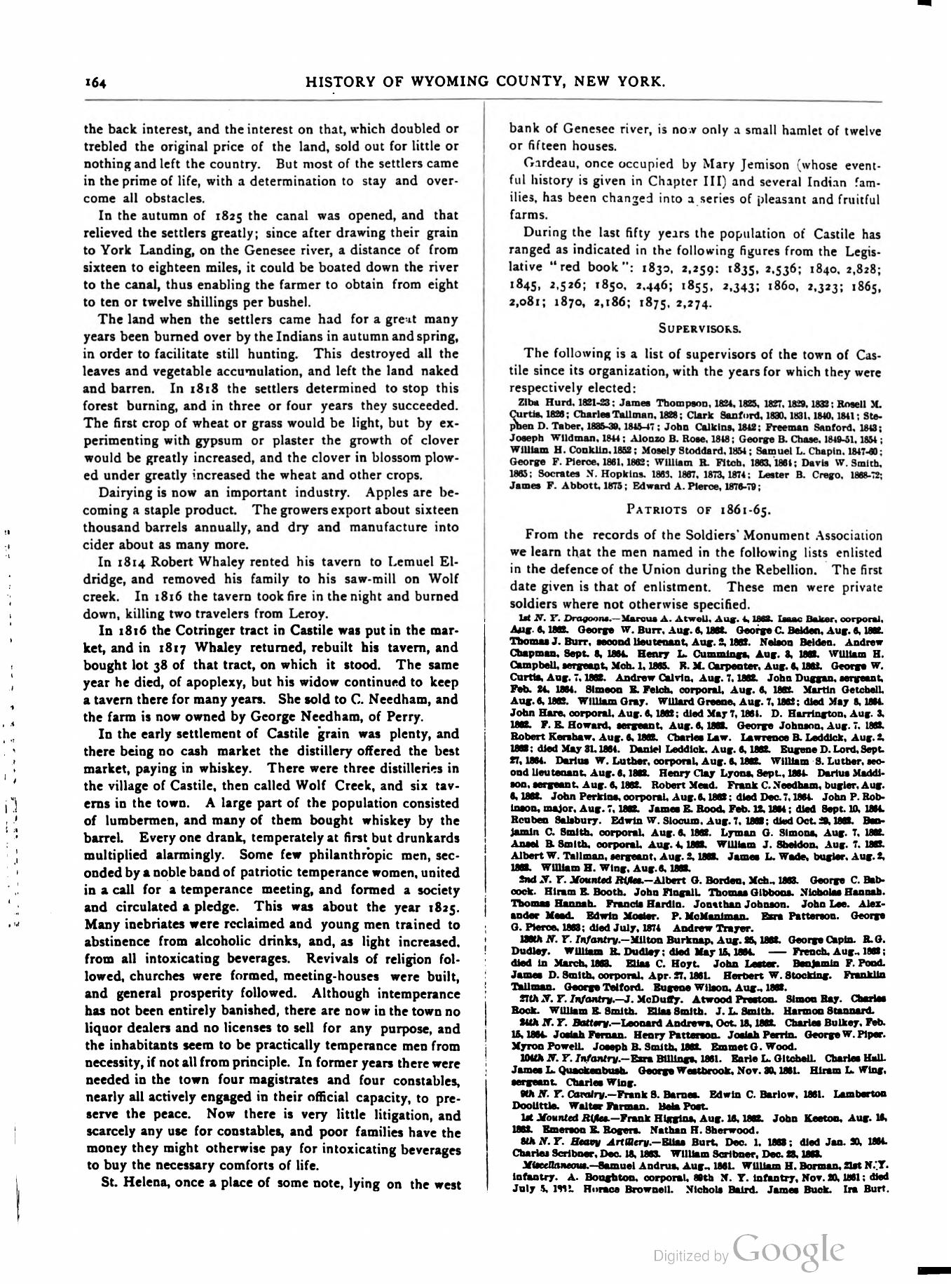
“John Hare, corporal, Aug. 6, 1862”
Source. F. W. Beers & Co. (1880). History of Wyoming County, N.Y. (p. 164). New York, NY: F. W. Beers & Co.. Public domain; digitised copy held in the archive of this site.
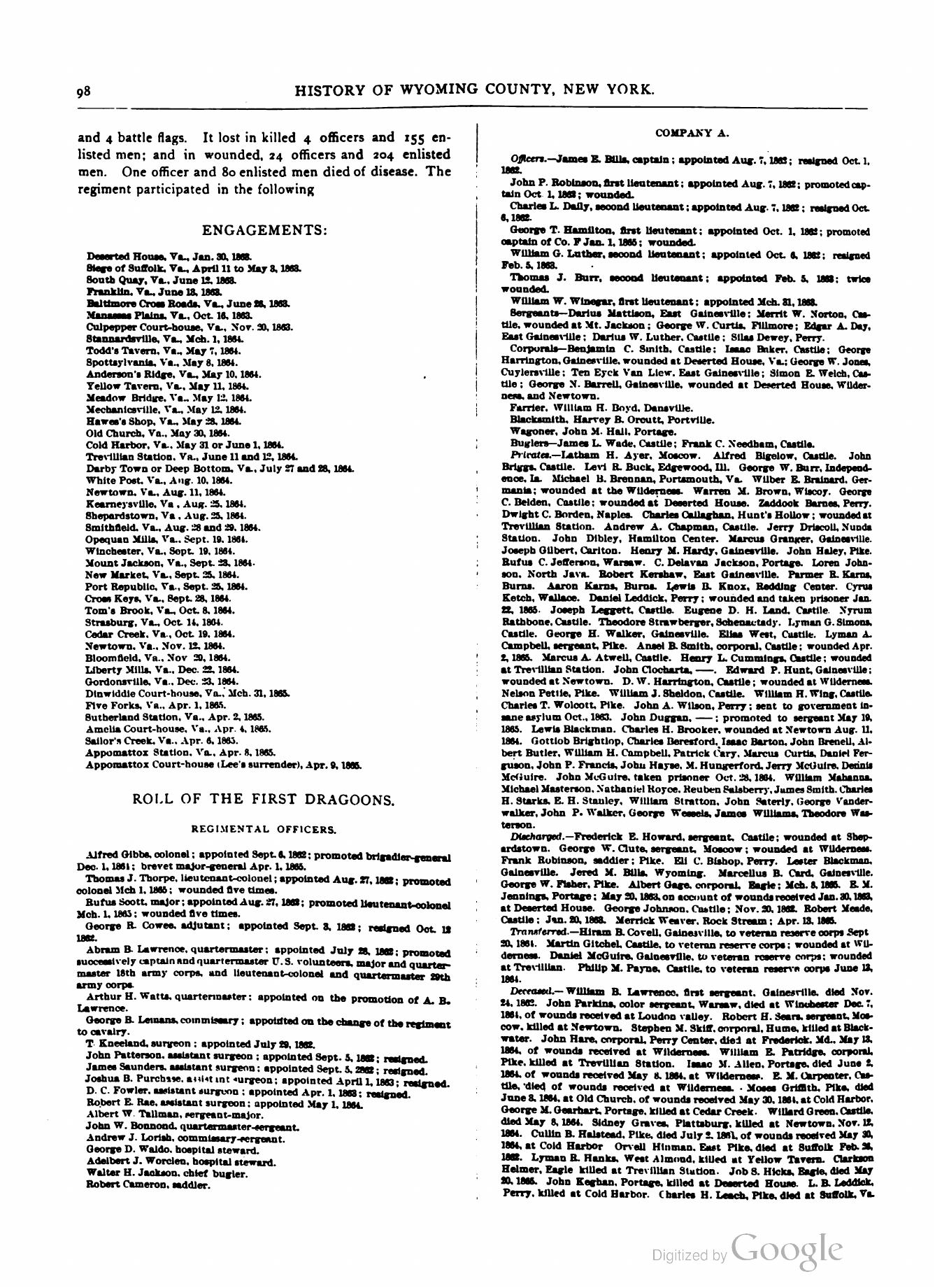
“John Hare, corporal, Perry Center, died at Frederick. Md., May 13, 1864, of wounds received at Wilderness”
Source. F. W. Beers & Co. (1880). History of Wyoming County, N.Y. (p. 98). New York, NY: F. W. Beers & Co.. Public domain; digitised copy held in the archive of this site.
Views: 59
Explore the evidence
View this article’s connected sources and media →
About this page
This article was brought over from AlfredGibbs.com. Its preserved text, media and citations remain available for comparison.