
Table of Contents
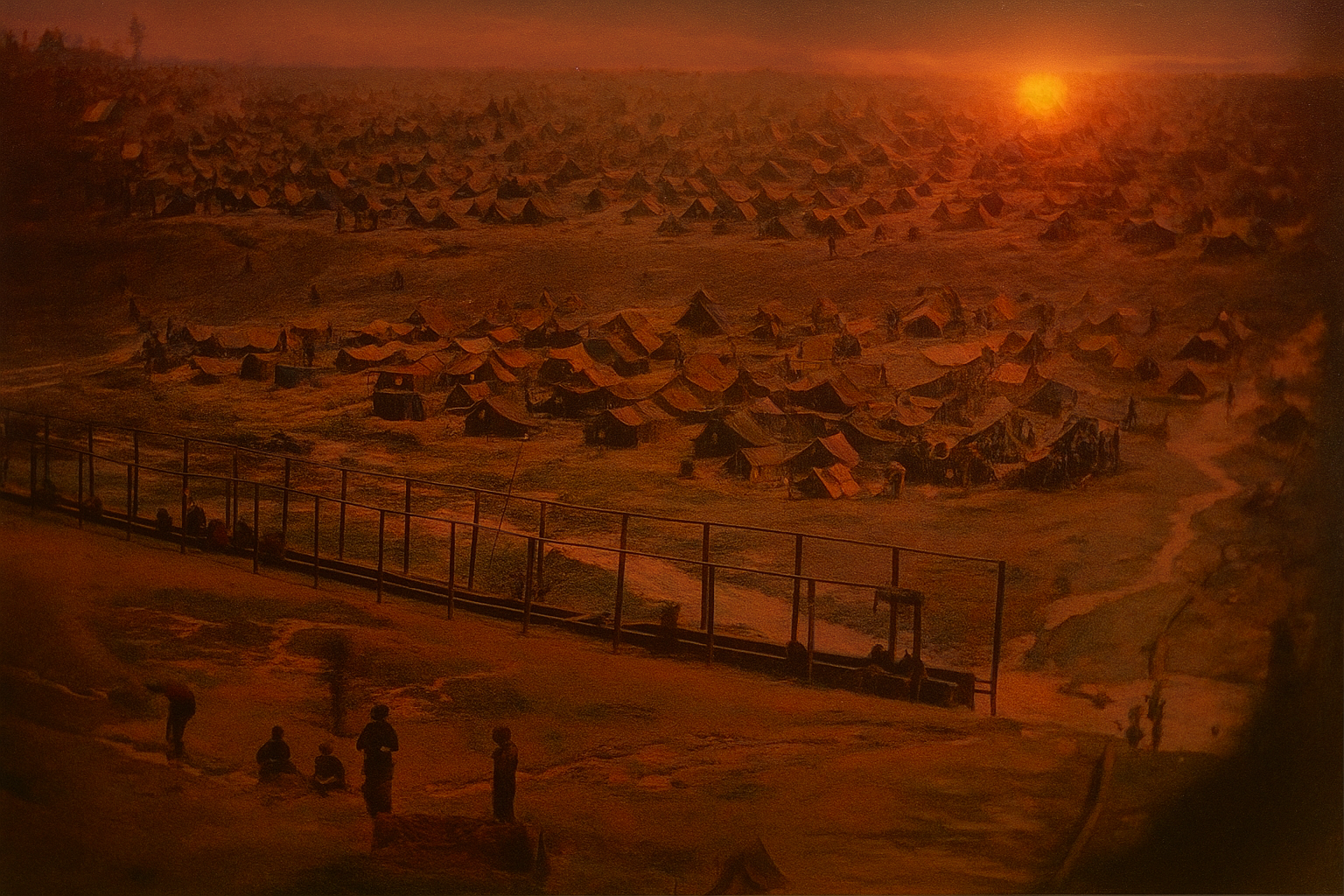
The Legacy of the Trial
Introduction
The trial of Captain Henry Wirz and its aftermath left an indelible mark on the historical memory of the Civil War. Convicted and executed in 1865 for war crimes committed during his tenure as commandant of Andersonville Prison, Wirz remains a polarizing figure in American history. His trial has been celebrated as an early example of accountability for wartime atrocities and criticized as a politically charged proceeding shaped more by public sentiment than judicial fairness.
This report examines the legacy of Wirz’s trial, beginning with his conviction and execution. It explores the public reaction and the broader ethical and historical debates that emerged in its wake. Finally, it considers the trial’s long-term implications for the understanding of war crimes and its role in shaping how Andersonville and the Civil War are remembered in American history.
The Verdict and Execution
Captain Henry Wirz’s conviction and execution marked the culmination of one of the most controversial trials in American history. On November 10, 1865, Wirz was found guilty on multiple counts, including conspiracy and murder, and sentenced to death by hanging. The tribunal concluded that he bore primary responsibility for the inhumane conditions and mass deaths at Andersonville Prison. The verdict was widely celebrated in the North, where many viewed it as a long-overdue act of justice for the suffering endured by Union prisoners (The Trial of Captain Henry Wirz Book, p. 245).
The execution itself was a public spectacle, attended by a crowd of onlookers eager to witness the conclusion of what many considered an emblematic case of Confederate cruelty. Wirz maintained his innocence to the end, reportedly refusing an offer to avoid execution in exchange for implicating Confederate President Jefferson Davis in the atrocities at Andersonville (The Trial of Captain Henry Wirz Book, p. 253). His final words, as recorded by witnesses, expressed his belief that he had been scapegoated for systemic failures beyond his control.
Public reactions to Wirz’s execution were sharply divided along regional lines. In the North, his death was seen as a necessary act of retribution, a symbolic punishment for the Confederacy’s treatment of Union prisoners. In the South, however, many viewed Wirz as a martyr, unfairly targeted by a vindictive Union. Confederate sympathizers argued that he had been made a scapegoat for conditions beyond his control, highlighting the chronic resource shortages and logistical challenges faced by the South during the war (Hesseltine, 1949).
Ethical debates surrounding Wirz’s trial and execution persist to this day. Historians have questioned the fairness of the proceedings, pointing to procedural irregularities and the influence of public sentiment. While some view the trial as an important step toward accountability for wartime atrocities, others argue that it exemplified the dangers of politicized justice (Percoco, 1993). These debates underscore the complexities of attributing individual culpability in the context of systemic failures, a theme that continues to resonate in discussions of war crimes and justice.
Public and Scholarly Reactions
The trial of Captain Wirz generated significant public and scholarly interest in the decades following the Civil War, shaping perceptions of both Andersonville and the broader Confederate war effort. For many in the North, the trial served as a cautionary tale about the consequences of inhumane treatment during wartime. Northern newspapers and publications emphasized Wirz’s conviction as a moral victory, using it to reinforce narratives of Union superiority and Confederate barbarity (The Trial of Captain Henry Wirz Book, p. 267).
However, as time passed, critical reappraisals of the trial began to emerge. Early 20th-century historians, particularly those sympathetic to the Lost Cause narrative, portrayed Wirz as a victim of Reconstruction-era politics. These accounts argued that his trial was less about justice and more about satisfying Northern demands for retribution. They emphasized the systemic challenges faced by Confederate leaders, such as resource shortages and the Union’s suspension of prisoner exchanges, to contextualize the conditions at Andersonville (Hesseltine, 1949).
Scholars have continued to debate the trial’s fairness and its implications for the concept of war crimes. Some view it as a precursor to modern war crimes trials, such as those held at Nuremberg after World War II. By holding Wirz accountable for the atrocities at Andersonville, the trial established an early precedent for the prosecution of individuals responsible for the treatment of prisoners of war (Percoco, 1993). Others, however, criticize the trial’s reliance on anecdotal evidence and its susceptibility to public and political pressures, arguing that it failed to meet the standards of impartial justice.
Public memory of Wirz and Andersonville remains divided. In the South, Wirz is commemorated in some circles as a martyr who suffered unjustly for the Confederacy’s broader failures. Monuments and memorials dedicated to Wirz, such as the one in Andersonville, Georgia, reflect this perspective. In contrast, Northern accounts continue to emphasize the suffering of Union prisoners and Wirz’s role in their plight. These competing narratives highlight the enduring tensions in how the Civil War is remembered and interpreted.
Long-Term Implications
The trial of Captain Henry Wirz had significant long-term implications for the understanding of war crimes and the treatment of prisoners of war. While it was one of the first trials to address individual accountability for wartime atrocities, it also exposed the challenges of balancing justice with fairness in highly charged political and social contexts.
One of the most enduring legacies of the trial is its impact on the evolving concept of war crimes. Wirz’s conviction highlighted the need for clear standards and procedures for prosecuting individuals accused of atrocities. This theme would reemerge in subsequent conflicts, most notably during the Nuremberg Trials after World War II, where the principle of individual accountability for crimes against humanity became a cornerstone of international law (Percoco, 1993). However, the procedural flaws and political pressures evident in Wirz’s trial also serve as a cautionary tale about the dangers of politicizing justice.
The trial also played a pivotal role in shaping the historical memory of Andersonville and the Civil War. By focusing on Wirz as a central figure, it reinforced narratives of Confederate cruelty while overshadowing the systemic factors that contributed to the camp’s conditions. This emphasis on individual culpability has influenced how historians and the public remember Andersonville, often simplifying the complex realities of wartime logistics and resource shortages (The Trial of Captain Henry Wirz Book, p. 288).
Finally, the trial has had lasting implications for the preservation of Andersonville as a site of memory. The National Prisoner of War Museum and the Andersonville National Historic Site reflect efforts to honor the victims of Andersonville while acknowledging the broader ethical and historical questions raised by the trial. These institutions encourage visitors to reflect on the human cost of war and the importance of accountability, ensuring that the lessons of Andersonville and Wirz’s trial remain relevant.
Final Thoughts
The trial of Captain Henry Wirz was a landmark moment in the aftermath of the Civil War, serving as both an attempt at justice and a reflection of the complexities of wartime accountability. While Wirz’s conviction and execution satisfied Northern demands for retribution, they also sparked enduring debates about the fairness of the trial and the broader systemic failures that contributed to the horrors of Andersonville.
As one of the first war crimes trials in U.S. history, Wirz’s case set a precedent for addressing individual culpability in the treatment of prisoners of war. However, its procedural flaws and political overtones underscore the challenges of seeking justice in the aftermath of conflict. Today, the legacy of the trial continues to shape how Andersonville and the Civil War are remembered, offering important lessons about the human cost of war and the enduring importance of accountability.
References
Chipman, N. P. (1911). The tragedy of Andersonville: Trial of Captain Henry Wirz, the prison keeper. [Sacramento?, CA: Publisher unknown]. Cornell University Library. Retrieved from https://www.archive.org
Hesseltine, W. B. (1949). Andersonville. The Georgia Review, 3(1), 103–114. Georgia Review. Retrieved from https://www.jstor.org/stable/41394808
Percoco, J. A. (1993). The Space Beyond the Gates: Andersonville Prison. OAH Magazine of History, 8(1), 37–43. Organization of American Historians. Retrieved from https://www.jstor.org/stable/25162924
Views: 32
Explore the evidence
View this article’s connected sources and media →
About this page
This article was brought over from AlfredGibbs.com. Its preserved text, media and citations remain available for comparison.