
Table of Contents
Carlisle Barracks: A Historic Post in September 1859
In September 1859, Carlisle Barracks, located in Cumberland County, Pennsylvania, served as a cornerstone of military training and recruitment for the U.S. Army. With a history dating back to 1757, this installation played a crucial role in preparing cavalry units and serving as a hub for military administration. At this time, General Alfred Gibbs, then a First Lieutenant and Brevet Captain, was stationed at Carlisle Barracks as part of the recruitment efforts.
Historical Significance of Carlisle Barracks
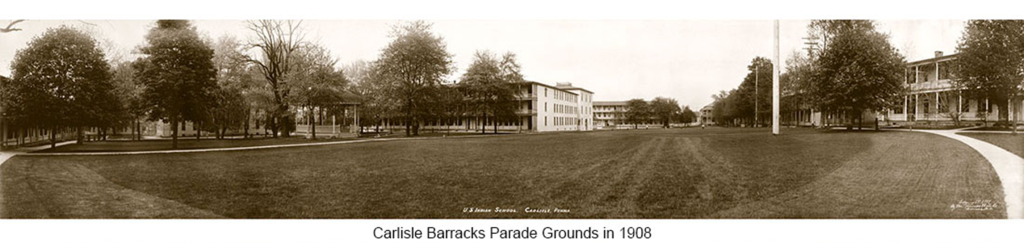
Established during the French and Indian War in 1757, Carlisle Barracks is one of the oldest Army installations in the United States. By 1859, the post was a key site for training cavalry recruits and supporting broader military operations. During the American Revolution, the barracks, then called Washingtonburg, served as a major ordnance center, storing and repairing arms for the Continental Army (Army Heritage and Education Center [AHEC], n.d.).
Carlisle Barracks played an essential role during the antebellum period by contributing to the readiness of the U.S. Army. The cavalry school at the barracks trained officers and soldiers in horsemanship, tactics, and the care of equipment, preparing them for service on the frontier and in potential conflicts. The post’s central location and infrastructure made it a vital hub for military logistics and administration (Military OneSource, n.d.).
Lieutenant Alfred Gibbs’ Role at Carlisle Barracks
In 1859, Lieutenant Alfred Gibbs was assigned to the recruitment offices at Carlisle Barracks. As a Brevet Captain, Gibbs oversaw the enlistment and training of new recruits. His work contributed directly to maintaining the Army’s operational readiness during a time when tensions in the United States were escalating. Recruiting officers like Gibbs ensured that incoming soldiers were adequately prepared for the challenges of military service, particularly in cavalry units that played an essential role in frontier defense (AHEC, n.d.).
Carlisle Barracks in the Mid-19th Century
The late 1850s were a time of increasing sectional tensions in the United States. Military posts like Carlisle Barracks were essential for maintaining the Army’s readiness amid growing national uncertainty. In addition to recruitment, the barracks supported military education and provided logistical infrastructure for the Army.
The post was strategically located near Harrisburg, Pennsylvania, allowing easy access to transportation routes like the Pennsylvania Turnpike and major railroads. Its position also made it a vital node for connecting the eastern United States with frontier regions. Agriculture, tourism, and industry in the surrounding area supported the post’s operations and contributed to the economy of Cumberland County (Military OneSource, n.d.).
Evolution of Carlisle Barracks
While the post served primarily as a cavalry school and recruitment center in 1859, its roles would evolve significantly in later years. By 1871, the cavalry school relocated, and Carlisle Barracks became home to the Carlisle Indian Industrial School in 1879. The school was a significant institution for Native American education, managed by the Department of the Interior under the leadership of Richard H. Pratt (AHEC, n.d.).
Carlisle Barracks’ long history demonstrates its adaptability and importance to the U.S. Army. Over time, it transitioned from a frontier post to a center for military education, now housing the U.S. Army War College. This institution prepares senior military leaders for strategic roles in defense and policy-making, ensuring that Carlisle Barracks continues to shape the future of the U.S. Army (Military OneSource, n.d.).
Legacy
Carlisle Barracks remains a testament to the enduring importance of military infrastructure in the United States. In 1859, its activities, including the work of officers like Alfred Gibbs, laid the foundation for its ongoing contributions to the nation’s defense. The historical significance of the barracks is preserved through its evolving roles and the people who served there.
References
Army Heritage and Education Center (AHEC). (n.d.). Carlisle Barracks: Then and Now. Retrieved November 27, 2024, from https://ahec.armywarcollege.edu/exhibits/CBKsThenAndNow.cfm
Military OneSource. (n.d.). Carlisle Barracks: Base Overview and Info. Retrieved November 27, 2024, from https://installations.militaryonesource.mil/in-depth-overview/carlisle-barracks
Views: 22
Explore the evidence
View this article’s connected sources and media →
About this page
This article was brought over from AlfredGibbs.com. Its preserved text, media and citations remain available for comparison.