
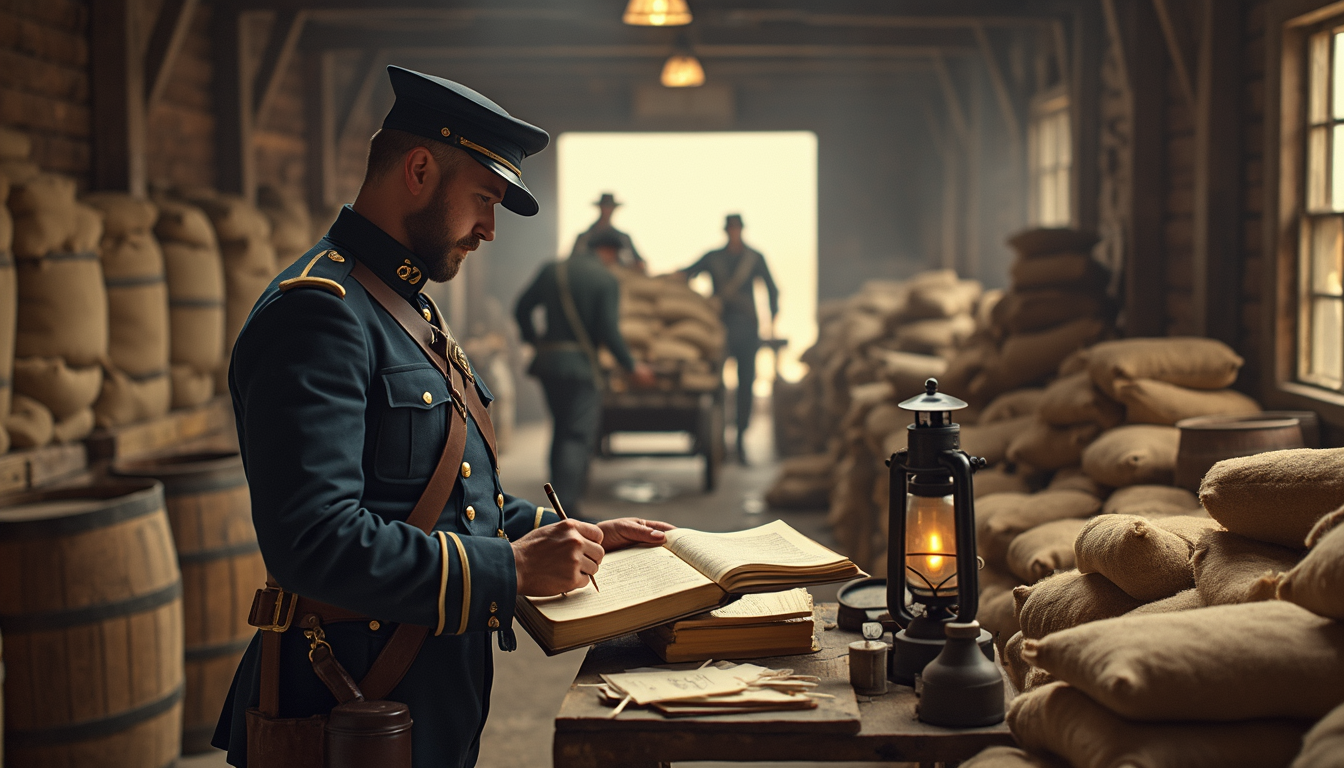
The Commissary Sergeant played a crucial role in ensuring that soldiers were adequately supplied with food and provisions during the Civil War. This role was part of the Subsistence Department, the military body responsible for the procurement, storage, and distribution of rations to Union forces (Newell & Shrader, 2011). Commissary Sergeants were tasked with a variety of duties that required both logistical acumen and dedication, as the role was vital for the army’s ability to maintain fighting strength in the field.
One of the primary duties of a Commissary Sergeant was overseeing the distribution of rations to soldiers. Rations during the Civil War included a variety of staple items such as pork, beef, bread, beans, rice, coffee, sugar, salt, and vinegar. Soldiers would typically receive a daily ration that, when available, met their nutritional needs to support the rigors of military life (Contributors to Wikimedia projects, n.d.). However, rations could be supplemented or limited based on availability, and Commissary Sergeants played an essential role in ensuring fair distribution according to available supplies.
Another significant responsibility was coordinating the logistics of food transport. Commissary Sergeants often worked with the Quartermaster Department to arrange the movement of supplies from depots to the front lines. This coordination was essential as food supplies were often transported from distant storage facilities or depots, sometimes even by rail. The Commissary Sergeant’s ability to manage this flow of supplies ensured that troops were fed even during active campaigns and extended maneuvers (Newell & Shrader, 2011).
Commissary Sergeants were also responsible for inventory management and record-keeping, a task essential for maintaining order and accountability within the regiment. They meticulously tracked the quantities of provisions, ensuring that each unit received its allotted share and that waste or theft was minimized. Given the high demand for resources and the challenges of transportation, careful inventory control helped maintain consistency and reduce the risk of food shortages, which could demoralize troops (Contributors to Wikimedia projects, n.d.).
In addition to provisioning, Commissary Sergeants were often involved in foraging operations. Especially in Confederate units where supplies were scarcer, it was common for Commissary Sergeants to oversee the collection of local resources to supplement rations. These activities included gathering or purchasing food from civilian sources when possible, especially during campaigns in rural areas. Foraging allowed armies to sustain themselves in regions with limited supply lines but also required Commissary Sergeants to exercise diplomacy and restraint to prevent negative impacts on local populations (Contributors to Wikimedia projects, n.d.).
In essence, the Commissary Sergeant’s role was indispensable to the Civil War military structure. This position demanded organization, resourcefulness, and a keen understanding of logistics. The effectiveness of the Subsistence Department and, by extension, the Commissary Sergeant, was a cornerstone of military readiness, ensuring that troops remained nourished and prepared for battle.
References
Contributors to Wikimedia projects. (n.d.). Foods of the American Civil War. In Wikipedia, The Free Encyclopedia. Retrieved from https://en.wikipedia.org/wiki/Foods_of_the_American_Civil_War
Newell, C. R., & Shrader, C. R. (2011). Of Duty Well and Faithfully Done: A History of the Regular Army in the Civil War. University of Nebraska Press.
Commissary Soldiers of the First New York Dragoons
| Name | Company | Rank | Age at Enlistment | Date Appointed | Service Details |
|---|---|---|---|---|---|
| Clarence L. Cudebec | F | First Sergeant | 26 | August 1, 1863 | Appointed commissary sergeant, later promoted to first sergeant; mustered out June 23, 1865, at Clouds Mills, Va. |
| Paul P. Draper | D | Sergeant | 38 | Not Stated | Appointed as commissary sergeant; mustered out June 30, 1865, at Clouds Mills, Va. |
| Edward L. Gilbert | I | Corporal | 37 | September 1, 1863 | Appointed commissary sergeant; absent in General Hospital at muster out of company. |
| Milo S. Goldthwait | I | Corporal | 20 | January 3, 1865 | Appointed commissary sergeant; mustered out June 30, 1865, at Clouds Mills, Va. |
| Benjamin W. Keith | B | First Sergeant | 27 | Not Stated | Appointed commissary sergeant; wounded twice; mustered out June 18, 1865, at Whitehall U.S. Army General Hospital, Philadelphia, Pa. |
| Andrew J. Lorish | C | Second Lieutenant | 29 | October 31, 1863 | Appointed regimental commissary sergeant, later promoted to second lieutenant; mustered out June 30, 1865, at Clouds Mills, Va. |
| Sidney S. Morris | I | Regimental Commissary Sergeant | 21 | Not Stated | Appointed commissary sergeant and later regimental commissary sergeant; mustered out June 30, 1865, at Clouds Mills, Va. |
Views: 155
Explore the evidence
View this article’s connected sources and media →
About this page
This article was brought over from AlfredGibbs.com. Its preserved text, media and citations remain available for comparison.