
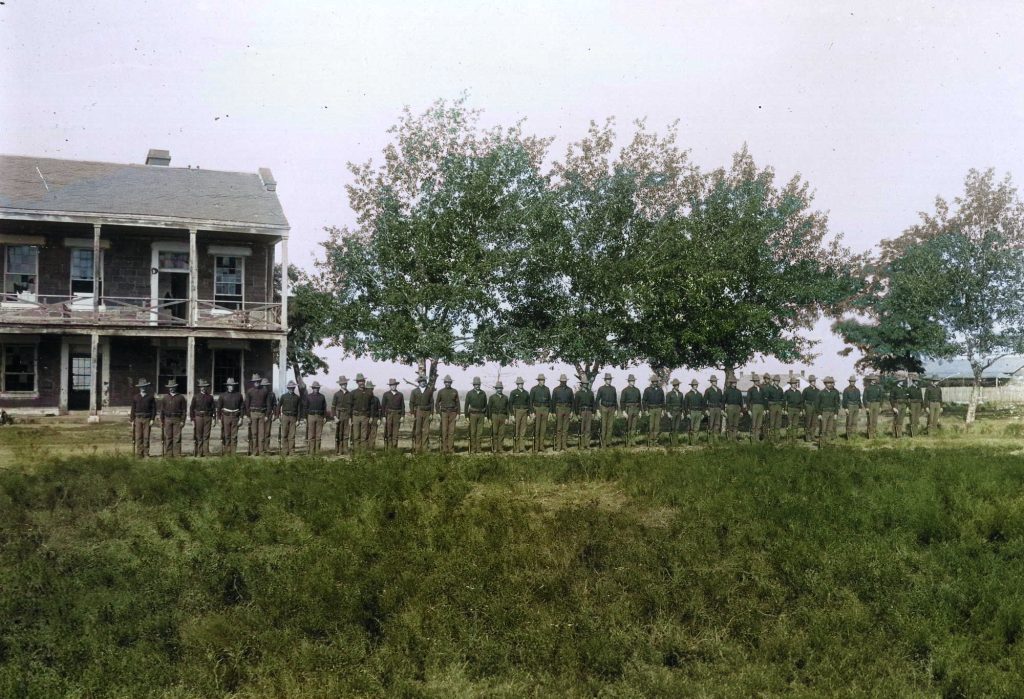
Fort Gibson, located in present-day Muskogee County, Oklahoma, holds a significant place in the history of the American frontier. Established in 1824 by Colonel Matthew Arbuckle, the fort was part of the U.S. Army’s efforts to protect the southwestern border of the United States and maintain peace among Native American tribes and settlers. Over its active years, the fort became a central hub for military and diplomatic activities in the region, especially during the turbulent years of Indian removal and the Civil War. This report explores the founding, development, and enduring impact of Fort Gibson on the history of the American West.
Founding and Early Role (1824-1832)
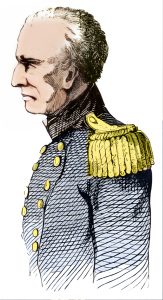
Fort Gibson was originally named Cantonment Gibson, after U.S. Army Commissary General George Gibson. Colonel Matthew Arbuckle, commanding the 7th Infantry Regiment, moved elements of his regiment from Fort Smith, Arkansas, and established the post on the east side of the Grand River. The fort’s location, about a mile north of the confluence with the Arkansas River, made it the westernmost U.S. military post at the time. Its mission was to protect the nation’s southwestern border and maintain peace between the feuding Cherokee and Osage tribes (Fort Gibson Historic Site, n.d.).
The early years of the fort were marked by construction efforts as soldiers built stockades, barracks, and other facilities. In addition to their peacekeeping duties, troops at Fort Gibson blazed roads and helped settle disputes among Native American tribes (Agnew, n.d.). The fort’s presence helped quell tensions in the region, and it played a vital role in the United States’ broader strategy of maintaining order on the expanding frontier.
Indian Removal and the Stokes Commission (1830s)
The passage of the Indian Removal Act in 1830 significantly altered the mission of Fort Gibson. As eastern tribes were forcibly relocated to Indian Territory, Fort Gibson became a critical post for managing the influx of displaced Native Americans. The Army renamed the post “Fort Gibson” in 1832, signaling its transformation from a temporary cantonment to a more permanent military installation (Fort Gibson Historic Site, n.d.).
With the arrival of immigrant Native Americans, tensions between the newcomers and Plains tribes already inhabiting the area escalated. The federal government responded by establishing the Stokes Commission, chaired by Montfort Stokes, a former governor of North Carolina. The commission, based at Fort Gibson, aimed to mediate disputes between the relocated tribes and the Osage. Troops from the fort supported the commission’s efforts, and while their work did not entirely resolve the conflicts, it helped to mitigate the worst of the violence (Agnew, n.d.).
During this period, Fort Gibson also served as a launching point for several expeditions into the southern Plains. Notably, author Washington Irving accompanied one such expedition in 1832, which inspired his book A Tour on the Prairies (Agnew, n.d.).
Fort Gibson and the Civil War
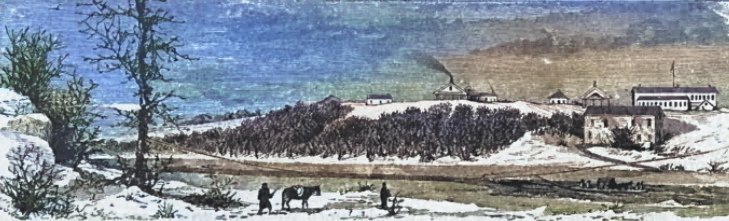
The role of Fort Gibson during the Civil War further cemented its historical significance. In 1862, Union forces occupied the fort, renaming it “Fort Blunt” after Brigadier General James G. Blunt, who commanded the Department of Kansas. The fort’s strategic position at the junction of the Arkansas River and the Texas Road made it a key asset for the Union in Indian Territory (Agnew, n.d.). Although Confederate forces never directly attacked the fort, Union troops stationed there played a pivotal role in the Battle of Honey Springs, the most significant military engagement in Indian Territory during the war (Fort Gibson Historic Site, n.d.).
After the war, Fort Gibson was reoccupied by U.S. forces, and it continued to serve as a military post until its final abandonment in 1890. Throughout the post-war years, the fort’s garrison fluctuated in size depending on the region’s needs, including managing disputes among local tribes and addressing the growing problem of white encroachment on Native American lands (Battlefields.org, n.d.).
Decline and Legacy
By the late 19th century, the role of Fort Gibson had diminished as the frontier moved further west. The fort was officially decommissioned in 1890, and the town of Fort Gibson gradually expanded into the former military grounds. However, Fort Gibson’s legacy endures. The fort is now a National Historic Landmark and is preserved as part of the Fort Gibson Historic Site, managed by the Oklahoma Historical Society. Visitors to the site can explore reconstructions of early log structures, original buildings from the 1840s through the 1870s, and a museum dedicated to the fort’s history (Fort Gibson Historic Site, n.d.).
Conclusion
Fort Gibson played a crucial role in the history of the American West. From its founding in 1824 to its decommissioning in 1890, the fort served as a military, diplomatic, and logistical hub for U.S. efforts to maintain peace and order on the frontier. Its involvement in Indian removal, the Civil War, and post-war reconstruction left an indelible mark on the region. Today, Fort Gibson stands as a testament to the challenges and complexities of the American frontier experience.
References
Agnew, B. (n.d.). Fort Gibson. Encyclopedia of Oklahoma History and Culture. Retrieved from https://www.okhistory.org/publications/enc/entry?entry=FO033
Battlefields.org. (n.d.). Fort Gibson Historic Site. American Battlefield Trust. Retrieved from https://www.battlefields.org/visit/heritage-sites/fort-gibson-historic-site
Fort Gibson Historic Site. (n.d.). Fort Gibson. Retrieved from https://en.wikipedia.org/wiki/Fort_Gibson
Views: 66
Explore the evidence
View this article’s connected sources and media →
About this page
This article was brought over from AlfredGibbs.com. Its preserved text, media and citations remain available for comparison.