
Introduction
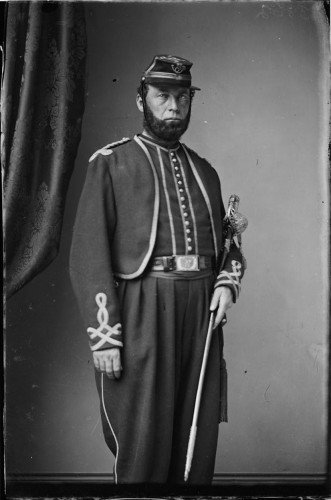
Lieutenant Colonel Edgar Addison Kimball was a dedicated military officer whose career spanned from the Mexican-American War to the American Civil War. Born on June 13, 1822, in Pembroke, New Hampshire, Kimball demonstrated an early commitment to service, eventually becoming an influential figure in the Union Army. He served with distinction in the 9th New York Infantry, also known as Hawkins’ Zouaves, and left a complex legacy marked by both bravery and a tragic confrontation with General Michael Corcoran. This report provides an overview of Kimball’s military service, highlighting his contributions, leadership roles, and the circumstances surrounding his untimely death.
Early Life and Military Career
Kimball attended Pembroke Military Academy and later Norwich University, where he received a solid military education. During the Mexican-American War, he served as a Captain in the 9th United States Infantry from 1847 to 1848. His valor in battles such as Contreras, Churubusco, and Chapultepec earned him a brevet promotion to Major. After the war, Kimball transitioned into civilian life as a printer and newspaper editor, becoming the proprietor of The Age, a liberal Democratic newspaper published in Woodstock, Vermont. He was also active in Democratic politics and worked as a Weigher in the New York Customs House.
Service in the Civil War
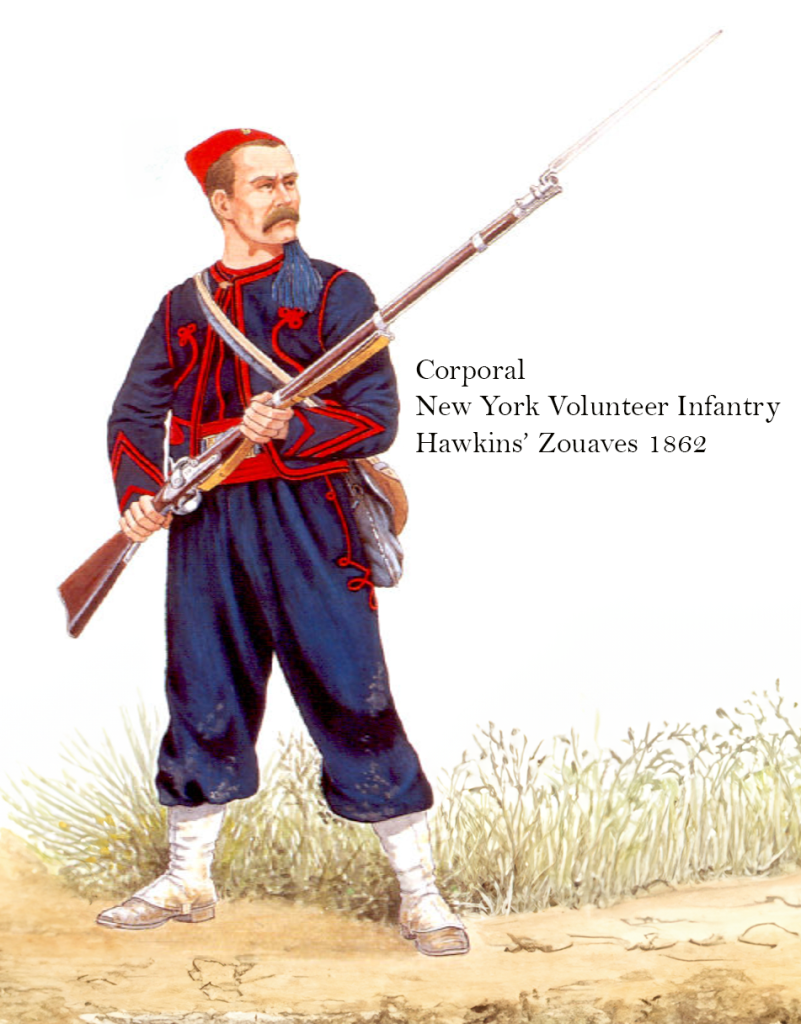
At the outset of the Civil War, Kimball rejoined military service, mustering into the 9th New York Infantry as a Major on May 4, 1861. His experience and leadership skills led to his promotion to Lieutenant Colonel on February 14, 1862, and he subsequently took command of the regiment. Kimball’s unit, Hawkins’ Zouaves, was renowned for its discipline and distinctive uniforms, and he played a key role in maintaining its reputation as a formidable fighting force.
During the Antietam Campaign, Kimball led the 9th New York in place of Colonel Rush Hawkins, who was on leave. On September 17, 1862, at the Battle of Antietam, Kimball commanded the regiment during a courageous charge against Confederate positions below Sharpsburg. Although the unit suffered heavy casualties, their actions contributed significantly to the Union’s efforts that day. Kimball’s leadership under fire earned him the respect of his men, who recognized his bravery and dedication to their cause (Antietam on the Web, accessed 10/08/2024).
The Incident at Suffolk
Lieutenant Colonel Kimball’s career, however, came to a tragic end on April 12, 1863, during operations in Suffolk, Virginia. In a tense and ultimately fatal encounter, Kimball was killed by General Michael Corcoran. According to accounts, including those from This Week in the Civil War, the incident occurred in the early hours of the morning after a report that the enemy was advancing. General Corcoran, responding to the situation, encountered Kimball, who was overseeing his regiment’s defenses. Kimball challenged Corcoran to provide the countersign, a standard procedure during times of heightened security.
Corcoran, apparently agitated and unwilling to comply, insisted on passing without providing the countersign. Kimball, in his role as the commanding officer of the regiment, insisted that Corcoran adhere to proper protocol. The confrontation escalated, with Kimball reportedly brandishing his sword and using “abusive language.” Corcoran, in what he later described as an act of self-defense, shot Kimball in the neck, killing him instantly (Find A Grave, accessed 10/08/2024).
Court of Inquiry and Aftermath
A Court of Inquiry, convened at the request of General Corcoran, later determined that Kimball had not been on duty or at a picket post when he confronted Corcoran. The court also concluded that Kimball had been intoxicated at the time, had used abusive language, and had threatened violence with his sword. As a result, Corcoran was found to have acted in self-defense and was not held accountable for Kimball’s death. This ruling, however, did little to assuage the feelings of those who respected Kimball’s service and leadership.
The death of Lieutenant Colonel Edgar Kimball was a significant loss for the 9th New York Infantry. His leadership during key battles and his dedication to the Union cause made him a respected figure among his peers. Despite the controversial circumstances of his death, Kimball’s contributions to the Union war effort remain notable.
Legacy
Edgar Addison Kimball’s legacy is a mix of commendable service and a tragic end. His career was marked by bravery on the battlefield and a commitment to his men. From his early service in the Mexican-American War, where he earned a brevet promotion for gallantry, to his role in leading Hawkins’ Zouaves during the Civil War, Kimball demonstrated a consistent dedication to military service. His death, resulting from a misunderstanding with General Corcoran, underscores the often-chaotic nature of wartime leadership and the tensions that can arise even among those on the same side.
Kimball is buried in Green-Wood Cemetery in Brooklyn, New York, where his grave serves as a reminder of his service and sacrifice. His story, though marked by controversy, highlights the complexities faced by officers during the Civil War, where split-second decisions could lead to tragic outcomes.
References
Antietam on the Web. (n.d.). Lieutenant Colonel Edgar Addison Kimball. Retrieved October 8, 2024, from https://antietam.aotw.org/officers.php?officer_id=445
Find A Grave. (n.d.). Edgar Addison Kimball. Retrieved October 8, 2024, from https://www.findagrave.com/memorial/3295/edgar-addison-kimball
This Week in the Civil War. (n.d.). Incident Report involving General Michael Corcoran and Lt. Col. Edgar Kimball.
Heitman, F. B. (1903). Historical Register and Dictionary of the United States Army. Vol. 1.
Appleton, D. (1861-1865). Appleton’s Cyclopaedia of American Biography.
Views: 42
Explore the evidence
View this article’s connected sources and media →
About this page
This article was brought over from AlfredGibbs.com. Its preserved text, media and citations remain available for comparison.