
Erie Depot and Railroad Service in Elmira, New York
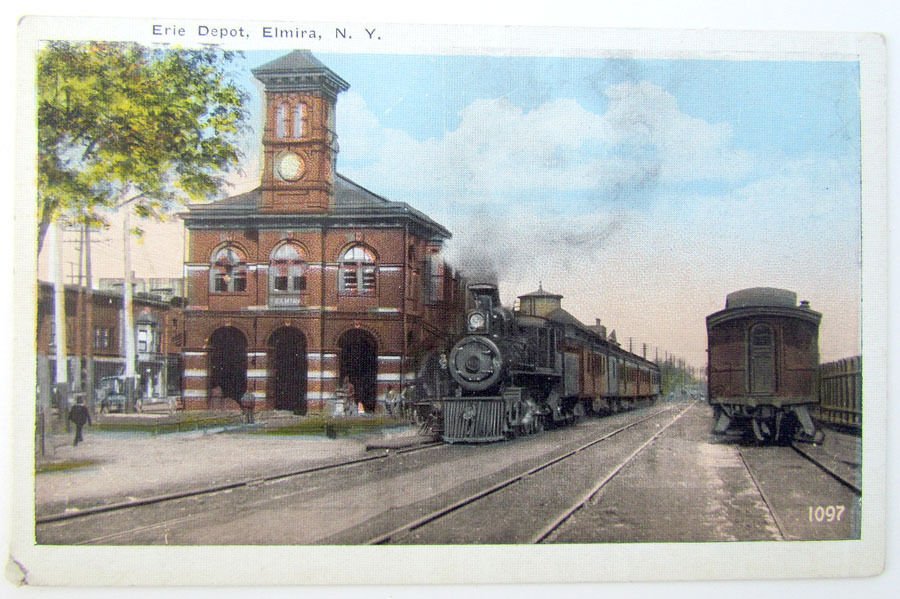
The history of railroad service in Elmira, New York, is deeply intertwined with the development of the town itself, reflecting the rise and fall of railroads during the 19th and 20th centuries. The Erie Depot, a key symbol of Elmira’s industrial and transportation heritage, has seen various stages of transformation, playing a pivotal role in both local and regional economic growth.
Early Beginnings of Railroads in Elmira
The story begins in 1835, when construction for the New York and Erie Railroad commenced in Deposit, New York. Although it would take 16 more years to complete the line all the way to Dunkirk, New York, this early groundwork set the stage for Elmira’s future as a crucial railroad hub. Elmira, located in the Southern Tier of New York State, was well-positioned to become a key junction for various railroads, linking it to major cities in the Northeast and beyond.
On October 2, 1849, the first New York and Erie (NY&E) train arrived in Elmira, marking the start of regular passenger service just six days later, with two trains each way per day. This event coincided with the construction of Elmira’s first railroad depot. Elmira’s population at the time was around 3,000, but the arrival of the railroad signaled the town’s growing importance as a transportation and industrial hub.
Expansion and Rail Competition
In 1850, the Canandaigua & Corning Railroad changed its name to the Elmira, Canandaigua & Niagara Falls Railroad, reflecting the evolving ambitions of the local rail network. Elmira’s role as a key transit point continued to grow in the coming years, particularly as the Elmira & Williamsport Railroad opened in 1854, facilitating the movement of lumber, coal, and iron between Pennsylvania and New York’s Feeder Canal, Junction Canal, and the rail lines in Elmira.
Railroad competition increased as multiple companies vied for dominance in the region. The Northern Central Railroad took over the Elmira & Williamsport line in 1863, adding Elmira to the network of the burgeoning Pennsylvania Railroad. This increasing importance of Elmira is reflected in the New York & Erie Railway’s renaming to the New York, Lake Erie, and Western Railway in 1875, and eventually to the Erie Railroad in 1895.
The Construction and Significance of the Erie Depot
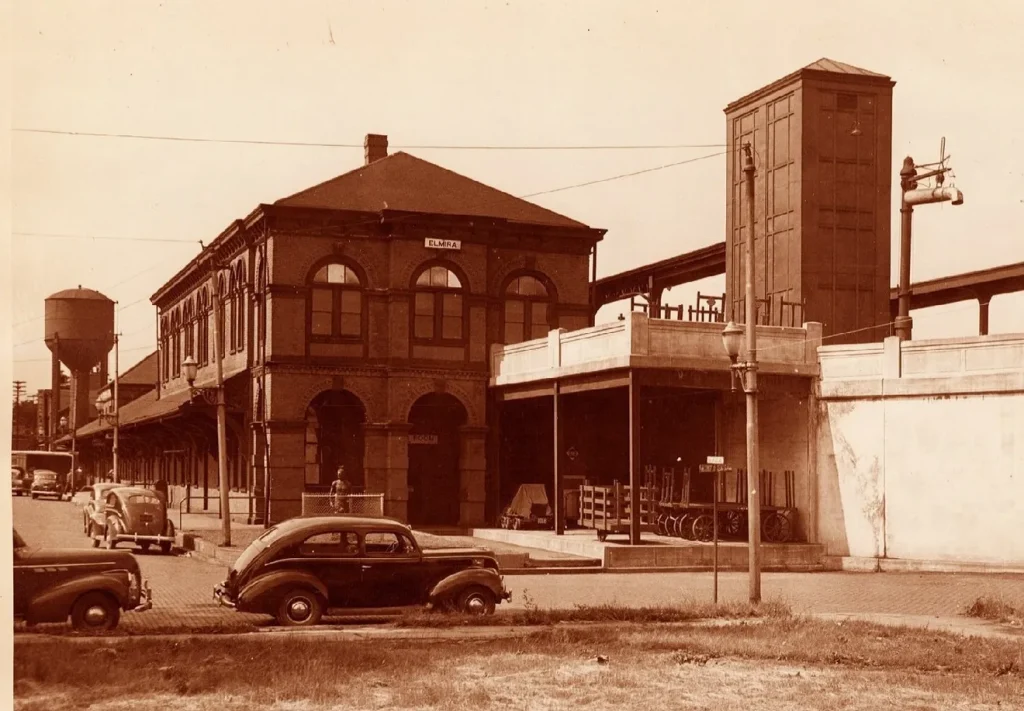
One of the most iconic landmarks in Elmira’s railroad history is the Erie Depot, which was first built in 1849. Unfortunately, a fire in 1867 damaged the original depot, necessitating the construction of a new one. The new station, completed in 1868 and officially opened in 1869, became a central symbol of Elmira’s prosperity.
The Erie Depot, constructed using stone from Susquehanna and Waverly, and brick from Horseheads, was praised for its solidity and beauty. As an important architectural and civic structure, it reflected the growing success of the town and its close ties to the railroads. An article from September 14, 1869, noted that the quality of the materials used “gave promise of that solidity of which not a tithe has been attained in some buildings.”
Elmira’s strategic position along multiple rail lines meant that the Erie Depot became a bustling center of activity. By the 1930s, the station was a “beehive of activity,” with 20 passenger trains departing daily, according to a report by Jim O’Hara in the Star-Gazette in 1959. This was during the height of passenger rail service, as travelers moved between cities for both business and leisure.
Railroad Avenue: The Heart of Elmira’s Rail District
Opposite the Erie Depot, Railroad Avenue was home to a series of hotels catering to the constant flow of travelers passing through Elmira. During the 1930s, the 500 block of Railroad Avenue included five hotels—the Roma Hotel, State Hotel, City Hotel, Globe Hotel, and Palace Hotel. These establishments thrived on the business brought by the Erie Depot and the other rail services in Elmira.
At 113-115 West Third Street, stood the American Hotel, originally constructed in 1835. Though now a vacant lot, this site was once a bustling center of activity for both residents and visitors. The American Hotel, like the nearby Erie Depot, was an integral part of the community that developed around the railroad.
Changes in the 20th Century: The Decline of Railroads
As the 20th century progressed, changes in transportation technologies, particularly the rise of automobiles and airplanes, led to the gradual decline of passenger rail services in Elmira and across the United States. In 1956, the Pennsylvania Railroad ended its passenger services in Elmira, followed by the last steam locomotive passing through the town in 1957.
Other railroads soon followed suit. The Lehigh Valley Railroad discontinued its passenger services in 1961, and the Erie-Lackawanna Railroad, which formed from the merger of the Erie Railroad and the Delaware, Lackawanna & Western Railroad in 1960, ended its passenger services in 1970. By the time Conrail absorbed the Erie-Lackawanna in 1976, Elmira’s days as a major railroad hub were largely over.
Preservation and the Modern Era
In 1983, Hilliard Corporation purchased the Erie Depot along with other properties on Railroad Avenue. Although much of the street has changed, with modern buildings replacing the old street front, the Erie Depot still stands as a monument to Elmira’s past. Hilliard’s preservation efforts reflect a growing interest in maintaining the town’s historic landmarks, even as the function of the railroad has largely shifted from passenger services to freight.
In 1998, Norfolk Southern took over Conrail’s operations in the Southern Tier, ensuring that Elmira’s connection to the broader rail network continues, though in a different form.
Final Thoughts
The Erie Depot and the railroads of Elmira played an instrumental role in the development of the town throughout the 19th and early 20th centuries. As a vital connection between major cities, Elmira grew alongside the railroads, with the Erie Depot serving as a symbol of this growth. While the decline of railroads eventually reduced Elmira’s prominence as a transportation hub, the historical significance of the Erie Depot remains preserved through the efforts of organizations like Hilliard Corporation. Today, the depot stands not only as a reminder of Elmira’s rich railroad history but also as a testament to the town’s resilience and adaptability in the face of change.
The story of the Erie Depot, from its construction in 1849 to its preservation in the modern era, mirrors the broader trends in American railroading. As railroads rose to prominence and then declined, towns like Elmira both flourished and struggled, forever linked to the fate of the trains that once ran through their streets.
Views: 316
Explore the evidence
View this article’s connected sources and media →
About this page
This article was brought over from AlfredGibbs.com. Its preserved text, media and citations remain available for comparison.