
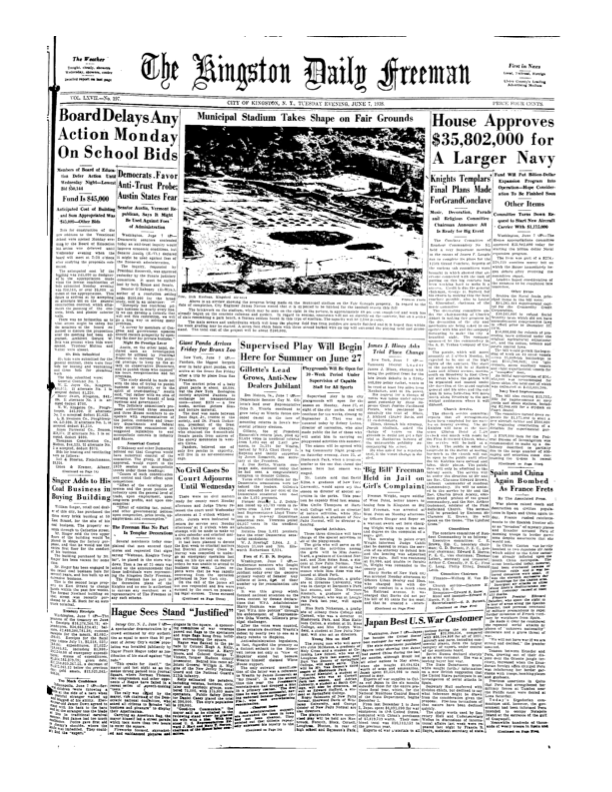
THE KINGSTON DAILY FREEMAN, KINGSTON, N. Y., TUESDAY EVENING, JUNE 7, 1938
More About Kingston Academy
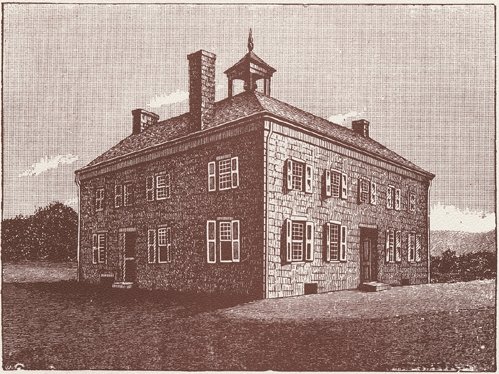
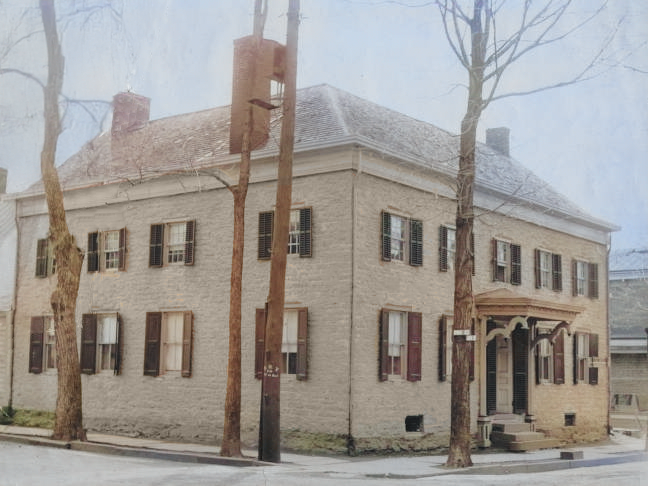
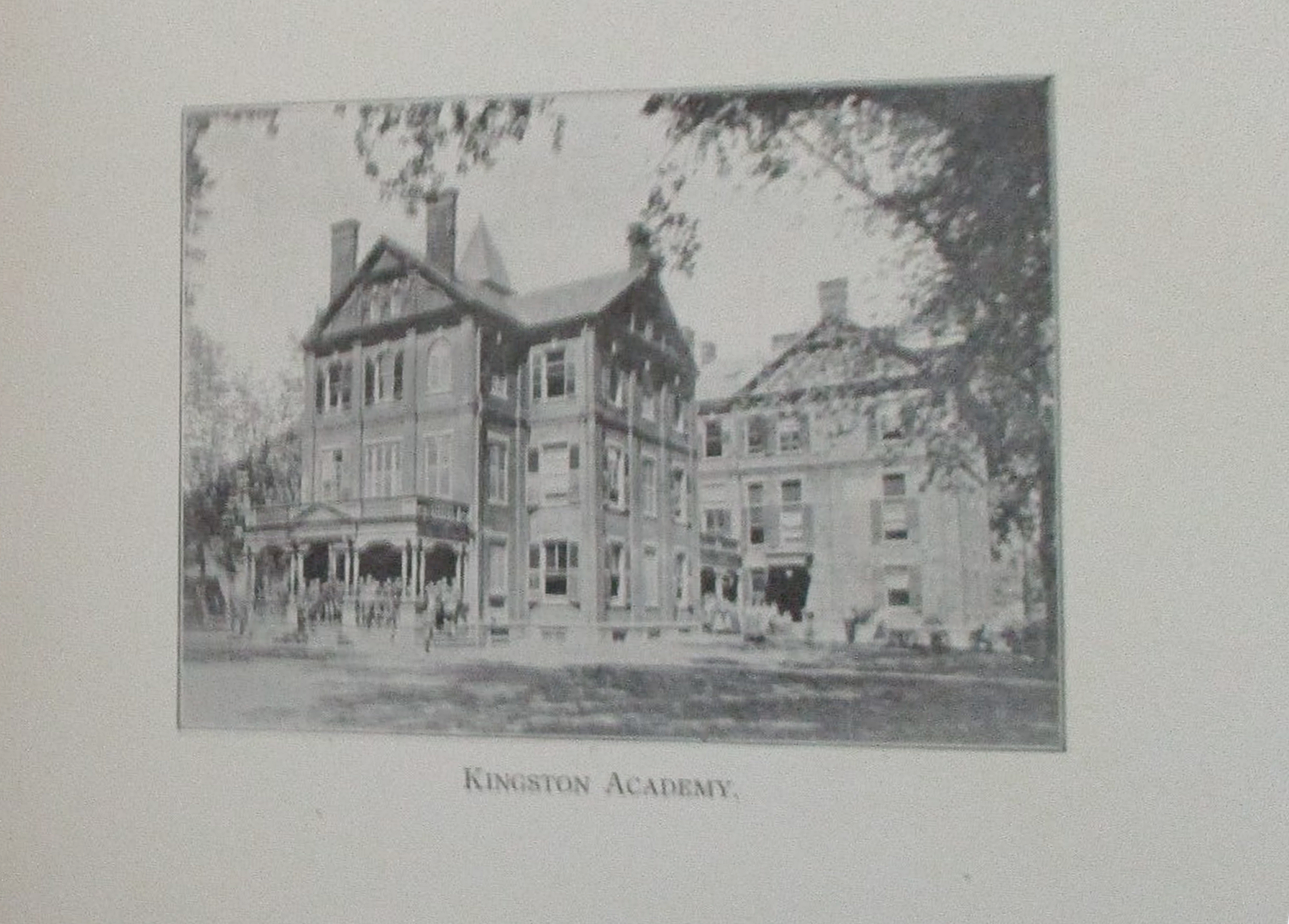
Kingston Academy closed its doors on June 23, 1915. Thereby ended an institution that had existed for 141 years—the oldest academy in New York State. During most of that period, Kingston Academy was more than a school. The life of the community, including a large section that extended beyond the limits of Kingston and Ulster County, was closely bound up with this academy. For many years, it afforded practically the only means for higher education for the young men and women of this region.
Kingston Academy opened its doors at a time when there were few opportunities for youthful education except at private schools or from private tutors. From an educational standpoint, the academy was a success. The aim of the academy was “the instruction of youth in the learned languages and other branches of knowledge.”
Kingston Academy was chartered in 1795 by the Board of Regents of the University of the State of New York, with Governor George Clinton, Chancellor, and DeWitt Clinton, Secretary of the Board of Regents, as the first officials to sign the charter. The application for a charter was originally made in 1794, but it was delayed until February 3, 1795, when Gulian Verplanck reported that the application met the necessary conditions for approval.
During the early years, Kingston Academy had an important place in the community. It provided educational opportunities for the sons and daughters of Kingston and other towns in the region. The school was frequently visited by public figures and dignitaries, and its success reflected the educational ambitions of the town.
The academy operated under its charter for many years, and in 1830, it moved to the triangular lot now known as Academy Green. The land was given to the academy trustees, and a new building was erected upon it. The academy continued to grow, attracting students from neighboring counties and states, including Pennsylvania and Maryland.
In 1778, a new academy building was constructed on the site, replacing the one the British had burned in 1777. The academy prospered for many years, but over time, the old building fell into disrepair. The building was finally razed in 1916, after standing for over 138 years. During its long history, Kingston Academy had a profound influence on education in the region, preparing many young people for college and professional careers.
The Academy’s history is deeply tied to the educational development of Kingston. In the early 19th century, Kingston Academy competed with other academies in the state, such as Dutchess Academy in Poughkeepsie and Farmers’ Hall Academy in Goshen. However, Kingston Academy maintained a unique position in Ulster County due to its longevity and the quality of its education.
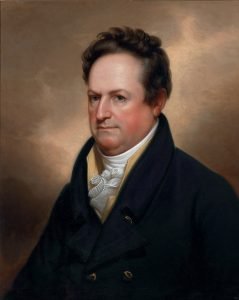
Many prominent figures, including DeWitt Clinton, received their early education at Kingston Academy. Clinton, who later became one of New York’s most distinguished governors, attended the academy before entering Columbia College, where he graduated with honors.
Kingston Academy also played a key role during the Revolutionary War. When the British burned Kingston on October 16, 1777, the academy was destroyed along with nearly the whole town, and teaching was suspended until a new building was erected on the site in 1778. The school then reopened and continued to serve the community for generations.
Update, July 2026. An earlier version of this page said the academy building survived the British burning of Kingston in 1777. The record is otherwise: the British burned Kingston, the academy among it, on October 16, 1777; teaching was suspended, and a new academy building was raised on the site in 1778. The Revolutionary War passage and the Schoonmaker reference have been corrected. Source: Schoonmaker, M. (1888), The History of Kingston, New York.
The academy’s charter, dated February 3, 1795, remains in the possession of the Board of Trustees of Kingston Academy. This document stands as a testament to the academy’s significance in the educational history of New York State.
In 1915, Kingston Academy was closed due to declining enrollment and financial difficulties. However, its legacy continues, and the academy remains an important chapter in the history of education in Kingston and Ulster County.
Ulster Had Six Regents
During the 154 years since the Board of Regents was created, six residents of Ulster County have served as Regents. Governor George Clinton was a Regent ex officio during 14 of the 21 years that he was the state’s chief executive. The Board of Regents was created for the special purpose of caring for Columbia College and for such other colleges as might be established. The first board was created by law on May 1, 1784.
The Board of Regents found that Kingston’s application for a college charter was declined because the required funds were not sufficient. Even though Kingston residents provided substantial contributions, the state of the economy and political conditions made it difficult for the Regents to approve more colleges. The ambitions of Kingston continued, and the trustees tried several more times to establish a college, but they were unsuccessful.


Views: 188
Explore the evidence
View this article’s connected sources and media →
About this page
This article was brought over from AlfredGibbs.com. Its preserved text, media and citations remain available for comparison.