White Post, Va., Aug. 10, 1864
The Civil War · Shenandoah Valley · August 10, 1864
White Post
The First New York Dragoons’ first engagement in the Shenandoah Valley — a brief brush with Confederate foragers gathering grain, which the regiment’s own historian called “mere boys’ play” beside the desperate battle that came the very next day.
On August 10, 1864, near the little village of White Post in Clarke County, Virginia, the First New York Dragoons fought what their historian called “our first engagement in the Shenandoah.” It was a small affair — a charge upon a party of Confederates busy gathering grain — and the regiment scattered them with a yell and a few rounds from its repeating carbines, taking the grain and threshing machines and losing not a man. The Dragoons themselves thought little of it; the desperate fight at Newtown the following day overshadowed it entirely. But it marked the regiment’s opening shot in the campaign that would make Sheridan’s name and break Confederate power in the Valley.
Into the Valley
The First New York Dragoons crossed the Potomac at Harper’s Ferry on August 8, 1864, riding into the Shenandoah as part of the Reserve Brigade of Wesley Merritt’s First Cavalry Division — the brigade then led by their own Colonel, Alfred Gibbs. Philip Sheridan had just taken command in the Valley with orders to drive out Jubal Early’s army and strip the country of the supplies that sustained it. The same day they crossed, the regiment was off on a reconnaissance toward Shepherdstown, marching back in the night; the few rebels they found retired at their approach.
Early on the morning of the 10th the Dragoons were in the saddle again, moving southwest. As the advance entered Charlestown — the place of John Brown’s execution — the regiments struck up the John Brown song, one after another taking it up until, as Bowen remembered, “several thousand voices composed a grand chorus.”
Boys’ Play at White Post
Pushing on through Berryville, the column struck a force of Confederates near White Post, busily gathering up grain. The Dragoons bore down on them with a yell and a few rounds from their repeating carbines, and the foragers made off at a lively gait, leaving the grain and threshing machines behind. It was the regiment’s first fight in the Shenandoah, and a bloodless one. Bowen dismissed it as “mere boys’ play” next to the “desperate battle of the day following” — the savage stand at Newtown on August 11, where the Dragoons, nearly single-handed, met a division of Early’s veterans and lost twenty-nine killed and seriously wounded. White Post was the quiet prelude; the storm broke the next day.
“Pushing on through Berryville, we struck a force of Johnnies, near White Post, busily gathering up grain; and here occurred our first engagement in the Shenandoah. At first they were disposed to resist our advance, but as we bore down upon them with a yell, pouring in a few rounds from the repeaters, they made off at a lively gait, leaving the grain, threshing machines, etc., in our possession. This affair, however, was as mere boys’ play compared with our desperate battle of the day following.”— James R. Bowen, Regimental History of the First New York Dragoons (1900), ch. XIV, p. 209.
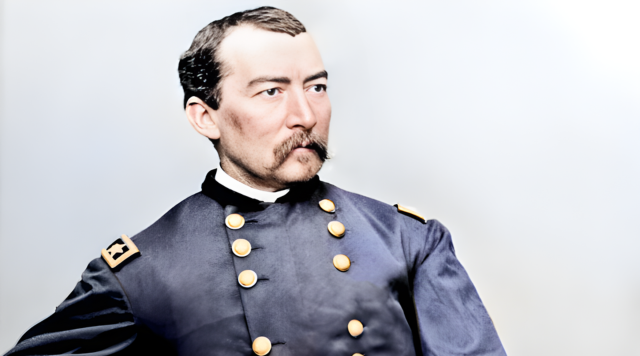
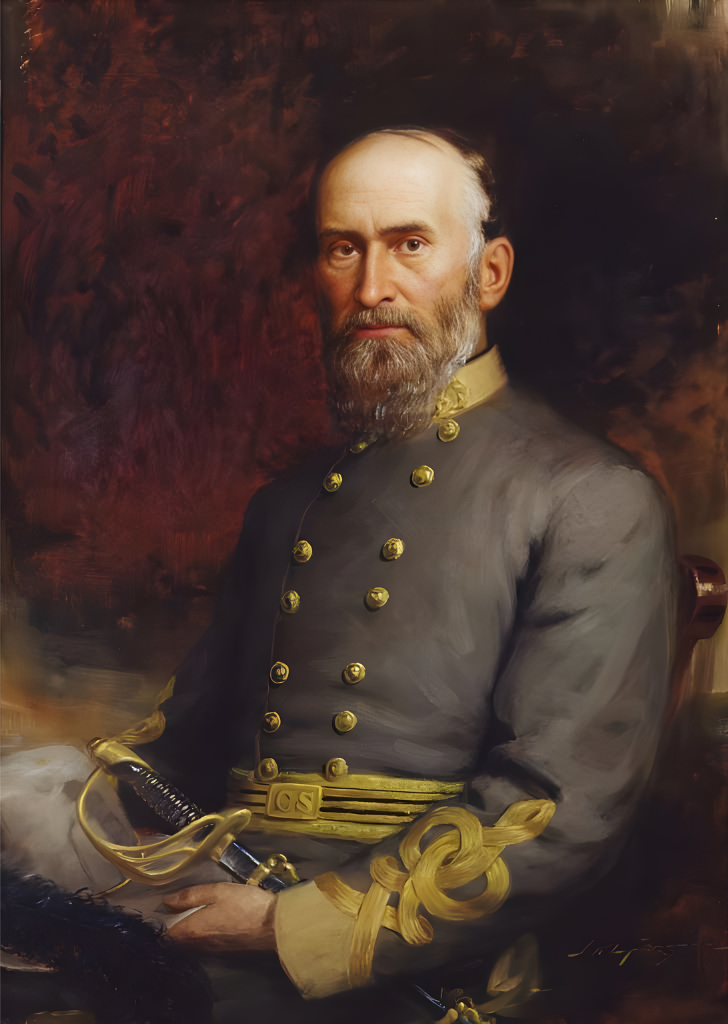
Roll of Loss — White Post / Stony Point, Va.
The regimental records name a single Dragoon associated with the fighting around White Post and Stony Point. Note that Bowen’s muster roll places Private Marshall’s capture on August 17 or 19, 1864 — not the August 10 action above — during the running skirmishes of these same days; he is listed here for completeness.
| Type | Name | Company | Rank |
|---|---|---|---|
| Captured | Edson C. Marshall | B | Private |
Sources & Further Reading
- Primary James R. Bowen, Regimental History of the First New York Dragoons (originally the 130th N.Y. Vol. Infantry) (1900), ch. XIV, “With Sheridan in the Shenandoah Valley,” pp. 208–210 — the regiment’s own historian and an eyewitness; the source of the account and the verbatim quotation above. Full text: archive.org/details/regimentalhistor00bowe.
- Primary U.S. War Dept., The War of the Rebellion: Official Records of the Union and Confederate Armies, Series I, Vol. 43 (the reports of Sheridan, Torbert, and Merritt covering the opening cavalry operations in the Valley, early August 1864).
- Note on the record: the small affair at White Post on August 10, 1864 was not a named battle and has no National Park Service / CWSAC or American Battlefield Trust battle summary of its own; it survives chiefly in the Dragoons’ own regimental history. The larger, separate cavalry fight near Newtown the next day (August 11, sometimes called the Double Tollgate fight) is a distinct engagement and is not covered here.
Third Winchester · The Shenandoah Valley Campaign · The Audiobook
Views: 96